IMCT Arrives in Assam to Assess Monsoon Flood Damage

Synopsis
An Inter-Ministerial Central Team has arrived in Assam to assess the impact of the 2026 monsoon floods, triggering the federal process for central disaster funds. The visit follows the protocol set by the Disaster Management Act, 2005, and could unlock SDRF and NDRF assistance for flood-hit families and farmers across the state.
Key Takeaways
The Chief Minister's Office of Assam confirmed on 26 July 2026 that an IMCT has arrived in the state to assess flood damage.
IMCTs are constituted by the Ministry of Home Affairs under the Disaster Management Act, 2005 to verify state-level disaster losses.
The team's findings will determine the quantum of assistance released from the SDRF or National Disaster Response Fund (NDRF) .
The Brahmaputra River and its tributaries cause annual inundations in Assam, displacing families and damaging crops and infrastructure.
Flood-affected families and farmers are the primary beneficiaries of any central relief package recommended by the IMCT.
The IMCT report's submission to the central government and any subsequent NDRF announcement are the key next steps to watch.
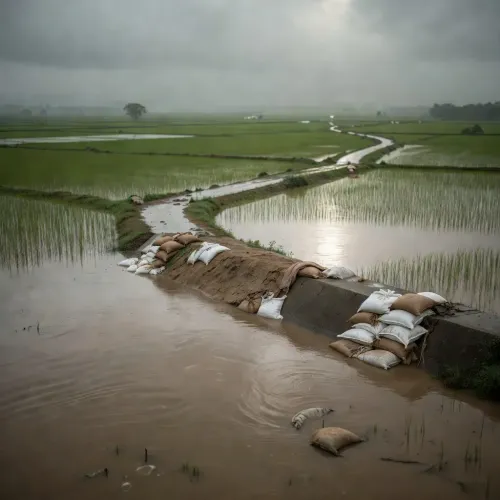
The Chief Minister's Office of Assam announced on Sunday, 26 July 2026 that an Inter-Ministerial Central Team (IMCT) has arrived in the state to assess the impact of the ongoing monsoon floods. The visit marks a formal step in the federal disaster-relief process that links state-level damage documentation to central funding assistance.
Context
Assam is one of India's most flood-prone states, with the Brahmaputra River and its tributaries inundating large swathes of agricultural and residential land almost every monsoon season. The annual cycle of flooding displaces hundreds of thousands of families, damages standing crops, and erodes rural infrastructure. The arrival of an IMCT signals that the scale of this year's inundation has crossed the threshold that warrants a formal central assessment.
An IMCT is constituted by the Ministry of Home Affairs under the framework established by the Disaster Management Act, 2005. Its primary mandate is to conduct an on-ground survey of damage, verify state government loss estimates, and recommend the quantum of financial assistance to be released from the State Disaster Response Fund (SDRF) or the National Disaster Response Fund (NDRF).
Policy Backdrop
The IMCT mechanism is the standard federal instrument through which states access supplementary central funds after major natural calamities. Once a state government submits a memorandum detailing losses — in lives, livestock, crops, and public infrastructure — the Ministry of Home Affairs constitutes a team of officials drawn from multiple central ministries to verify the figures on the ground.
The Disaster Management Act, 2005 created the legal scaffolding for this process, defining the roles of state and central governments and establishing the NDRF as a fund of last resort to supplement state resources when a disaster overwhelms local capacity. Assam has invoked this mechanism repeatedly over successive monsoon seasons, reflecting both the severity of its flood exposure and the established protocol for seeking additional relief.
Chief Minister Himanta Biswa Sarma, who has led the state since May 2021, has been responsible for coordinating state-level flood response and liaising with the central government for additional assistance during each major inundation cycle.
Stakeholders and Impact
The most immediate stakeholders are the flood-affected families and farmers across Assam whose livelihoods, homes, and standing crops have been damaged. For them, the IMCT visit is a critical procedural step: the team's report directly determines how much central money flows into relief and rehabilitation operations.
Farmers in the Brahmaputra valley face compounded losses — not only are crops destroyed during inundation, but soil erosion and silt deposition often render agricultural land unproductive for subsequent seasons. A favourable IMCT assessment and a swift release of NDRF funds can make the difference between timely recovery and prolonged distress for rural communities.
What's Next
The IMCT is expected to tour affected districts, review damage memoranda submitted by the state government, and prepare a report for submission to the Ministry of Home Affairs. The central government will then decide on the quantum of additional assistance to be released under the SDRF or NDRF framework.
Any announcement of a special central relief package or accelerated fund disbursement will be closely watched by state authorities and flood-affected communities alike. The speed of the central government's response following the IMCT report will be a key indicator of the priority accorded to Assam's flood crisis this monsoon season.
Point of View
Consequential because the team's report is the gateway to central funds. The speed with which the Ministry of Home Affairs constituted and dispatched the team will be read by state officials as a signal of New Delhi's responsiveness. For Chief Minister Himanta Biswa Sarma, a swift and generous NDRF release would provide both fiscal relief and political capital ahead of what is typically a prolonged post-flood rehabilitation period. More broadly, the annual recurrence of this mechanism in Assam raises a structural question: whether ad-hoc central assessments are sufficient, or whether a more permanent, pre-positioned funding arrangement is needed for chronically flood-prone states.
NationPress
24 Oct 2026
Frequently Asked Questions
What is an IMCT and why has it come to Assam?
An Inter-Ministerial Central Team (IMCT) is a group of officials constituted by the Ministry of Home Affairs to assess damage caused by natural disasters and recommend financial assistance from central funds. It has arrived in Assam to verify the extent of the 2026 monsoon flood damage so that the central government can determine how much relief money to release.
What funds can Assam receive after the IMCT assessment?
Based on the IMCT's report, Assam can receive financial assistance from the State Disaster Response Fund (SDRF) or the National Disaster Response Fund (NDRF), both established under the Disaster Management Act, 2005, to supplement state resources after major calamities.
Why does Assam face severe floods every year?
Assam is inundated almost every monsoon because the Brahmaputra River and its numerous tributaries carry enormous volumes of water from the eastern Himalayas. The river's flood plains are densely populated and farmed, making annual inundation a recurring humanitarian and economic crisis.
Who is responsible for coordinating flood relief in Assam?
At the state level, flood relief coordination is the responsibility of the state government, led by Chief Minister Himanta Biswa Sarma. At the central level, the Ministry of Home Affairs oversees the IMCT process and the release of NDRF funds.
What happens after the IMCT submits its report?
After the IMCT submits its damage assessment report to the Ministry of Home Affairs, the central government reviews the findings and decides on the quantum of additional financial assistance to release to Assam for relief, rehabilitation, and reconstruction.