India's agri exports surge 25% in April-September FY27, Basmati leads
Synopsis
India's farm exports are diversifying fast — Basmati rice hit $1.6 billion in just six months, yellow dent corn jumped nearly 12-fold, and Vietnam went from a $0.02 million buyer to a $69.94 million one. The first half of FY27 suggests India's agricultural export story is shifting from volume to variety and reach.
Key Takeaways
Basmati rice exports rose 25.4 per cent to $1.6 billion in April–September FY 2026–27 .
Iran was the top Basmati destination at $187.1 million ; the UAE posted the highest growth at over 50 per cent .
Processed frozen potato exports grew 20.8 per cent to $179.4 million , led by the Philippines and a 75 per cent surge from Indonesia .
Yellow dent corn exports surged nearly 12-fold , from $9.78 million to $122.82 million , with Vietnam jumping from $0.02 million to $69.94 million .
Growth spanned West Asia , East and Southeast Asia , and North America , reflecting broad geographical diversification.
India's agricultural exports recorded robust growth during the April–September period of FY 2026–27, led by Basmati rice, processed frozen potatoes, and yellow dent corn, according to an official government statement released on 20 November 2026. The performance signals a widening geographical reach for Indian farm and processed food products across West Asia, East Asia, Southeast Asia, and North America.
Basmati Rice Leads the Charge
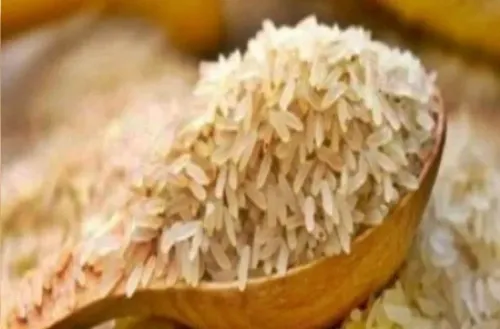
Basmati rice exports rose 25.4 per cent to $1.6 billion during the period, with gains recorded across multiple high-value markets. Iran emerged as the single largest destination, with shipment value climbing 44.1 per cent from $129.8 million to $187.1 million.
The UAE posted the steepest percentage rise among major buyers, with exports surging more than 50 per cent to reach $138.3 million. Saudi Arabia saw a 7.9 per cent increase to $174.4 million, while the United States registered a 27.7 per cent jump to $139.8 million. Yemen, Oman, Jordan, Canada, Qatar, Nepal, Mauritius, and Italy also recorded higher Basmati inflows, underscoring the commodity's broadening global footprint.
Frozen Potato Exports Cross $179 Million
India's exports of processed frozen potatoes grew 20.8 per cent, rising from $148.5 million to $179.4 million over the same six-month window. Growth was concentrated in East and Southeast Asian markets.
The Philippines remained the top buyer, with shipments reaching $36.7 million, followed by Saudi Arabia at $24.3 million. Indonesia posted a sharp 75 per cent jump to $13.3 million, while exports to Japan more than doubled to $13.2 million — one of the fastest individual-market expansions in the category.
Yellow Dent Corn: A Near-12-Fold Surge
The most striking turnaround came from yellow dent corn, whose export value leapt from $9.78 million in April–September FY 2025–26 to $122.82 million in the corresponding period of FY 2026–27 — an approximately 12-fold increase. The surge was driven by a dramatic scale-up in shipments to Asian markets.
Vietnam alone accounted for the bulk of this jump, with imports from India rising from just $0.02 million to $69.94 million, reflecting what the official statement described as 'exceptional growth.' The speed of that diversification suggests a structural demand shift rather than a one-off procurement spike.
What Is Driving the Broad-Based Momentum
According to the official statement, the strong first-half performance reflects a combination of stronger demand in traditional markets, rapid uptake in emerging destinations, and the deliberate geographical diversification of India's agricultural export basket. This comes amid sustained government focus on value-added food processing and efforts to expand market access agreements with Southeast Asian and Gulf economies.
Notably, the gains span both commodity staples and processed categories, suggesting that India's agri-export story is no longer purely volume-driven. The broadening of buyer countries — from West Asian staples to Japanese frozen-food chains — points to improving product standards and cold-chain logistics as underlying enablers.
What to Watch Next
Full-year performance will hinge on global commodity price trajectories, monsoon-linked supply adequacy, and whether the Vietnam corn volumes sustain beyond seasonal procurement cycles. Industry bodies and policymakers will likely track whether the second half of FY 2026–27 consolidates these gains or whether demand normalises in key emerging markets.
Point of View
But the yellow dent corn story is the one that deserves deeper scrutiny. A near-12-fold jump driven almost entirely by a single new buyer — Vietnam — raises the question of whether this is a durable trade relationship or a one-season procurement anomaly. On Basmati, the Iran and UAE numbers are strong, but India's heavy reliance on West Asian markets for its marquee export crop remains a concentration risk, particularly given geopolitical volatility in the Gulf. The frozen potato story is arguably the most structurally sound — Japan doubling its purchases and Indonesia up 75 per cent suggest real consumer-market penetration, not just commodity arbitrage. The government's framing of 'widening geographical reach' is accurate, but the second half of FY27 will reveal whether this diversification is sticky or circumstantial.
NationPress
20 Nov 2026
Frequently Asked Questions
How much did India's Basmati rice exports grow in April-September FY27?
India's Basmati rice exports grew 25.4 per cent to $1.6 billion in April-September FY 2026-27, according to an official statement. Iran was the largest buyer at $187.1 million, followed by Saudi Arabia at $174.4 million and the United States at $139.8 million.
Which country saw the biggest jump in Indian Basmati rice imports?
The UAE recorded the steepest rise, with Basmati imports from India surging more than 50 per cent to $138.3 million during April-September FY27. Iran posted the largest absolute increase in value, with shipments rising from $129.8 million to $187.1 million.
Why did yellow dent corn exports surge nearly 12-fold?
India's yellow dent corn exports jumped from $9.78 million to $122.82 million in the first half of FY27, driven largely by a dramatic scale-up in shipments to Vietnam, which rose from $0.02 million to $69.94 million. The official statement attributed the increase to substantial growth in Asian market demand, though analysts note the concentration in a single new buyer warrants monitoring.
Which markets are driving India's frozen potato export growth?
East and Southeast Asia are the primary growth engines, with the Philippines the top buyer at $36.7 million . Indonesia posted 75 per cent growth to $13.3 million and Japan more than doubled its purchases to $13.2 million — among the fastest individual-market expansions in the category.
What does the April-September FY27 agri-export data indicate about India's trade strategy?
The data indicates India is broadening both the product mix and buyer geography of its agricultural exports, moving beyond traditional West Asian reliance in Basmati to North American and East Asian markets. The parallel growth in processed categories like frozen potatoes signals increasing value-addition, though sustaining these trends through the second half of the financial year remains the key test.