How are India and the UK Enhancing AI and Telecom Collaboration?
Synopsis
In a move to bolster collaboration in telecommunications and AI, India's Minister of State for Communications met with the UK’s Parliamentary Under-Secretary of State. This meeting marks a significant step in the deepening **India-UK** partnership, paving the way for advancements in **AI**, **quantum communications**, and **telecom innovation**. Explore how both nations are shaping the future of technology.
Key Takeaways
Strengthened collaboration between India and the UK in AI and telecommunications.
Focus on AI-driven innovations for telecom networks.
Commitment to global standards in emerging technologies.
Joint initiatives to combat telecom fraud and scams.
Expansion of 5G and rural connectivity efforts.
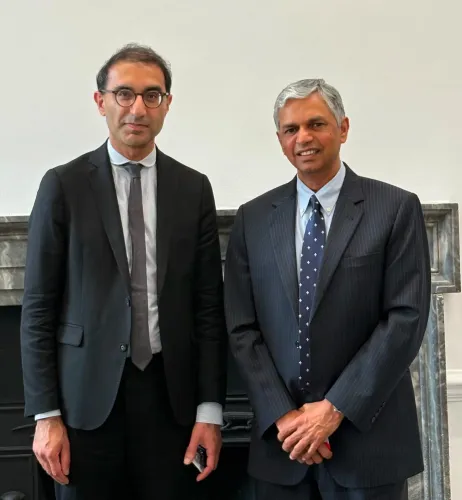
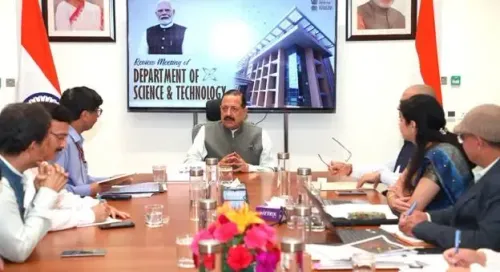
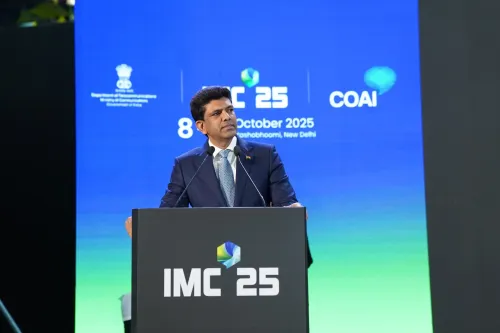
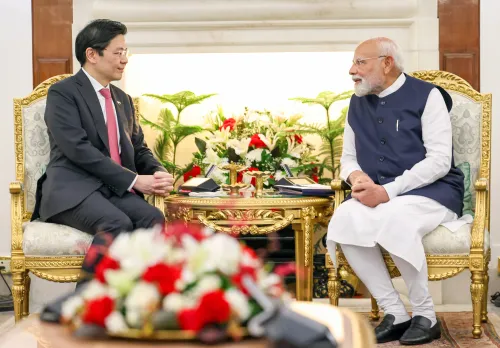
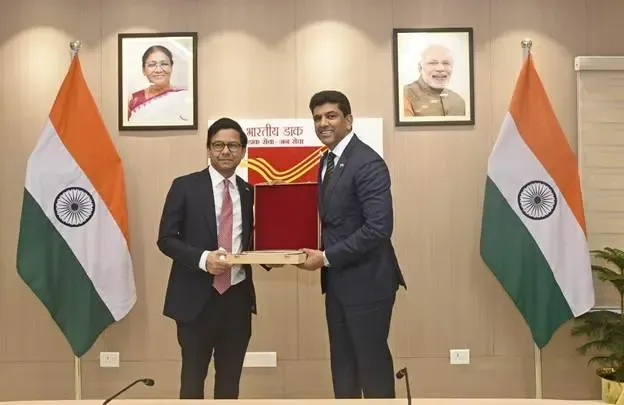
New Delhi, Feb 18 (NationPress) India’s Minister of State for Communications, Pemmasani Chandra Sekhar, convened a meeting with the UK's Parliamentary Under-Secretary of State for AI and Online Safety, Kanishka Narayan, on Wednesday, underscoring the expanding partnership between India and the UK in telecommunications, digital innovation, and emerging technologies.
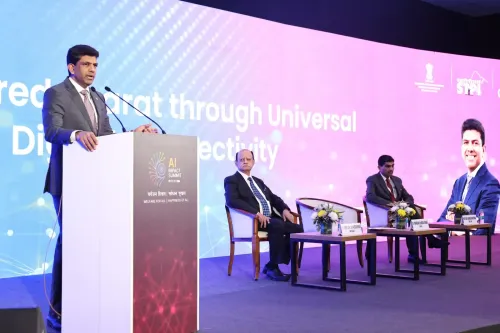
During their discussions at the AI Summit, the minister stressed that India considers artificial intelligence to be pivotal for the future of telecommunications. He remarked that leveraging India’s vast scale alongside the UK’s research capabilities can significantly influence global standards in AI-native networks, Open RAN, and 6G, ensuring technology fosters both growth and trust.
Chandra Sekhar also drew attention to India’s National Quantum Mission and highlighted the immense possibilities for collaboration in quantum communications and secure networks.
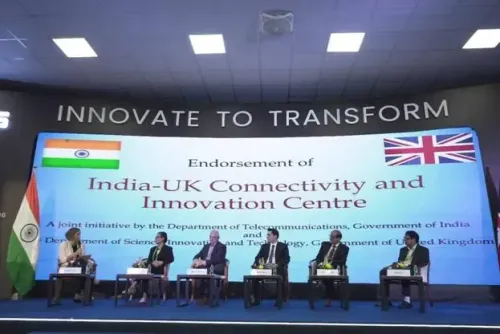
Both parties reviewed the progress under the DoT–DCMS MoU and celebrated the activation of the India–UK Connectivity and Innovation Centre, which was endorsed at the India Mobile Congress 2025.
The discussions centered on enhancing collaboration in AI applications for telecom networks, encompassing autonomous network management, AI-driven cybersecurity, spectrum innovation, and non-terrestrial networks. Both nations expressed interest in joint research initiatives, pilot deployments, and coordinated participation in global standardization forums such as the International Telecommunication Union (ITU) and 3GPP.
India and the UK exchanged insights on ongoing strategies to combat telecom fraud and digital scams through the application of artificial intelligence. India showcased initiatives like the Financial Fraud Risk Indicator (FRI), the Sanchar Saathi platform, and the use of AI-based anti-spam and fraud detection tools by Telecom Service Providers (TSPs). In return, the UK shared its experiences with open data frameworks and robust deterrent regulatory measures as key components of its strategy.
Moreover, India requested support from the UK for significant multilateral engagements at the International Telecommunication Union (ITU), including the candidacy of M. Revathi for the role of Director, Radiocommunication Bureau (BR), ITU, and India’s re-election to the ITU Council for the 2027–2030 term, reaffirming its ongoing contribution to global telecom governance and standardization. India’s proposal to host the ITU Plenipotentiary Conference (PP-2030) was also discussed, reflecting India’s dedication to shaping a secure, inclusive, and future-ready global digital ecosystem.
Additionally, India spotlighted its swift 5G rollout, expansion of rural connectivity, digital public infrastructure, and citizen-focused telecom governance initiatives.
The meeting concluded with a mutual commitment to fortify structured institutional collaboration and develop secure, trusted, and future-ready digital infrastructures in both nations.
Point of View
It is clear that this meeting between India and the UK signifies a pivotal moment in the realm of telecommunications and AI. The emphasis on collaborative efforts in emerging technologies reflects a commitment to not only national progress but also to global standards and governance in digital innovation. NationPress stands firmly behind initiatives that promote secure and evolving digital infrastructures.
NationPress
8 Oct 2026
Frequently Asked Questions
What is the significance of the India-UK meeting on AI?
The meeting underscores significant cooperation in telecommunications and AI, aiming to establish global standards and collaborative frameworks.
How does India view artificial intelligence in telecommunications?
India considers artificial intelligence central to the future of telecommunications, aiming to leverage its scale with the UK's research strengths.
What initiatives were discussed to combat telecom fraud?
The discussions included India's Financial Fraud Risk Indicator and the Sanchar Saathi platform, highlighting the use of AI in detecting fraud.
What future collaborations are expected between India and the UK?
Future collaborations will focus on AI applications in telecom, quantum communications, and joint research initiatives.
What is India's National Quantum Mission?
India's National Quantum Mission aims to foster advancements in quantum communications and secure networks, showcasing its commitment to emerging technologies.