INDIA bloc meets in Delhi with 23 parties; DMK skips, Left unhappy
Synopsis
The INDIA bloc's 'janbandhan' meeting in Delhi drew 23 parties but exposed a coalition under strain — DMK stayed away, the Left is unhappy, and the gathering was convened partly at TMC's insistence. With the 2029 Lok Sabha already on the horizon, the opposition's unity project is visibly still a negotiation, not a settled front.
Key Takeaways
23 political parties attended the INDIA janbandhan meeting at the Constitution Club, New Delhi on 8 June .
DMK , a key INDIA bloc ally, was absent from the meeting.
Left parties have expressed dissatisfaction over recent developments within the alliance.
The meeting was convened partly at the insistence of the All India Trinamool Congress (TMC) ; Mamata Banerjee and Abhishek Banerjee were expected to attend.
Congress general secretary Jairam Ramesh said absent parties still oppose the Modi government's policies.
The alliance is focused on building a common strategy ahead of the 2029 Lok Sabha elections .
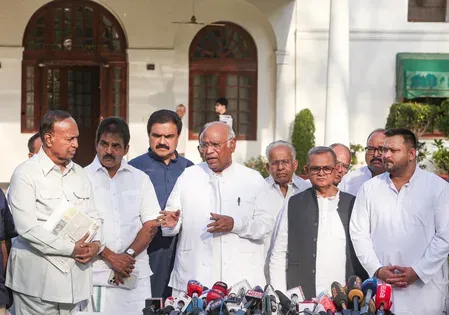
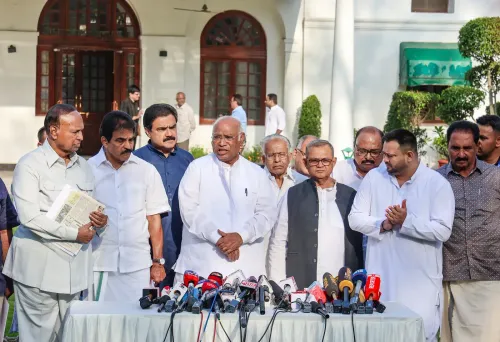
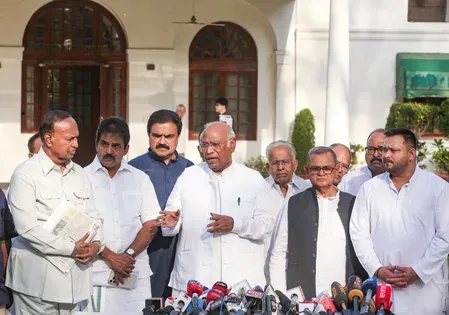
Twenty-three political parties gathered at the Constitution Club in New Delhi on Monday, 8 June for the INDIA janbandhan meeting, a high-stakes exercise in opposition unity that exposed fresh fault lines within the coalition. The meeting came amid visible internal strains, with key ally Dravida Munnetra Kazhagam (DMK) staying away and Left parties expressing dissatisfaction over recent developments inside the alliance.
Who Attended and Who Did Not
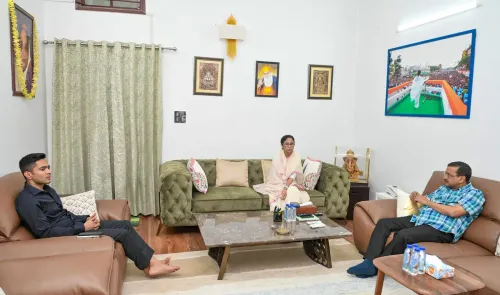
Congress general secretary Jairam Ramesh confirmed the participation of 23 parties, while acknowledging that several alliance partners would not be present. West Bengal Chief Minister Mamata Banerjee and All India Trinamool Congress (TMC) national general secretary Abhishek Banerjee were among those expected to attend. Notably, the meeting was convened partly at the insistence of the TMC, according to sources.
DMK's absence was conspicuous given its status as one of the INDIA bloc's most powerful regional pillars. Left parties, while not formally withdrawing, are reportedly unhappy with how internal consultations within the alliance have unfolded.
What the Alliance Said
Ramesh, in a post on X, said that parties unable to attend had nonetheless conveyed their opposition to the ruling government's policies. 'There are some parties that have expressed their inability to attend this particular meeting for their own reasons, even though they have conveyed their strong opposition to the Modi government's policies,' he said.
TMC Rajya Sabha member Derek O'Brien struck a unifying note, quoting Ramesh's post and stating, 'Meeting with a common purpose and clear intent. INDIA united. Many parties look forward to meeting in the spirit of camaraderie.' He added: 'Like India itself, the INDIA janbandhan continues to stand united through its diversity.'
Key Agenda Items
Ramesh outlined a broad opposition charge sheet against the Bharatiya Janata Party (BJP)-led government, accusing it of 'snatching away the right to vote for millions of Indians, assaulting the Constitution daily, attacking Opposition leaders through investigative agencies, seriously damaging the livelihoods of crores of Indians, breaking household budgets through relentless price rise, betraying the hopes and aspirations of lakhs of youth, dampening investment climate, and compromising the national interest by its foreign policy.'
The meeting was also expected to deliberate on preparations for the 2029 Lok Sabha elections and on shaping a common political strategy across constituent parties.
What the Meeting Signals
The INDIA bloc, formed ahead of the 2024 general elections, has struggled to maintain cohesion since its electoral performance fell short of dislodging the BJP. The absence of DMK — which commands significant influence in Tamil Nadu and holds considerable sway in Parliament — and the Left's discontent suggest that the alliance's internal coordination remains a work in progress. This is at least the second major occasion since 2024 where cracks within the coalition have been publicly visible.
The meeting was expected to conclude with a joint statement on coordination and electoral strategy, with the 2029 Lok Sabha contest now increasingly shaping opposition planning.
Point of View
But the subtext is more telling: DMK's absence and Left discontent reveal that the coalition's internal architecture is still contested. The fact that the meeting required TMC's prodding to happen at all raises questions about who holds convening authority within the alliance — and whether Congress retains the gravitational pull it once did. With no electoral contest immediately ahead, the risk is that the bloc drifts into performative unity rather than building the ground-level coordination that 2029 will demand. The opposition's real test is not whether it can fill a hall in Delhi, but whether it can agree on seat-sharing, messaging, and leadership before the BJP forces the question.
NationPress
23 Oct 2026
Frequently Asked Questions
What is the INDIA janbandhan meeting held on 8 June?
It is a meeting of the INDIA opposition bloc held at the Constitution Club in New Delhi on 8 June, attended by 23 political parties. The gathering was convened to discuss alliance coordination, a common political strategy, and preparations for the 2029 Lok Sabha elections.
Why did DMK skip the INDIA bloc meeting?
DMK did not attend the 8 June meeting, though the specific reasons were not publicly stated. Congress's Jairam Ramesh noted that absent parties had conveyed their inability to attend 'for their own reasons' while still opposing the Modi government's policies.
Why are Left parties unhappy with the INDIA bloc?
Left parties have expressed dissatisfaction over recent internal developments within the alliance, according to reports. The precise grievances were not detailed publicly ahead of the meeting, but their discontent adds to signs of internal strain within the coalition.
Who called the INDIA bloc meeting and who attended?
The meeting was convened following discussions among alliance partners and reportedly at the insistence of the Trinamool Congress. West Bengal Chief Minister Mamata Banerjee and TMC national general secretary Abhishek Banerjee were expected to attend, along with representatives of 23 parties.
What issues did the INDIA bloc raise against the government?
Congress general secretary Jairam Ramesh outlined a broad charge sheet, accusing the government of undermining voting rights, attacking the Constitution, using investigative agencies against opposition leaders, fuelling price rise, failing youth employment, and compromising foreign policy interests.