INDIA bloc meets on poll irregularities, CJP notably absent from Rahul Gandhi huddle
Synopsis
The INDIA bloc convened a civil society outreach meeting hosted by Rahul Gandhi to strategise on alleged electoral irregularities — but the Cockroach Janta Party, whose campaigns closely mirror the bloc's own, was nowhere in the room. The CJP's deliberate self-distancing, combined with Congress's reported suspicions about the organisation's origins and funding, reveals a fractured protest ecosystem that the opposition has yet to fully reconcile.
Key Takeaways
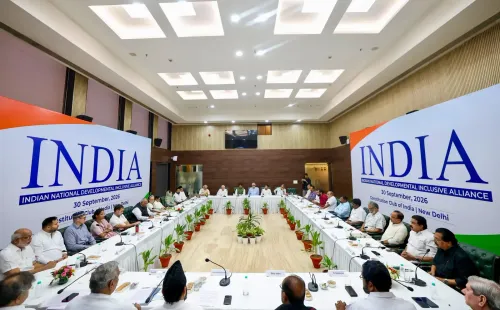
The INDIA bloc held a strategy meeting on 14 October in New Delhi , hosted by Rahul Gandhi , focused on alleged electoral irregularities.
Prashant Bhushan and Yogendra Yadav attended as prominent civil society figures unaffiliated with any major party.
The Cockroach Janta Party (CJP) , founded by Abhijeet Dipke , had no representation despite receiving public backing from several attendees.
The CJP has reportedly insisted on remaining independent and not merging into any political formation, including the INDIA bloc.
Congress leaders have reportedly questioned the CJP's origins, funding transparency, and rapid growth, with some fearing it could split votes in favour of the BJP .
Neha Bora of AISA and CPI(ML) Liberation General Secretary Dipankar Bhattacharya were among the youth and Left representation at the meeting.
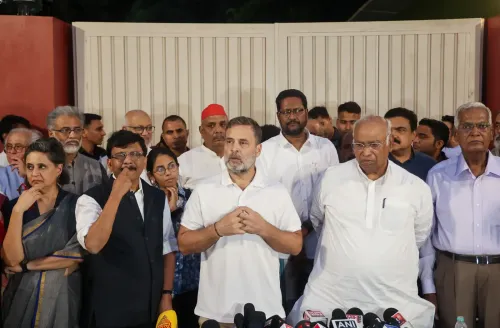
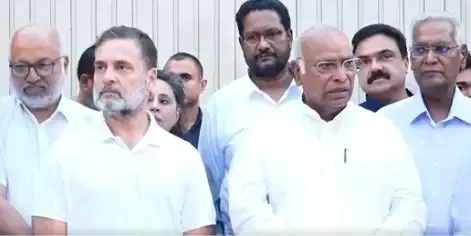
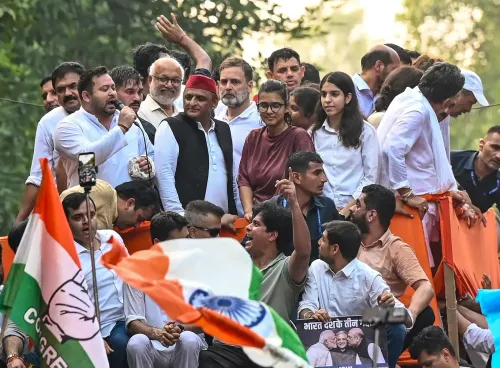
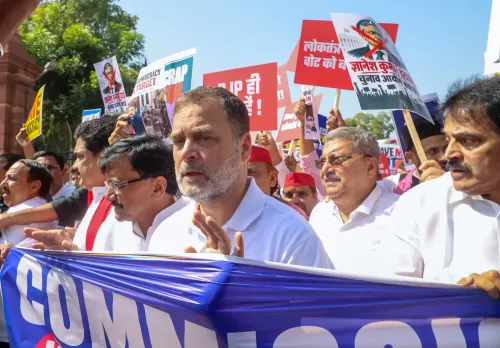
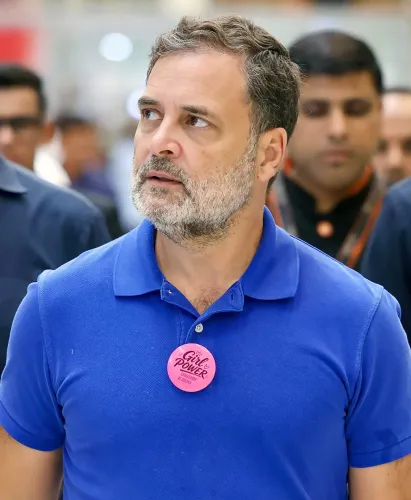
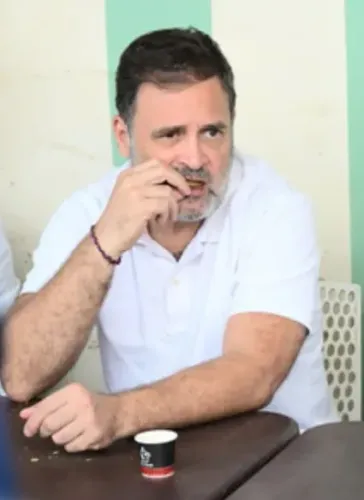
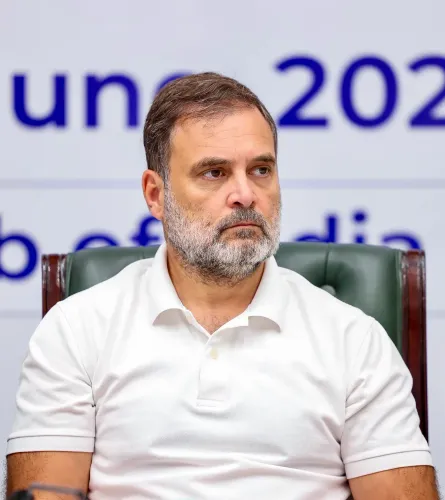
The Congress-led INDIA bloc convened a strategy meeting in New Delhi on Tuesday, 14 October, hosted by Leader of Opposition in the Lok Sabha Rahul Gandhi, bringing together senior opposition leaders and prominent civil society figures to discuss alleged electoral irregularities — but representatives of the Cockroach Janta Party (CJP) were conspicuously absent. The gathering signalled a coordinated push by the bloc ahead of upcoming elections, even as fault lines within the broader protest ecosystem remained visible.
Who Was at the Table
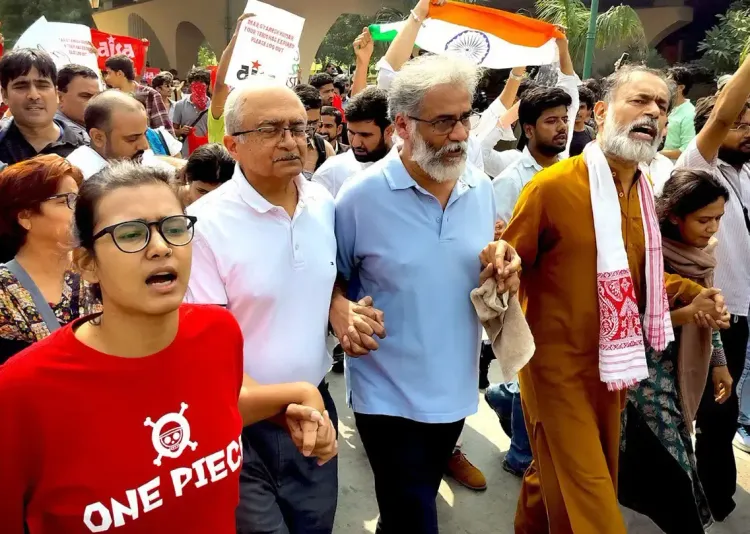
Among the notable civil society attendees were veteran public-interest lawyer Prashant Bhushan and political activist and commentator Yogendra Yadav, both widely associated with anti-corruption and democratic rights campaigns. Their presence drew attention not only for what it represented, but also for what it underscored: the CJP, despite receiving public backing from several of those present, had no visible representation at the meeting.
The only notable youth presence was reportedly Neha Bora, President of the All India Students Association (AISA), the student wing of the Communist Party of India (Marxist–Leninist) Liberation. The party's General Secretary, Dipankar Bhattacharya, was also present. Bora is not a formal CJP office-bearer but has been a prominent face in several of the organisation's protests and campaigns.
Why the CJP's Absence Matters
Founded by Abhijeet Dipke and initially perceived as a satirical outfit, the CJP has since evolved into a more assertive political entity — gaining particular prominence through its campaign against then Education Minister Dharmendra Pradhan and its ongoing criticism of Chief Election Commissioner Gyanesh Kumar. Several INDIA bloc constituents have reportedly sought coordination with the CJP, even without a formal alliance.
The CJP, however, is said to have insisted on maintaining its independence and has declined to merge into any political formation, including the INDIA bloc. This stance has reportedly kept it at arm's length, even as its campaigns frequently overlap with those of opposition parties.
Congress and the CJP: A Complicated Equation
The relationship between the Indian National Congress (Congress) and the CJP has been marked by mutual wariness rather than partnership, according to reports. While both have opposed similar government policies — including those related to electoral processes — they have operated through separate structures.
Reports indicate that Congress leaders have questioned the CJP's origins, funding transparency, timing of formation, and rapid growth. Some within the party are said to be concerned that the CJP could function as a vote-splitting force that might ultimately benefit the Bharatiya Janata Party (BJP). These anxieties, reportedly simmering for months, explain why a grouping that has received public endorsements from figures present at Tuesday's meeting has yet to be formally brought into the fold.
The Bhushan-Yadav Factor
The presence of Bhushan and Yadav carries its own layered significance. Both were once prominent figures in the movement around activist Anna Hazare and later founding members of the Aam Aadmi Party (AAP) during its formative years, before parting ways with Arvind Kejriwal.
Following that split, Yadav launched Swaraj Abhiyan and subsequently Swaraj India, intended as models of participatory politics. Neither achieved sustained electoral traction. Yadav subsequently pivoted toward issue-based activism, including a period organising farmers — notably under the Samyukta Kisan Morcha (SKM) umbrella that spearheaded the 2020-21 agitation against agricultural laws — before reportedly stepping back from that formation as well amid differences over tactics and leadership.
Crucially, neither Bhushan nor Yadav is currently affiliated with any major political party. That independence, according to analysts, is precisely what makes them attractive to the INDIA bloc: their presence allows the opposition to project a broader coalition without formally absorbing organisations that may be reluctant to join. How that coalition holds — and whether the CJP's self-imposed distance eventually narrows — will be a key dynamic to track as the electoral calendar approaches.
Point of View
Failing to coordinate risks duplicating effort and diluting impact precisely when opposition consolidation matters most.
NationPress
14 Oct 2026
Frequently Asked Questions
Why was the Cockroach Janta Party (CJP) absent from the INDIA bloc meeting?
The CJP was absent because it has reportedly insisted on maintaining its independence and has declined to merge into or formally align with any political formation, including the INDIA bloc. Several INDIA constituents have sought coordination, but no formal arrangement has materialised.
What was the INDIA bloc strategy meeting about?
The meeting, hosted by Leader of Opposition Rahul Gandhi in New Delhi on 14 October, was aimed at coordinating a campaign against alleged electoral irregularities. It brought together senior opposition leaders and civil society figures including Prashant Bhushan and Yogendra Yadav.
Who is the CJP and why has it become prominent?
The Cockroach Janta Party (CJP) was founded by Abhijeet Dipke and was initially perceived as a satirical outfit. It gained prominence through its aggressive campaign against then Education Minister Dharmendra Pradhan and has since turned its attention to Chief Election Commissioner Gyanesh Kumar.
Why are Prashant Bhushan and Yogendra Yadav significant to the INDIA bloc?
Both are prominent civil society figures unaffiliated with any major political party, which allows the INDIA bloc to project a broader coalition beyond its constituent parties. Both were formerly associated with the Anna Hazare movement and the early Aam Aadmi Party before parting ways with Arvind Kejriwal.
What is Congress's position on the CJP?
Congress has reportedly viewed the CJP with suspicion rather than as a partner, with party leaders said to have questioned its origins, funding transparency, and rapid growth. Some within Congress are concerned the CJP could function as a vote-splitting force that might ultimately benefit the BJP.