INDIA Bloc protests MMDR Amendment Act in Bhubaneswar, demands repeal
Synopsis
The INDIA bloc took its opposition to the MMDR Amendment Act, 2026 to the streets of Bhubaneswar, alleging the law could cost mineral-rich Odisha lakhs of crores in lost revenue. With effigies of the PM and Home Minister burnt and Congress calling it a direct assault on cooperative federalism, the protest signals a sustained opposition campaign — not a one-day demonstration.
Key Takeaways
The INDIA bloc held a major protest in Bhubaneswar on 25 August against the MMDR Amendment Act, 2026 .
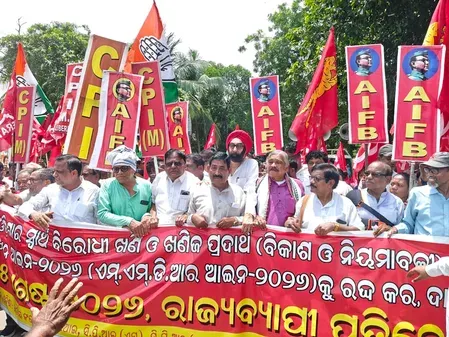
Protesters marched from Congress Bhawan to Lower PMG and burnt effigies of PM Modi and Home Minister Amit Shah .
Opposition leaders allege the law will deprive Odisha of mineral revenue worth lakhs of crores of rupees .
Senior Congress leader Prasad Kumar Harichandan called the Act “a direct attack on cooperative federalism.” The opposition also criticised the Odisha state government for not opposing the legislation.
Leaders warned of an intensified agitation if the Centre does not withdraw the law.
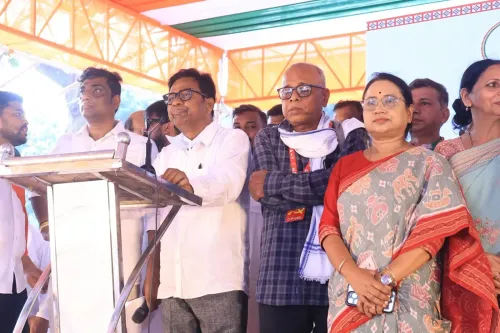
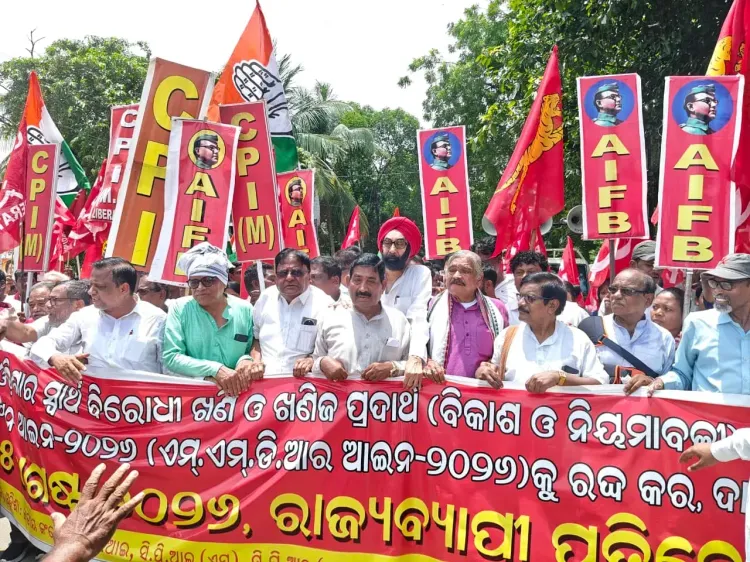
Opposition parties under the INDIA bloc on Tuesday, 25 August staged a large-scale protest in Bhubaneswar, demanding the withdrawal of the Mines and Minerals (Development and Regulation) (MMDR) Amendment Act, 2026, alleging the legislation would strip Odisha of revenue running into lakhs of crores of rupees. The demonstration marked one of the most visible opposition mobilisations in the state capital since the law received presidential assent.
How the Protest Unfolded
A procession set off from Congress Bhawan and marched toward Lower PMG, where leaders and workers from multiple opposition parties gathered for a public demonstration. Protesters later burnt effigies of Prime Minister Narendra Modi and Union Home Minister Amit Shah as a symbolic mark of dissent. The turnout spanned several parties aligned under the INDIA bloc umbrella.
What the Opposition Alleges
Opposition leaders argued that despite Odisha being one of India's most mineral-rich states, the Centre's policies toward it have remained discriminatory. They contended that the MMDR Amendment Act, 2026 would deprive the state of a significant share of revenue from its mineral resources. Beyond the mining law, speakers at the demonstration also criticised the Central Government over what they described as failures in the education sector and a disregard for state-specific interests.
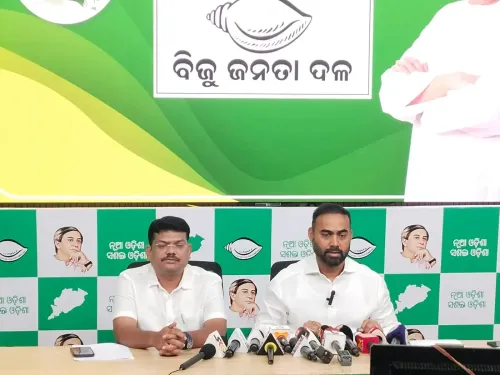
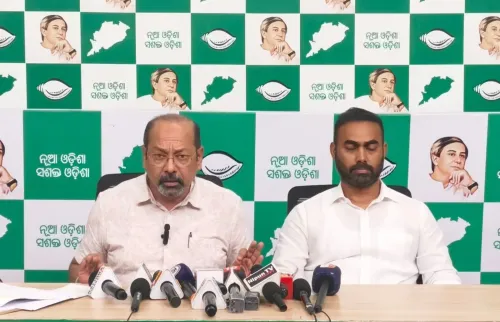
The opposition also turned its fire on the Odisha state government, accusing it of staying silent rather than opposing the legislation at the national level. Leaders warned they would escalate the agitation if the Centre did not reconsider the amendment.
Congress Calls It an Attack on Federalism
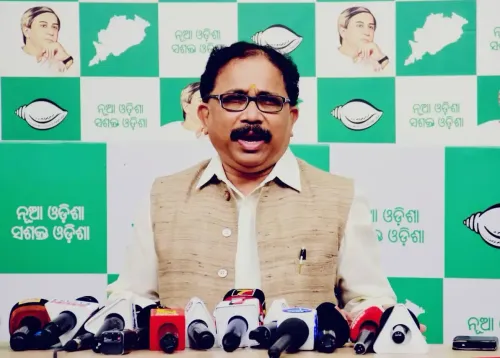
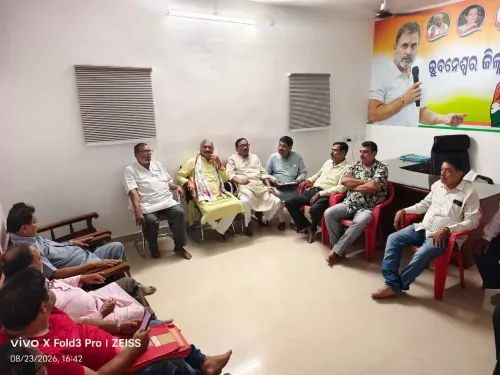
At a separate press conference held in Bhubaneswar on the same day, senior Congress leader Prasad Kumar Harichandan framed the law in constitutional terms. “MMDR Amendment Act, 2026 is a direct attack on cooperative federalism and the financial rights of mineral-rich states. The Congress party completely opposes the Mines and Minerals (Development and Regulation) Amendment Act, 2026. As the law has already received the President’s assent, our demand is now clear and firm: The Central Government should withdraw and repeal this law and restore the constitutional and financial rights of the states,” he said.
What Happens Next
Opposition leaders reiterated that their agitation would continue until the Centre acts. With the law already enacted, the practical route available to opponents is either a parliamentary repeal — which would require majority support — or a legal challenge. The intensity of street protests in mineral-dependent states like Odisha is likely to shape whether the issue gains broader national traction in the weeks ahead.
Point of View
2026 has handed the opposition a rare issue that cuts across party lines in mineral-rich states — one rooted in revenue arithmetic rather than ideology. Odisha's dependence on mining royalties makes the financial stakes tangible and verifiable, which is precisely why the Congress framing around cooperative federalism is politically potent. What the protest does not yet answer is why the Odisha state government, run by a non-INDIA bloc party, has reportedly stayed quiet — that silence may be the more revealing story. If opposition parties can sustain street pressure and link it to a credible legal or parliamentary challenge, the MMDR Act could become a flashpoint well beyond Bhubaneswar.
NationPress
9 Oct 2026
Frequently Asked Questions
What is the MMDR Amendment Act, 2026?
The Mines and Minerals (Development and Regulation) Amendment Act, 2026 is a central legislation that has already received the President’s assent. Opposition parties allege it alters the revenue-sharing framework for mineral-rich states, potentially costing Odisha lakhs of crores of rupees in lost income from its mineral resources.
Why are opposition parties protesting the MMDR Amendment Act in Odisha?
Opposition leaders argue that Odisha, despite being one of India’s most mineral-rich states, will lose a significant share of revenue under the new law. They contend the amendment is discriminatory toward mineral-dependent states and undermines cooperative federalism.
What did Congress leader Prasad Kumar Harichandan say about the Act?
Harichandan described the MMDR Amendment Act, 2026 as ‘a direct attack on cooperative federalism and the financial rights of mineral-rich states.’ He demanded that the Central Government withdraw and repeal the law, and restore the constitutional and financial rights of states.
What action did protesters take in Bhubaneswar?
Protesters marched from Congress Bhawan to Lower PMG, held a public demonstration, and burnt effigies of Prime Minister Narendra Modi and Union Home Minister Amit Shah. Leaders from multiple INDIA bloc parties addressed the gathering and warned of an escalating agitation.
What are the next steps for the opposition on this issue?
Opposition leaders have vowed to continue their agitation until the Centre withdraws the law. Since the Act has already received presidential assent, the available routes are a parliamentary repeal or a legal challenge — both of which would require broader political mobilisation beyond Odisha.