MMDR Amendment: BJD warns of ₹12,000 crore annual loss for Odisha
Synopsis
The BJD is warning that the Centre's MMDR Act amendment will strip Odisha of ₹12,000 crore in annual mining revenue — and it is invoking a Supreme Court ruling to back that claim. With the party announcing street agitations and Congress joining the chorus, the amendment is fast becoming a flashpoint over federal resource rights in one of India's most mineral-rich states.
Key Takeaways
The BJD warned on 14 August that the MMDR Act amendment will cost Odisha ₹12,000 crore in annual mining revenue.
Former Minister Priti Ranjan Ghadai accused Odisha's 20 BJP MPs of backing the Bill in Parliament without debate.
Bhrugu Baxipatra cited a Supreme Court ruling affirming states' exclusive right to collect mining revenue, arguing the Centre is disregarding it.
The Supreme Court had directed in July 2024 that ₹1.5 lakh crore in outstanding dues be recovered from mining owners — the state BJP government has reportedly not acted on this.
The BJD opposed the Bill in the Rajya Sabha and announced imminent state-wide street agitations.
The Opposition Congress also criticised the amendment and questioned the silence of Odisha's MPs.
The Biju Janata Dal (BJD) on 14 August launched a sharp offensive against the Bharatiya Janata Party (BJP)-led state and central governments over the amendment to the Mines and Minerals (Development and Regulation) (MMDR) Act, warning that the revised legislation will siphon Odisha's mining revenues to New Delhi and cost the state exchequer an estimated ₹12,000 crore annually. The party announced it will launch state-wide street agitations to resist what it called an assault on Odisha's federal rights.
Key Allegations at the Press Conference
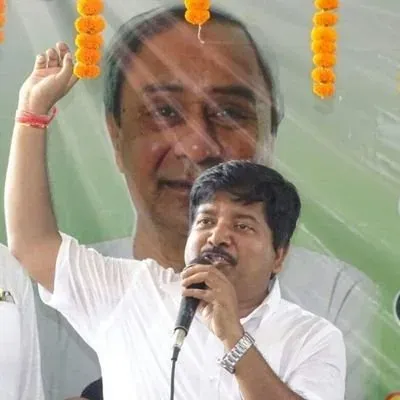
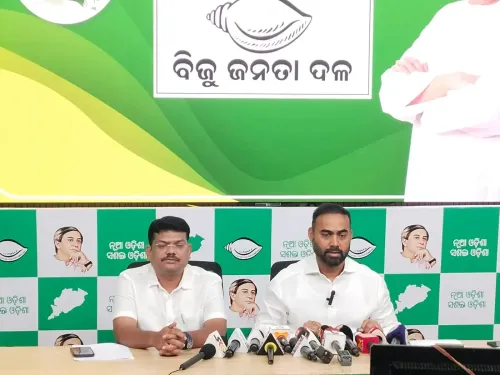
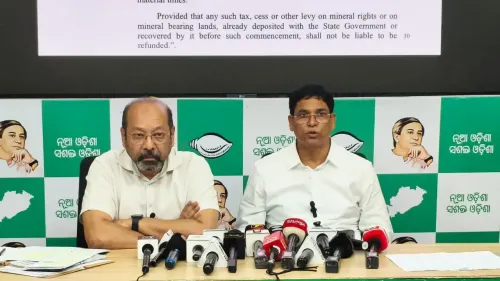
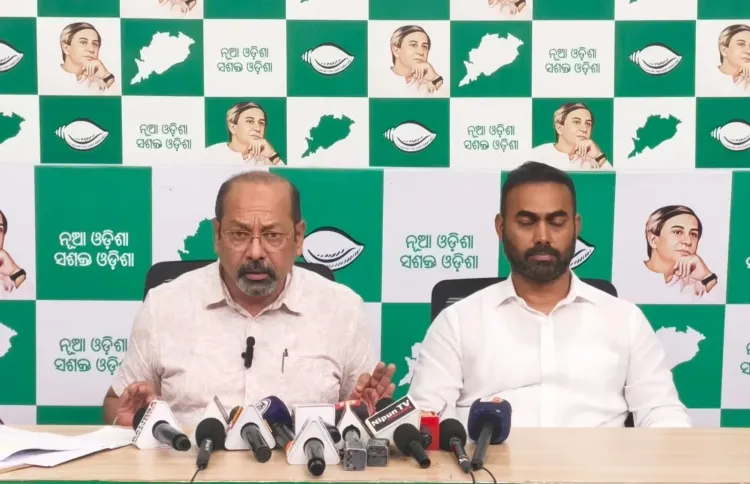
Addressing a joint press conference at Sankha Bhawan in Bhubaneswar, former Minister Priti Ranjan Ghadai and Senior General Secretary Bhrugu Baxipatra condemned the amendment, accusing the 'double-engine' government of sacrificing the state's economic interests. Ghadai alleged that since the BJP assumed power in Odisha, illegal smuggling of mineral resources has surged across the state. He also criticised the central government for diverting royalty revenues — generated from local mineral wealth — away from the District Mineral Foundation (DMF), which is meant to fund public welfare in mining-affected regions.
Ghadai specifically questioned the conduct of Odisha's 20 BJP Members of Parliament, accusing them of remaining silent and backing the Bill in Parliament without debate. 'The people of Odisha deserve an answer as to how the state BJP Government and the MPs accepted this Bill, which strikes at the federal structure. It is unacceptable that Odisha's mining revenue will not be invested in the development of the state but will instead be used for the development of other states,' he said.
Supreme Court Ruling Cited
Baxipatra invoked a Supreme Court ruling that affirmed the state government's exclusive right to collect mining revenue for the development of mineral-rich Odisha, arguing that the Centre is now disregarding that judgment. He further pointed out that although the Supreme Court directed in July 2024 that ₹1.5 lakh crore in outstanding dues be recovered from mining owners, the state BJP government has made no effort to act on that directive.
'On the other hand, through this law, the annual revenue of ₹12,000 crore that the state receives will be handed over to the Central Government. According to the new Bill, the State Government will no longer be able to recover outstanding dues from any mining owner. The people of Odisha will never forgive the BJP Government for the immense loss it is causing to the state,' Baxipatra said.
BJD's Opposition in Parliament and Next Steps
The BJD leadership reiterated that the party had strongly opposed the MMDR Act Amendment Bill in the Rajya Sabha. The party announced it will shortly mobilise cadres for state-wide agitations to safeguard Odisha's mineral rights and revenues. The Opposition Indian National Congress (Congress) also criticised the government over the issue, echoing concerns about the silence of Odisha's MPs during the parliamentary proceedings.
What the Amendment Means for Odisha
Odisha is among India's most mineral-rich states, with significant reserves of iron ore, coal, bauxite, and chromite. Critics argue that centralising mining revenue collection undermines the state's capacity to fund local infrastructure, tribal welfare, and environmental remediation through the DMF framework. This is not the first time the MMDR Act has been contested on federal grounds — earlier amendments in 2015 and 2021 also drew resistance from mineral-rich states over revenue-sharing arrangements. The latest amendment, according to the BJD, escalates that tension to a new level by reportedly restricting states from recovering dues independently.
Point of View
But it also carries a degree of political convenience — the party is in opposition for the first time in over two decades and needs a wedge issue. That said, the substantive concern is real: Odisha accounts for a disproportionate share of India's mineral output, and any amendment that shifts revenue control to the Centre deserves scrutiny against the Supreme Court's own federalism rulings. The silence of Odisha's 20 BJP MPs during parliamentary proceedings — if accurate — is a legitimate accountability question that neither the state government nor the Centre has publicly answered. The ₹12,000 crore figure needs independent verification, but the direction of the argument — that mineral-rich states bear environmental and social costs while revenues flow outward — is a structural tension that predates this amendment and will outlast it.
NationPress
28 Sept 2026
Frequently Asked Questions
What is the MMDR Act amendment and why is BJD opposing it?
The Mines and Minerals (Development and Regulation) (MMDR) Act amendment, passed in Parliament, reportedly centralises mining revenue collection, diverting funds that would otherwise flow to Odisha's state exchequer and District Mineral Foundation. The BJD opposes it because it claims the change will cost Odisha ₹12,000 crore annually and contradicts a Supreme Court ruling affirming states' exclusive rights over mining revenue.
How much revenue does Odisha stand to lose under the new MMDR amendment?
According to the BJD, the amendment will result in an annual loss of ₹12,000 crore for the Odisha state exchequer. The party alleges these funds will be redirected to the Central Government rather than being reinvested in the state's development.
What did the Supreme Court rule about Odisha's mining revenue?
The Supreme Court ruled that the state government has the exclusive right to collect revenue from the mining sector for the development of mineral-rich Odisha. In July 2024, the court also directed that ₹1.5 lakh crore in outstanding dues be recovered from mining owners, an order the BJD says the state BJP government has not acted upon.
What action is the BJD planning over the MMDR amendment?
The BJD has announced it will launch state-wide street agitations to resist the amendment. The party had already opposed the Bill in the Rajya Sabha and is now mobilising for public protests to press its demand that Odisha's mineral rights and revenues be protected.
Has any other party criticised the MMDR amendment in Odisha?
Yes, the Opposition Indian National Congress also criticised the amendment and questioned why Odisha's MPs remained silent during parliamentary proceedings, echoing the BJD's concerns about the state's loss of mining revenue control.