Odisha Assembly disrupted for third day over MMDR Amendment Act repeal demand
Synopsis
The Odisha Assembly has now seen three straight days of opposition disruptions — and the BJD is no longer just protesting inside the House. With MLAs marching to the OMC office and threatening a statewide economic blockade, the fight over the MMDR Amendment Act is moving from parliamentary theatre to street-level agitation, with Congress putting a ₹1.10 lakh crore loss figure on the table.
Key Takeaways
The Odisha Assembly was disrupted for the third consecutive day on 24 September 2026 over the MMDR Amendment Act .
BJD and Congress MLAs protested inside the House, forcing adjournment until 4 pm .
BJD legislators staged a gherao of the Odisha Mining Corporation (OMC) office, with leader Arun Sahu calling it the start of an 'economic blockade.' Congress leader Tara Prasad Bahinipati alleged the Act has cost Odisha ₹1.10 lakh crore , plus an annual loss of ₹10,000 crore .
The BJD has issued an ultimatum to the state and the Centre to withdraw the legislation or face a statewide economic blockade .
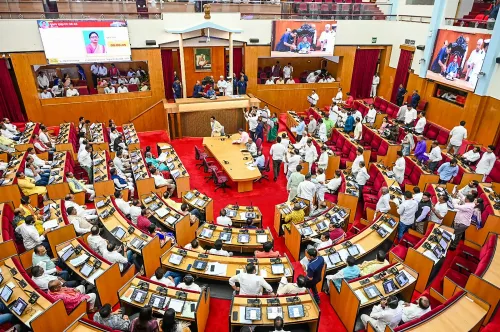
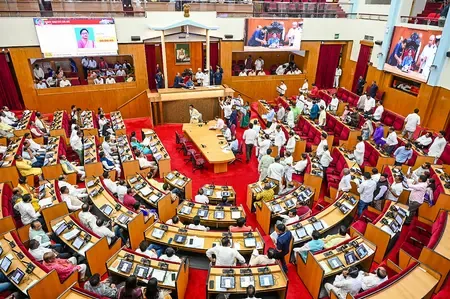
The monsoon session of the Odisha Legislative Assembly was disrupted for the third consecutive day on Thursday, 24 September 2026, as opposition Biju Janata Dal (BJD) and Congress legislators staged coordinated protests inside and outside the House, demanding repeal of the Mines and Minerals (Development and Regulation) Amendment Act — commonly referred to as the MMDR Amendment Act.
How the Disruption Unfolded
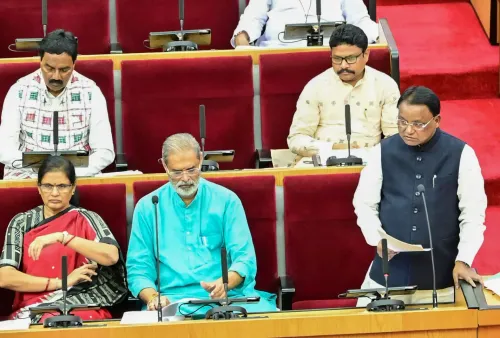
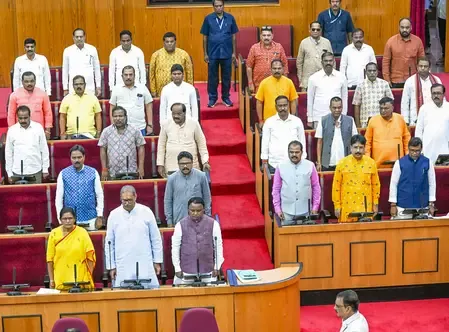
As proceedings opened on the third day of the session, BJD and Congress MLAs gathered near the Speaker's podium carrying posters and banners, raising anti-government slogans against the MMDR Amendment Act. The Deputy Speaker, Bhabani Shankar Bhoi, attempted to steer Question Hour, with ministers Mukesh Mahaling and Suresh Pujari fielding queries amid the chaos. The disruptions, however, proved unrelenting, forcing the Deputy Speaker to adjourn the House until 4 pm.
Notably, the BJD had spent the previous two days demanding the resignation of School and Mass Education Minister Nityananda Gond over printing errors in state school textbooks — a separate grievance. Their pivot to the MMDR Act on day three signals a broadening of the opposition's assault on the ruling dispensation.
Protests Spill Outside the Assembly
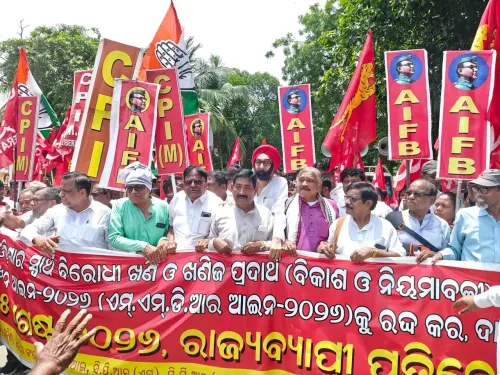
Once outside, the two opposition parties pursued parallel tracks. Congress MLAs staged a demonstration beneath the Mahatma Gandhi statue within the Assembly complex. BJD legislators, meanwhile, marched to the Odisha Mining Corporation (OMC) office and staged a gherao, calling the MMDR Amendment Act, 2026 'against the interests of the state.'
Senior BJD leader and party MLA Arun Sahu declared the OMC gherao the beginning of an 'economic blockade' against the legislation. He said the party had issued an ultimatum to both the state government and the Centre to withdraw the amendment, warning of a statewide economic blockade if the demand was not met. 'This is only the beginning. We will continue our protest and adopt a broader strategy if the government fails to act,' Sahu said.
Financial Stakes: Congress Puts a Number on the Loss
Congress leader Tara Prasad Bahinipati alleged that the enactment of the MMDR Amendment Act had already cost Odisha ₹1.10 lakh crore, with an additional annual loss of ₹10,000 crore every year. He alleged that the BJP-led Union government had 'betrayed' the people of Odisha who had voted for it during the 2024 general elections. These figures were stated by the Congress leader and have not been independently verified.
What the MMDR Row Is About
The MMDR Amendment Act has been a flashpoint between mineral-rich states and the Centre over the distribution of royalties, levies, and administrative control over mining blocks. Odisha, one of India's most mineral-abundant states, has historically been sensitive to any federal legislation that could alter the terms of mineral revenue-sharing. Critics argue that the amendment dilutes state authority and reduces Odisha's share of proceeds from its own natural resources — a charge the Union government has contested.
This is the third session in recent memory in which Odisha's Assembly has seen sustained disruptions over Centre-state disputes on resource governance, underscoring a deepening friction between Bhubaneswar and New Delhi on the subject. The BJD has vowed to escalate its agitation and mobilise public support statewide in the days ahead.
Point of View
Not an organic outburst. The party is positioning itself as the guardian of Odisha's mineral wealth at a moment when it is in opposition and needs an identity-defining issue. The Congress figure of ₹1.10 lakh crore in losses is politically powerful but unverified; its acceptance in public discourse without scrutiny illustrates how resource-revenue arithmetic can be weaponised. The deeper structural question — how the MMDR amendment actually redistributes royalties and who audits those flows — is being obscured by the theatre of disruption.
NationPress
24 Sept 2026
Frequently Asked Questions
Why is the Odisha Assembly being disrupted over the MMDR Amendment Act?
Opposition parties BJD and Congress are demanding repeal of the MMDR Amendment Act, 2026, alleging it reduces Odisha's share of revenue from its mineral resources and adversely affects the state's interests. The disruptions have continued for three consecutive days of the monsoon session.
What is the MMDR Amendment Act and why does it matter for Odisha?
The Mines and Minerals (Development and Regulation) Amendment Act governs royalties, levies, and administrative control over mining blocks in India. Odisha, one of the country's most mineral-rich states, is particularly sensitive to federal changes in mineral revenue-sharing, and critics argue the amendment dilutes state authority over these resources.
What financial loss has Congress attributed to the MMDR Amendment Act?
Congress leader Tara Prasad Bahinipati alleged that the Act has already caused a loss of ₹1.10 lakh crore to Odisha, with an additional recurring annual loss of ₹10,000 crore. These figures were stated by the Congress leader and have not been independently verified.
What action has the BJD threatened if the Act is not repealed?
BJD MLA Arun Sahu announced that the party's gherao of the Odisha Mining Corporation office was only the beginning, and warned of a statewide economic blockade if the state government and the Centre do not withdraw the MMDR Amendment Act.
What other issues has the opposition raised in the Odisha Assembly this session?
Before pivoting to the MMDR Act, BJD legislators had spent the first two days of the monsoon session demanding the resignation of School and Mass Education Minister Nityananda Gond over printing errors found in state school textbooks, indicating a broad-based opposition offensive during this session.