INDIA bloc lists 6 demands: ballot voting, pre-SIR rolls for future polls
Synopsis
The full INDIA bloc has for the first time collectively formalised six demands — including scrapping EVMs for ballot paper and using pre-SIR rolls for future polls — marking a sharp escalation against the Election Commission just ahead of key state elections. The unified front raises the political stakes significantly.
Key Takeaways
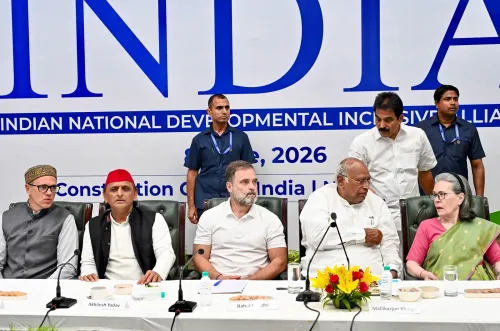
INDIA bloc met in New Delhi on 30 September to plan nationwide protests against the ECI's Special Intensive Revision (SIR) of electoral rolls.
Congress President Mallikarjun Kharge presented six formal demands on behalf of all bloc constituents.
Key demands include using pre-SIR electoral rolls for future elections and replacing EVMs with ballot paper voting .
Other demands cover voter protection from exclusion, appeal mechanisms before deletion, easier youth registration, and ECI institutional accountability.
Rahul Gandhi was cited as having repeatedly presented evidence of 'vote chori' in states including Haryana and Maharashtra , which the bloc says the ECI ignored.
The bloc warned it will not allow the principle of 'one person, one vote, one value' to be weakened.
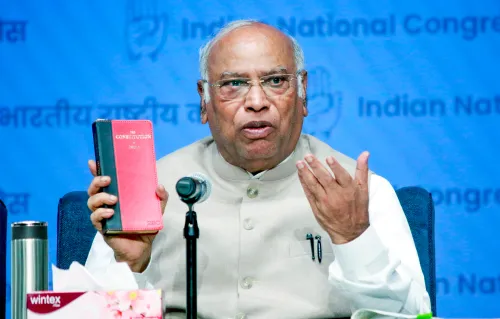
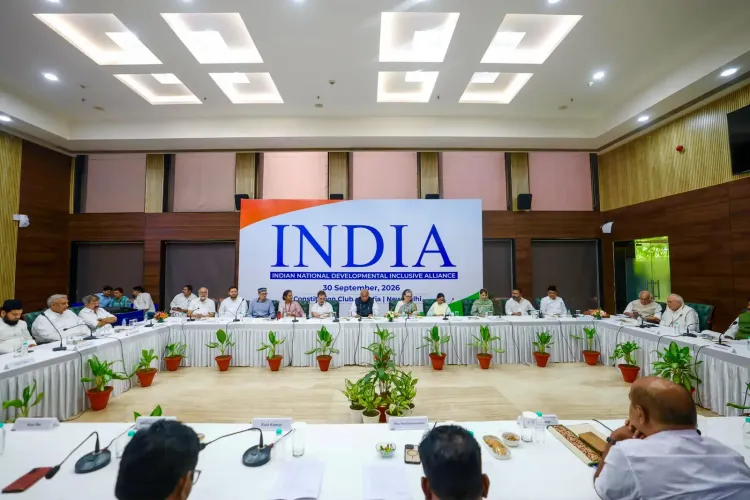
The opposition INDIA bloc convened in New Delhi on Wednesday, 30 September to chart a roadmap for nationwide protests against what it described as the Election Commission of India's (ECI) 'flawed and partisan' approach to electoral roll management. At the heart of the meeting was a call by Congress President Mallikarjun Kharge to roll back the Special Intensive Revision (SIR) of electoral rolls, asserting that the 'ballot belongs to the people of the country.'
Six Demands Placed on the Table
Addressing INDIA bloc members in his opening remarks, Kharge laid out six formal demands, stating that all constituent parties stand united on each issue. The demands collectively target what the bloc characterises as a systematic erosion of electoral integrity.
The first demand calls for the pre-SIR electoral roll to be used for all future elections, alongside complete transparency in every electoral roll revision — including constituency-wise and booth-wise data on additions, deletions, and corrections.
The second demand seeks due reasoning and an effective appeal mechanism before any legitimate voter is removed from the roll. The third calls for protection of eligible voters from exclusion arising from administrative failures, inadequate documentation, or lack of awareness.
The fourth — and arguably the most politically charged — demand is a return to ballot paper voting in place of Electronic Voting Machines (EVMs), which the bloc argues would 'ensure the purity and sanctity of the electorate's choice.' The fifth demand focuses on simple and accessible voter registration for young citizens, particularly first-time voters. The sixth calls for maintaining institutional accountability and restoring public confidence in the Election Commission across the political spectrum.
Kharge on Democratic Principles
'India's democratic system was built on the principle of one person, one vote, one value — and that principle is facing a serious threat,' Kharge said. He argued that the ECI had failed to respond adequately to opposition complaints, noting that Congress leader Rahul Gandhi had 'repeatedly shown proof of vote chori in multiple states from Haryana to Maharashtra,' but the Commission had allegedly tried to 'gloss over it.'
'Instead of acknowledging our complaints, the Commission looked the other way. In a democracy, institutions must earn public trust through transparency,' Kharge stated.
Bloc's Unified Stand Against SIR
Echoing a shared concern over alleged irregularities in the ECI's SIR exercise, INDIA bloc allies collectively declared: 'We will not allow transparency to be replaced by secrecy. And we will not allow the fundamental principle of our Republic — one person, one vote, one value — to be weakened.'
This comes amid a broader political battle over the credibility of the ECI's voter roll revision process, which opposition parties argue has led to the deletion of legitimate voter names in several states. Critics argue that the SIR, as conducted, lacked adequate safeguards and public oversight.
Context and What Comes Next
The demand to return to ballot paper voting is not new — opposition parties have periodically raised EVM concerns since at least 2017 — but Wednesday's meeting marks the first time the full INDIA bloc has collectively formalised it as a unified demand alongside electoral roll transparency. The bloc's push for nationwide protests signals an escalation ahead of upcoming state assembly elections.
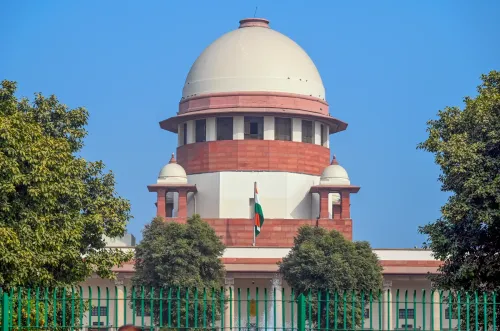
Whether the ECI responds to any of the six demands formally remains to be seen; the Commission has previously defended the SIR process as a routine, legally mandated exercise. All eyes will now be on how the bloc mobilises public pressure and whether it approaches the Supreme Court for judicial intervention.
Point of View
And the Election Commission has consistently defended both its machines and its roll revision process through legal and technical channels. What is new here is the collective formalisation — every major opposition party signing on to ballot paper voting as a shared demand raises the political cost of dismissal. The more substantive and potentially actionable demand, however, is the one on pre-SIR rolls and booth-wise transparency: that is a specific, verifiable ask that courts could engage with. If the bloc pursues judicial routes alongside street protests, the ECI's procedural defences will face a harder test than they have so far.
NationPress
30 Sept 2026
Frequently Asked Questions
What are the six demands made by the INDIA bloc against the Election Commission?
The INDIA bloc's six demands are: using pre-SIR electoral rolls for future elections with full transparency in revisions; an effective appeal mechanism before voter deletion; protection of eligible voters from exclusion; replacing EVMs with ballot paper voting; simpler voter registration for young and first-time voters; and restoring institutional accountability in the Election Commission.
Why is the INDIA bloc demanding a return to ballot paper voting instead of EVMs?
The bloc argues that EVMs lack sufficient transparency and that ballot paper voting would 'ensure the purity and sanctity of the electorate's choice.' Opposition parties have raised EVM credibility concerns across multiple state elections, though the Election Commission has consistently defended the machines as tamper-proof.
What is the Special Intensive Revision (SIR) of electoral rolls and why is it controversial?
The Special Intensive Revision (SIR) is a legally mandated exercise by the Election Commission of India to update voter rolls by adding new voters and removing ineligible ones. The INDIA bloc contends the recent SIR exercise was conducted without adequate safeguards, leading to the deletion of legitimate voter names — a charge the ECI has denied.
What did Congress President Mallikarjun Kharge say about Rahul Gandhi and 'vote chori'?
Kharge stated that Rahul Gandhi had repeatedly presented evidence of 'vote chori' — or vote theft — in multiple states including Haryana and Maharashtra, but alleged that the Election Commission 'tried to gloss over it' rather than address the complaints.
What happens next after the INDIA bloc meeting on 30 September?
The bloc is planning nationwide protests against the ECI's approach to electoral roll revision. Whether it also approaches the Supreme Court for judicial intervention remains to be confirmed. The ECI has not yet formally responded to the six demands tabled at the meeting.