India Leads BRICS Health Meeting, Emphasizes Mental Health and Lifestyles
Synopsis
In a landmark meeting on April 15, India spearheaded the first BRICS Health Working Group under its 2026 chairmanship. The focus was on critical health priorities, such as promoting mental wellness and healthy lifestyles, showcasing a commitment to global health cooperation.
Key Takeaways
India chairs the BRICS Health Working Group for 2026.
New initiatives focus on mental wellness and healthy lifestyles.
Collaboration emphasizes tackling communicable and non-communicable diseases.
Member countries support integrating traditional and complementary medicine.
Strengthening pandemic preparedness is a shared goal among BRICS nations.
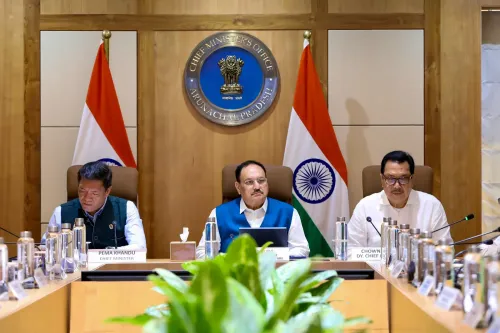
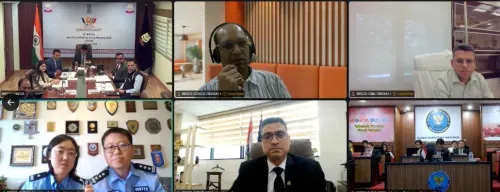
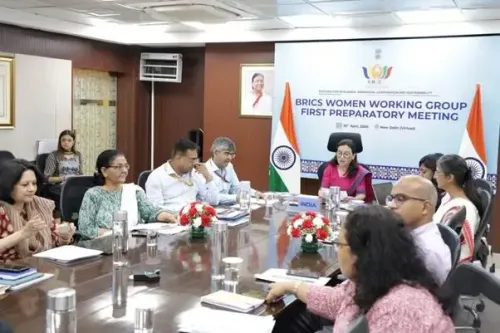
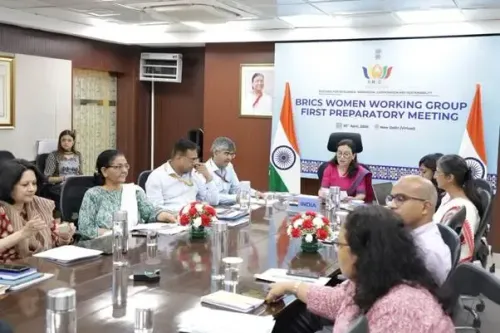
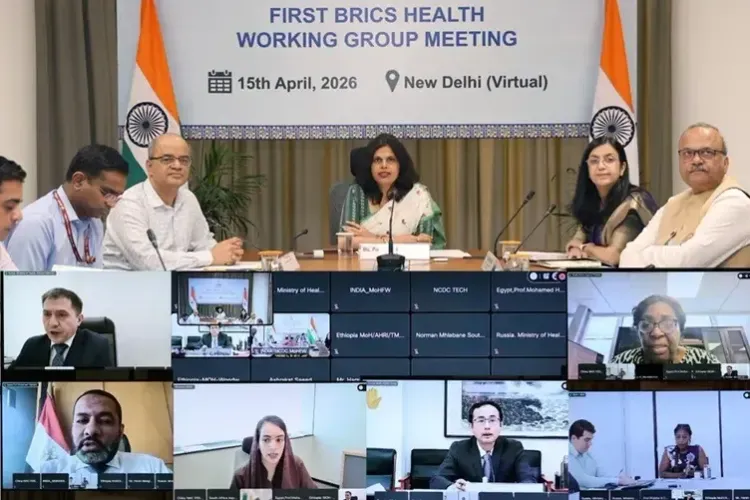
New Delhi, April 15 (NationPress) - The Ministry of Health and Family Welfare convened the inaugural Health Working Group (HWG) meeting within the BRICS framework for 2026 on Wednesday, uniting senior health officials and representatives from nine member countries. This meeting aims to strengthen collaboration on critical public health issues, including tuberculosis research, digital health frameworks, and mental wellness.
This virtual session, led by Union Health Secretary Punya Salila Srivastava, included participation from Brazil, Russia, China, South Africa, Egypt, Ethiopia, the United Arab Emirates, and Indonesia, showcasing the expanded BRICS membership that now encompasses four continents.
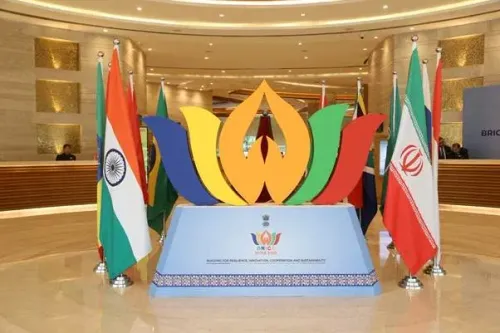
As the BRICS Chair for 2026, India has centered its presidency on the theme 'Building for Resilience, Innovation, Cooperation, and Sustainability', a vision grounded in the people-centric philosophy outlined by Prime Minister Narendra Modi during the 2025 Rio Summit.
This theme lays the foundation for India's health diplomacy priorities throughout the year, stressing inclusive, evidence-based, and scalable health cooperation tailored to various national contexts.
Health Secretary Srivastava highlighted that recent BRICS HWG meetings have facilitated partnerships on urgent health challenges, including both communicable and non-communicable diseases, the fortification of health systems, and enhancing access to affordable medicines.
Furthermore, she introduced two new priority initiatives under India’s leadership.
The first initiative is a BRICS Mission for Healthy Lifestyles, which aims to encourage healthy behaviors while addressing primary risk factors such as poor diets, lack of physical activity, tobacco consumption, and excessive alcohol intake.
The second initiative focuses on the Promotion of Mental Health and Wellness, with an emphasis on enhancing mental health services, reducing stigma, and integrating mental health into the overall public health strategy.
Both initiatives received widespread endorsement from member representatives.
Brazil, China, Egypt, Ethiopia, and Indonesia expressed strong support for these new priorities, alongside backing for the incorporation of traditional, complementary, and integrative medicine within national health systems.
The meeting discussed nine focal areas under the BRICS Health Working Group for 2026, including the BRICS TB Research Network, cooperation among BRICS medical product regulators, a BRICS Integrated Early Warning System for mass infectious diseases, a digital health framework for continuous care, the healthy lifestyles mission, mental health promotion, traditional medicine, health issues influenced by social determinants, and a BRICS Network of National Public Health Institutes.
The government noted that the agenda spans from rigorous scientific inquiries and regulatory harmonization to addressing social determinants of health and enhancing digital infrastructure.
Throughout their statements, member nations underscored shared objectives such as universal health coverage, equitable access to health technologies, local production of medicines and vaccines, and the fortification of pandemic preparedness infrastructure.
Deepening collaboration on tuberculosis via the BRICS TB Research Network and enhancing the integrated early warning system for infectious diseases emerged as immediate priorities that necessitate tangible outcomes.
Point of View
India's emphasis on lifestyle-related health initiatives and mental wellness reflects a forward-thinking approach to public health. The collaborative discussions among member nations signify a growing commitment to address pressing health issues collectively, ensuring a comprehensive strategy for global health improvement.
NationPress
21 Sept 2026
Frequently Asked Questions
What is the main focus of the BRICS Health Working Group for 2026?
The primary focus includes promoting healthy lifestyles and mental health, alongside addressing key health challenges like tuberculosis and enhancing digital health infrastructure.
Which countries participated in the virtual meeting?
Countries involved include Brazil, Russia, China, South Africa, Egypt, Ethiopia, the United Arab Emirates, and Indonesia.
What are the two new initiatives proposed by India?
India proposed a BRICS Mission for Healthy Lifestyles and a focus on the Promotion of Mental Health and Wellness.
How does the meeting aim to impact global health?
The meeting aims to strengthen cooperation on public health priorities and enhance access to medicines and healthcare services across member nations.
What role does digital health play in the discussions?
Digital health is a key focus, aiming to improve healthcare access, especially in remote areas, through innovative health architecture.