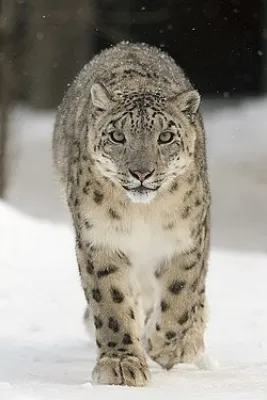
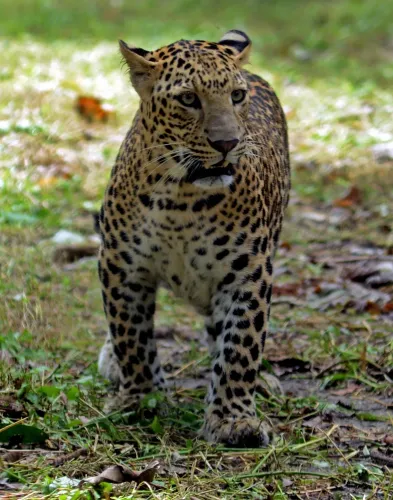
Snow leopard conservation: India counts 718 'Ghosts of the Mountains'
Synopsis
India has officially counted 718 snow leopards — the elusive 'Ghost of the Mountains' — with Ladakh alone sheltering 477. On International Snow Leopard Day, the government and the Indian Army are doubling down on a community-integrated conservation model, even as poaching, prey decline, retaliatory killings, and climate change continue to squeeze one of the world's rarest big cats.
Key Takeaways
India's SPAI Report 2024 estimates 718 snow leopards in the country, with Ladakh hosting the highest share of approximately 477 .
Global snow leopard population is estimated at just 3,500–7,000 individuals , placing the species among the world's most endangered cats.
Key threats include poaching, depletion of prey species, retaliatory killings by communities, hydroelectric projects, mining, and climate change.
The Indian Army's Fire and Fury Corps signed an MoU with Ladakh's forest department on World Wildlife Day 2026 , establishing a Joint Snow Leopard Conservation Cell .
The MoEFCC emphasises community involvement as central to India's conservation strategy, in line with commitments under the GSLEP .
Female snow leopards give birth to only one or two cubs every two years , making population recovery exceptionally slow after any ecological disruption.
On the occasion of International Snow Leopard Day, conservationists across India have renewed calls for intensified monitoring and community-based protection of the snow leopard — a species so elusive it has earned the name 'Ghost of the Mountains'. The Snow Leopard Population Assessment in India (SPAI) Report 2024 estimates 718 snow leopards remain in the country, with Ladakh hosting the largest share at approximately 477 individuals.
Where Snow Leopards Live in India
Snow leopards in India are largely confined to the high-altitude, cold, arid, and rugged terrain spanning Jammu and Kashmir, Himachal Pradesh, Uttarakhand, Sikkim, and Arunachal Pradesh. Despite this wide distributional range, the species remains critically vulnerable — the global population is estimated at between 3,500 and 7,000 individuals, according to the Snow Leopard Conservancy – India Trust (SLC-IT), which works for the conservation of snow leopards and associated wildlife in Ladakh and Spiti.
Threats Driving the Decline
The SLC-IT has identified a layered set of threats facing the species. Poaching for pelts and body parts remains a persistent menace. At the same time, the prey base — primarily Blue Sheep and Asiatic Ibex — is shrinking due to competition from domestic livestock that deplete high-altitude pastures. Retaliatory killings by local communities, whose livestock are sometimes taken in numbers of 50 at a time, represent another serious pressure. More recently, hydroelectric projects, mining activity, and climate change have emerged as compounding threats.
The species' own biology makes recovery painfully slow. A female snow leopard typically gives birth to just one or two cubs once every two years, meaning that any ecological disruption takes generations to overcome in population terms. As the SLC-IT notes, the snow leopard is considered an 'umbrella' or 'keystone' species — its survival as the apex predator is essential to maintaining the balance of the entire high-altitude ecosystem.
Government and Military Step Up Conservation Efforts
The Ministry of Environment, Forest and Climate Change (MoEFCC) reaffirmed on Friday that India's conservation approach is designed to integrate community involvement alongside ecosystem protection. 'Snow leopards share their high-altitude habitat with local communities. India's conservation efforts include community involvement and support for livelihoods alongside protection of snow leopard ecosystems,' the ministry said.
Notably, the Indian Army — which maintains bases in close proximity to snow leopard habitats — has taken an active role in conservation. On World Wildlife Day this year, the Fire and Fury Corps signed a Memorandum of Understanding (MoU) with the Forest, Ecology and Environment Department of the Union Territory of Ladakh. The agreement established a Joint Snow Leopard Conservation Cell to monitor wildlife movements, gather field observations from remote border areas, and tackle threats such as free-ranging feral dogs. Beyond snow leopards, the partnership covers the Himalayan Wolf, Bharal (Blue Sheep), Ibex, Marmot, and the Black-necked Crane.
India's International Commitments
India's conservation drive aligns with its obligations under the Global Snow Leopard and Ecosystem Protection Program (GSLEP), a multi-country framework that coordinates range-state efforts across the 12 countries where snow leopards are found. The MoEFCC's renewed call on International Snow Leopard Day signals that, despite progress in population assessment, significant gaps in monitoring and habitat protection remain to be addressed. With climate change projected to shrink high-altitude ecosystems further, the pace of intervention will be critical in determining whether India's 718 snow leopards hold steady — or continue to decline.
Point of View
But a single census figure can mask the real story: habitat fragmentation and climate-driven shrinkage of high-altitude pastures are structural threats no headcount resolves. The Army-forest department MoU is a genuinely novel partnership — deploying border-area intelligence assets for wildlife monitoring is a model few countries have attempted. The harder question is whether community livelihoods are being supported robustly enough to make retaliatory killings economically irrational; past schemes have often been under-funded relative to the scale of livestock loss. India's GSLEP commitments need matching domestic budgets, not just institutional MoUs.
NationPress
24 Oct 2026
Frequently Asked Questions
How many snow leopards are there in India?
According to the Snow Leopard Population Assessment in India (SPAI) Report 2024, there are an estimated 718 snow leopards in India. Ladakh has the highest concentration, with approximately 477 individuals.
Why is the snow leopard called the 'Ghost of the Mountains'?
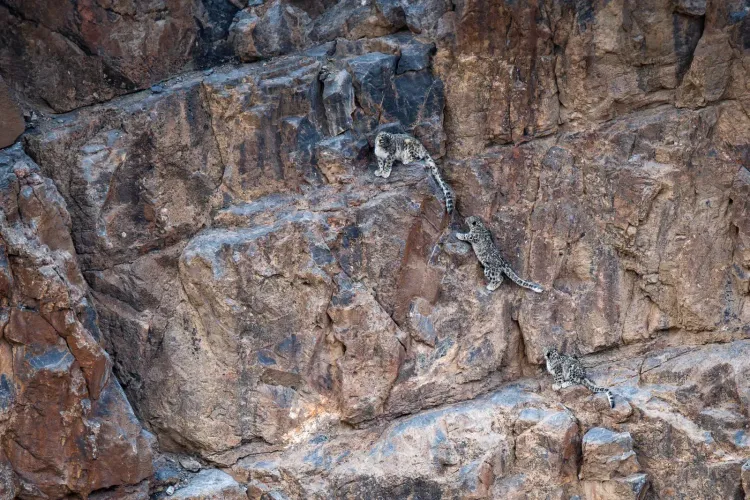
The snow leopard is nicknamed the 'Ghost of the Mountains' because of its extraordinarily elusive nature — it inhabits remote, high-altitude terrain and is rarely seen despite its presence across a wide range. Its pale, spotted coat provides near-perfect camouflage against rocky, snow-covered landscapes.
What are the biggest threats to snow leopards in India?
The Snow Leopard Conservancy – India Trust (SLC-IT) identifies poaching for pelts and body parts, decline of prey species such as Blue Sheep and Asiatic Ibex due to livestock competition, and retaliatory killings by communities whose livestock are attacked as the primary threats. Hydroelectric projects, mining, and climate change are more recent and growing pressures.
What role is the Indian Army playing in snow leopard conservation?
The Indian Army's Fire and Fury Corps signed an MoU with Ladakh's Forest, Ecology and Environment Department on World Wildlife Day 2026, establishing a Joint Snow Leopard Conservation Cell. The cell monitors wildlife movements, collects field data from remote border areas, and works to control threats like feral dogs.
What is the Global Snow Leopard and Ecosystem Protection Program (GSLEP)?
The GSLEP is an international conservation framework involving the 12 countries where snow leopards are found, coordinating range-state efforts to protect the species and its high-altitude ecosystems. India's conservation measures, including community involvement and Army-civil partnerships, are aligned with its GSLEP commitments.