Piyush Goyal's Egypt visit: India-Egypt CEPA talks begin, $12 billion trade target set
Synopsis
India and Egypt have launched formal CEPA negotiations after a ministerial-level upgrade of their Joint Trade Committee — a first. With bilateral trade already up 64% year-on-year at $5.04 billion in just six months and a $12 billion target now on the table, Goyal's Africa-first visit signals that India is treating Egypt not just as a trade partner, but as a strategic gateway to the continent.
Key Takeaways
Commerce Minister Piyush Goyal concluded his visit to Egypt on 17 November 2026 — his first bilateral visit to an African country.
Both sides agreed to form a Working Group to discuss modalities for a CEPA covering goods, services, and investment.
Bilateral merchandise trade stood at $5.04 billion in April–September 2026 , up 64% year-on-year.
A bilateral trade target of $12 billion has been jointly agreed upon.
Approximately 70 Indian companies operate in Egypt with investments of around $5 billion ; Egypt welcomed more Indian investment in the Suez Canal Economic Zone .
Both sides discussed linking India's UPI with Egypt's Instapay and leveraging India's Digital Public Infrastructure for Egypt's digital transformation.
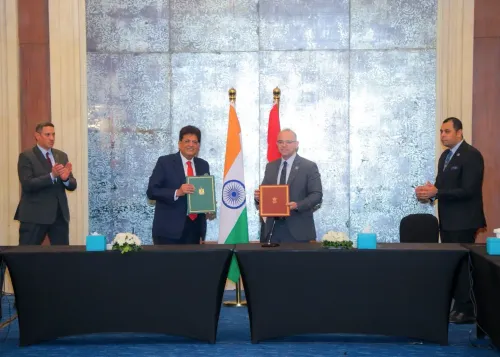
Commerce and Industry Minister Piyush Goyal concluded his official visit to Egypt on Tuesday, 17 November 2026, with both sides agreeing to constitute a Working Group to discuss the framework for a Comprehensive Economic Partnership Agreement (CEPA) covering trade in goods, services, and investment. The joint decision, confirmed in an official statement, marks a significant step in deepening the India–Egypt economic partnership and sets a bilateral trade target of $12 billion.
A Historic First for India-Africa Bilateral Diplomacy
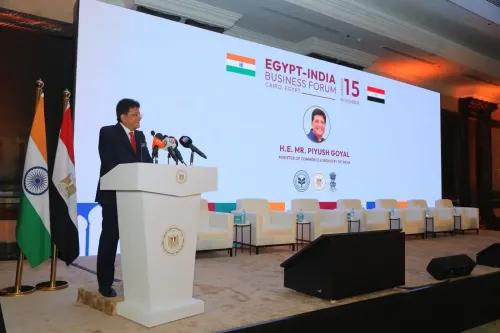
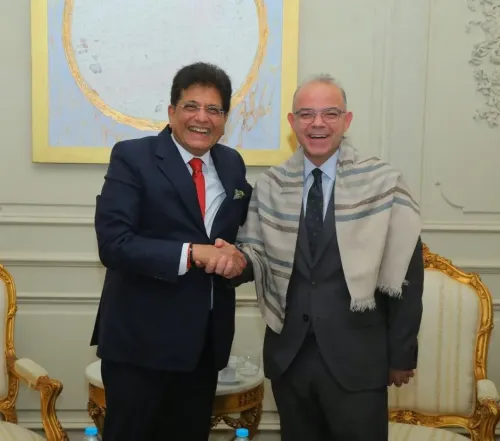
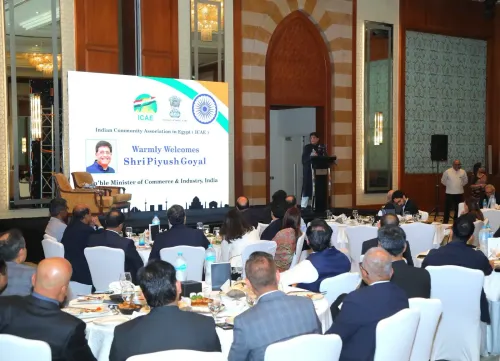
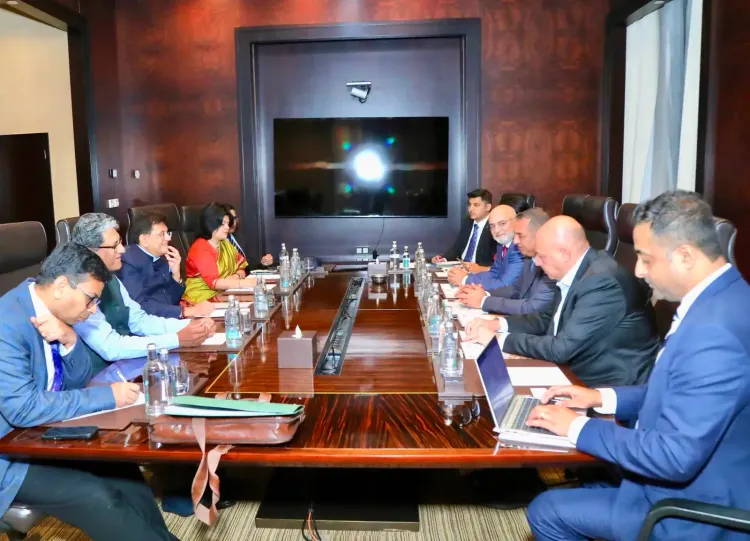
The visit was notable as Goyal's first bilateral visit to an African country, signalling a deliberate push to strengthen India's commercial footprint on the continent. During the trip, he called on Egyptian Prime Minister Dr. Mostafa Madbouly, held bilateral meetings with Egyptian ministers, and engaged extensively with business representatives from both countries.
Significantly, the 7th Session of the India–Egypt Joint Trade Committee (JTC) was elevated to the Ministerial level for the first time, reflecting the growing strategic weight of the bilateral economic relationship. This upgrade is widely seen as a marker of intent from both governments to accelerate trade and investment ties.
Trade Numbers and the $12 Billion Target
Bilateral merchandise trade during April–September 2026 stood at $5.04 billion, registering a sharp growth of 64 per cent over the corresponding period of the previous year. India's exports to Egypt during FY 2025–26 stood at $3.87 billion, while imports from Egypt amounted to $2.60 billion.
Both sides agreed to work towards achieving a target of $12 billion in bilateral trade, emphasising the need to diversify the trade basket, promote higher value-added exports, strengthen market access, and address trade-related challenges. This comes amid India's broader push to reduce dependence on traditional Western markets and diversify its export geography.
Key Sectors and Investment Opportunities
Discussions spanned a broad range of sectors including pharmaceuticals, engineering goods, chemicals and petrochemicals, fertilisers, textiles, renewable energy, green hydrogen, food security, agricultural cooperation, and transport and logistics. Both sides also underscored the importance of regular exchanges of business delegations, buyer missions, and trade exhibitions.
Approximately 70 Indian companies are currently operating in Egypt, with cumulative investments of around $5 billion. The Egyptian side specifically welcomed greater Indian participation in the Suez Canal Economic Zone (SCZONE), as well as in automotive and auto components, food processing, and logistics sectors.
Digital Connectivity and Fintech Linkages
In a forward-looking development, both sides acknowledged the potential of linking India's Unified Payments Interface (UPI) with Egypt's Instapay system. They also discussed leveraging India's Digital Public Infrastructure (DPI) to accelerate Egypt's digital transformation and recognised the role of trade in local currencies in enhancing bilateral exports. Notably, UPI's international expansion has been a consistent theme of India's recent bilateral engagements across the Global South.
What Comes Next
Minister Goyal extended invitations to Egyptian leaders and the business community to participate in the Vibrant Gujarat Summit 2027, to be held in Gandhinagar, Gujarat, and Bharat Mobility 2027, scheduled from 4–9 February 2027 in New Delhi. The constitution of the Working Group on CEPA modalities is expected to be formalised in the weeks ahead, with both governments having committed to evaluating mutual gains before finalising the Terms of Reference.
Point of View
Using Egypt as both a market and a logistics corridor via the Suez Canal Economic Zone. A 64% year-on-year jump in six-month trade figures is striking, though analysts will want to know how much of that growth is driven by one-off commodity flows versus durable export diversification. The UPI-Instapay linkage proposal is the genuinely novel element here: if operationalised, it could become a template for India's digital financial diplomacy across Africa and the Middle East. The real test will be whether the CEPA Working Group moves faster than India's historically slow FTA negotiations — several of which have stalled for years.
NationPress
17 Nov 2026
Frequently Asked Questions
What did India and Egypt agree on during Piyush Goyal's visit?
India and Egypt agreed to constitute a Working Group to discuss the framework and modalities for a Comprehensive Economic Partnership Agreement (CEPA) covering trade in goods, services, and investment. Both sides also set a bilateral trade target of $12 billion and elevated their Joint Trade Committee to the ministerial level.
What is the current state of India-Egypt bilateral trade?
Bilateral merchandise trade between India and Egypt stood at $5.04 billion during April–September 2026, registering growth of 64% over the same period the previous year. India's exports to Egypt in FY 2025–26 were $3.87 billion, while imports from Egypt amounted to $2.60 billion.
What is a CEPA and why does it matter for India and Egypt?
A Comprehensive Economic Partnership Agreement (CEPA) is a broad trade deal covering goods, services, and investment flows between two countries. For India and Egypt, it would provide a structured framework to boost trade beyond the current $12 billion target, reduce tariff and non-tariff barriers, and attract greater investment in sectors such as pharmaceuticals, renewables, and logistics.
How significant is Indian investment in Egypt?
Approximately 70 Indian companies are currently operating in Egypt, with cumulative investments of around $5 billion. Egypt has invited greater Indian participation in the Suez Canal Economic Zone (SCZONE) and in sectors including automotive, pharmaceuticals, food processing, and renewable energy.
What was proposed regarding India's UPI and Egypt's Instapay?
Both sides acknowledged the potential of linking India's Unified Payments Interface (UPI) with Egypt's Instapay digital payment system. They also discussed leveraging India's Digital Public Infrastructure (DPI) to support Egypt's digital transformation and the role of trade in local currencies in expanding bilateral exports.