India-EU space cooperation deepens as EOS-05 boosts India's strategic edge
Synopsis
India's EOS-05 is more than a new satellite — it is a sovereignty statement. Combined with an India-EU cooperation framework now extended to 2032 and covering space weather, disaster response, and security, the two sides are quietly building one of the most consequential non-US space partnerships in the world.
Key Takeaways
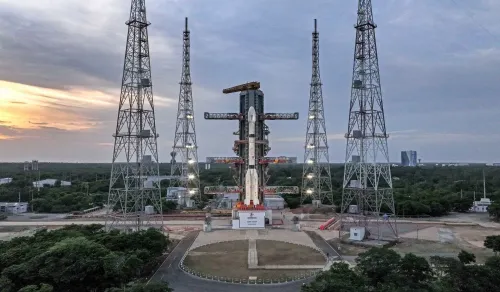
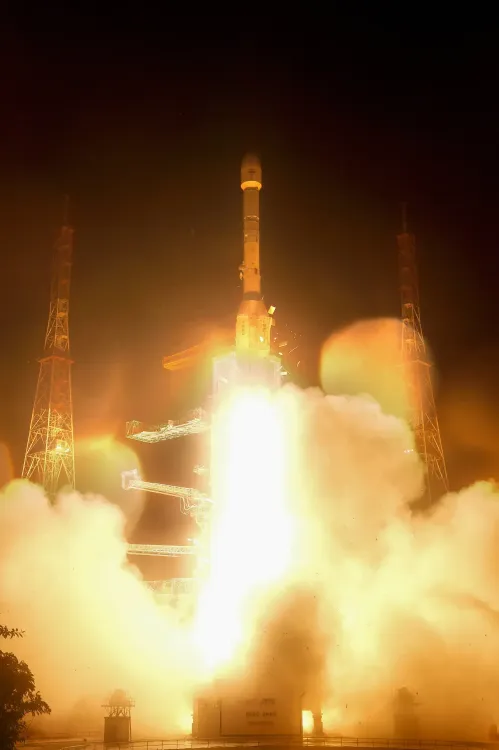
EOS-05 , India's first geostationary imaging satellite, orbits at approximately 36,000 km and offers persistent wide-area observation over South Asia and the Indian Ocean.
An exchange of letters signed in Paris on 10 September extended the ISRO-ESA cooperation framework to 8 January 2032 , adding space weather and orbital sustainability.
India launched the European Proba-3 solar mission on a PSLV-XL rocket in December 2024 , marking a milestone in operational collaboration.
Since 2018 , India and the European Commission have shared data between Copernicus and Indian civilian satellites, excluding commercial high-resolution imagery.
Key near-term priorities include disaster management , space surveillance , and orbital security as satellite numbers rise globally.
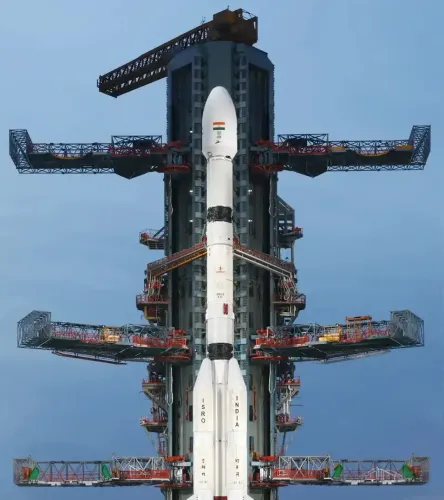
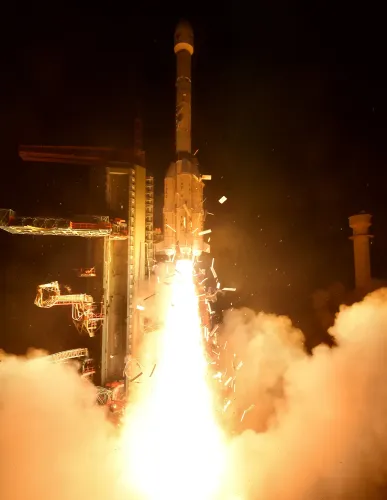
India's launch of EOS-05, its first geostationary Earth-observation satellite, has meaningfully expanded the country's space capabilities and set the stage for closer collaboration with the European Union, according to an analysis published in Brussels Signal authored by Javier Villamor. The satellite, positioned at an altitude of roughly 36,000 kilometres, can monitor a far wider region and revisit the same area far more frequently than low-orbit alternatives — a critical edge for tracking cyclones, floods, fires, agricultural conditions, and coastal activity over South Asia and the Indian Ocean.
What EOS-05 Changes for India
The satellite represents a step toward what analysts describe as technological sovereignty. 'For India, having its own satellites, domestic launch systems, and the ability to schedule its own observations means relying less on foreign providers to understand what is happening over its territory, along its borders and across the Indian Ocean. It is a question of technological sovereignty,' Villamor wrote in Brussels Signal.
India is pursuing a concentrated model — ensuring that critical capabilities in Earth observation, navigation, launch, crewed missions, and a future space station are available domestically. This self-reliance doctrine distinguishes New Delhi's approach from Europe's more distributed architecture.
Europe's Broader Space Architecture
Europe's Copernicus programme brings together multiple Sentinel satellites to cover land, oceans, and the atmosphere through radar, optical imaging, meteorology, and atmospheric measurements. The result is a multinational ecosystem that complements rather than duplicates what India is building. According to Villamor's analysis, competition between the two need not be zero-sum: 'Competition between the two can be beneficial precisely because neither needs to copy the other.'
Europe, for its part, seeks to preserve its own industrial autonomy and reduce dependence on third countries for strategic space assets — a goal that aligns with India's own sovereignty-first posture, even if the institutional paths differ.
How Cooperation Has Grown
The European Space Agency (ESA) and ISRO have expanded cooperation across human and robotic exploration, astronaut training, space operations, and interoperability. In December 2024, India launched the European Proba-3 solar observation mission aboard a PSLV-XL rocket — a concrete demonstration of operational trust between the two sides.
An exchange of letters signed in Paris on 10 September extended their cooperation framework to 8 January 2032, adding space weather monitoring and the sustainability of outer space activities to the agenda. Since 2018, the European Commission and India's Department of Space have maintained a data-sharing agreement between Copernicus and selected Indian civilian satellites — with New Delhi gaining access to Sentinel data and Europe drawing on Indian mission data, though commercial high-resolution imagery remains excluded from the arrangement.
Disaster Management and Security: The Near-Term Priorities
The most immediate area where deeper ties could yield dividends is disaster management. EOS-05's persistent observation over South Asia and the Indian Ocean, when combined with Europe's radar, emergency mapping, multispectral data, and processing capabilities, could significantly shorten response times during rapidly evolving events such as cyclones or floods.
Beyond disaster response, the two sides have also put space surveillance, communications, and security on their bilateral agenda. Modern economies are increasingly dependent on satellites for navigation, telecommunications, meteorology, logistics, and defence, and as orbital congestion grows, so does the imperative for coordinated debris tracking and collision avoidance. This is the framework within which India and the EU are now deepening their engagement.
What Comes Next
With the cooperation framework extended to 2032 and both sides investing heavily in their own space infrastructure, the India-EU relationship is moving from occasional mission partnerships toward a more structured strategic alignment. Whether that translates into joint missions, interoperable ground systems, or shared early-warning protocols for space weather events will depend on how quickly both sides operationalise the commitments signed in Paris.
Point of View
And those limits will be tested as dual-use pressures grow. Europe brings depth and redundancy; India brings low-cost launch cadence and growing Earth-observation capacity. The real question is whether the 2032 framework produces interoperable systems or remains a collection of bilateral courtesies. Given how quickly China is expanding its own space architecture, both sides have strong incentive to move faster than they historically have.
NationPress
25 Sept 2026
Frequently Asked Questions
What is EOS-05 and why does it matter?
EOS-05 is India's first geostationary Earth-observation satellite, operating at an altitude of approximately 36,000 kilometres. Its geostationary position allows it to persistently monitor a large region — including South Asia and the Indian Ocean — making it valuable for tracking cyclones, floods, fires, agriculture, and coastal activity. It advances India's goal of technological sovereignty in space.
What did India and the EU agree to in Paris in September?
An exchange of letters signed in Paris on 10 September extended the ISRO-ESA cooperation framework to 8 January 2032. The updated framework adds space weather monitoring and the sustainability of outer space activities to an already broad agenda covering Earth observation, human and robotic exploration, astronaut training, and space operations.
How does India's space approach differ from Europe's?
India is pursuing a concentrated model focused on developing as many critical capabilities — launchers, Earth observation, navigation, crewed missions — domestically as possible. Europe's model, anchored by the Copernicus programme, is broader and more distributed, combining radar, optical, meteorological, and atmospheric data across multiple Sentinel satellites and partner nations.
What is the Copernicus-India data-sharing arrangement?
Since 2018, the European Commission and India's Department of Space have exchanged data between the Copernicus programme and selected Indian civilian satellites. India gains access to Sentinel data, while European users can draw on data from Indian missions. Commercial high-resolution imagery is excluded from the arrangement.
Why is disaster management a priority for India-EU space cooperation?
EOS-05's persistent geostationary coverage over South Asia and the Indian Ocean complements Europe's radar, emergency mapping, and multispectral processing capabilities. During fast-moving events such as cyclones or floods, combining both sets of assets can shorten emergency response times — making disaster management one of the most practical and immediate areas for deeper collaboration.