Is the India-EU Trade Deal a Win-Win Agreement?
Synopsis
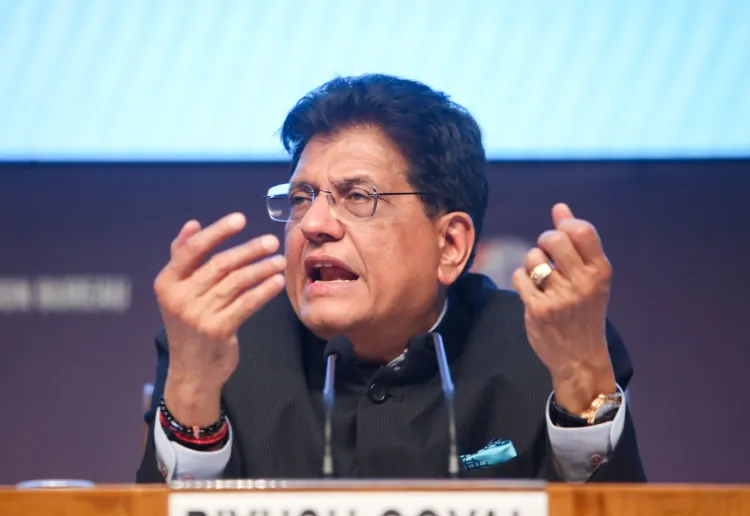
Commerce Minister Piyush Goyal defends the India-EU trade deal as a mutually beneficial agreement, countering Congress's criticism. He emphasizes its potential to drive economic growth and create opportunities. This deal, dubbed the 'mother of all deals', links two major economies amidst global trade tensions, promising substantial benefits for India.
Key Takeaways
India-EU trade deal is a mutually beneficial agreement.
Expected to accelerate economic growth in India.
Opens large opportunities for businesses and citizens .
Concerns raised by Congress regarding safety standards.
Strategic partnership built on mutual trust .
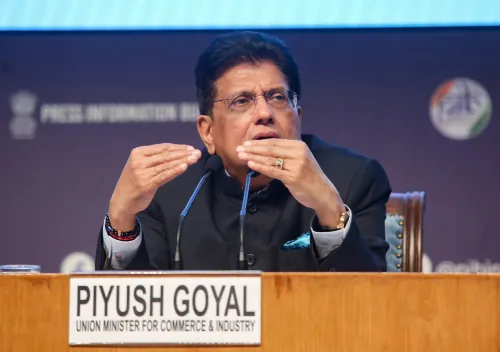
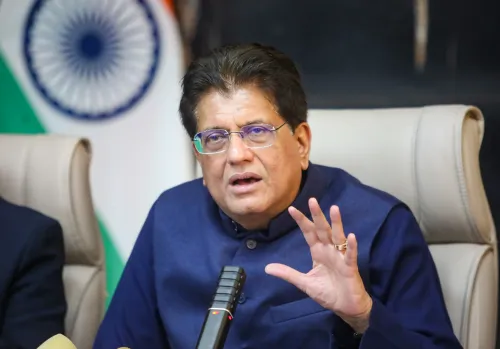
New Delhi, Jan 29 (NationPress) - Commerce and Industry Minister Piyush Goyal has firmly rebutted the criticism from the Congress party concerning the India-European Union free trade agreement, emphasizing that the deal is not a zero-sum arrangement but rather a mutually advantageous one that will propel India’s economic growth and create vast opportunities for its businesses and citizens.
The Congress party had previously raised concerns after the finalization of the India-EU free trade agreement, questioning the Modi government’s negotiation strategies.
They highlighted worries about the lack of exemptions for Indian aluminium and steel manufacturers from the EU’s Carbon Border Adjustment Mechanism and criticized the reduction or relief of tariffs on over 96 percent of the bloc’s exports to India.
Congress General Secretary Jairam Ramesh pointed out that the agreement also presents challenges related to the EU’s strict health and product safety standards, which will still apply to Indian exports even after the free trade deal is enacted.
He further raised issues regarding India’s largest export sector to the EU, which is refined fuels.
In response to Ramesh’s comments, Goyal took to social media to express his surprise that those who failed to make timely decisions during their tenure are now trying to justify their inaction. He noted that such leaders seem disconnected from the realities faced by the nation.
The Union Minister stated that the country has suffered significant losses due to missed opportunities in the past, resulting in job losses, decreased income, and stunted growth. He added that the Indian populace has consistently shown their disapproval of such indecision.
In a post on X, Goyal remarked, “I hope my friend will abandon this negative and pessimistic outlook, which overlooks our ambitious citizens eager to engage in global business. Let’s strive to create opportunities for them instead of being obstacles in their path to prosperity.”
In his comprehensive response, Goyal expressed his confusion regarding how while the global community refers to the agreement as the “mother of all deals,” his “friend” Ramesh has dismissed it as “hugely hyped.”
“Is the combined GDP of $25 trillion, global trade worth $11 trillion, and a shared market of 2 billion people, alongside $33 billion of India’s labour-intensive exports, merely hype? It’s unfortunate that my friend overlooked a fundamental truth: we are predominantly complementary economies,” he added.
Goyal reiterated that the agreement does not compromise India’s interests. “This is not a zero-sum deal. It is a win-win agreement that will expedite our economic growth and generate numerous opportunities for Indian businesses and citizens,” he stated.
Addressing the concerns regarding the Carbon Border Adjustment Mechanism, the minister pointed out that India has proactively addressed the issue to safeguard the interests of domestic exporters in the steel, aluminium, and other sectors, identifying feasible solutions.
“We have discovered innovative methods to navigate these complex and sensitive matters through dialogue, trust, and collaboration with our partners rather than adopting a rigid, 'my way or the highway' approach,” Goyal stated.
He further remarked that the agreement symbolizes a long-term strategic partnership founded on mutual trust and respect, which will enhance global trade connections.
“I hope my friend can invest more time in understanding the auto sector and our objectives. Our quota-based, premium segment-oriented, and phased auto offer (with a 5-year delay for EVs from EIF) aims to bolster 'Make in India',” he explained.
Goyal elaborated that simplifying regulations for completely knocked-down imports would encourage European original equipment manufacturers to establish assembly facilities in India.
This would gradually transition foreign companies from merely importing vehicles to assembling them locally, ultimately leading to full localization through domestic supply chains.
“This process will introduce high-end manufacturing, quality standards, and advanced R&D practices into the Indian ecosystem. It will also generate new demand, benefiting consumers by broadening their choices and providing quicker access to global models. Additionally, it enhances safety and technology standards,” the Union Minister stated.
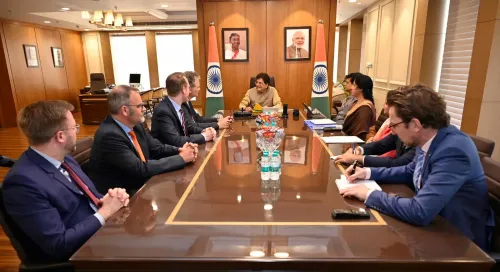
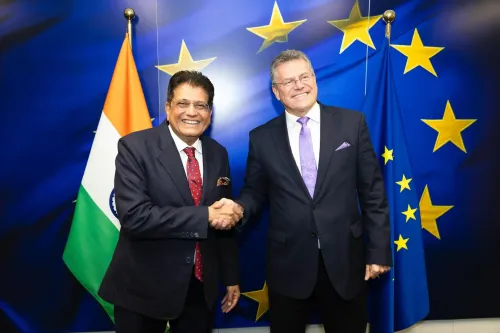
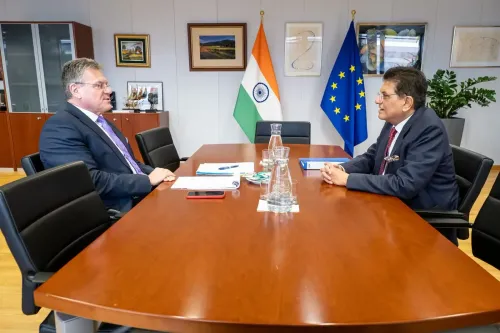
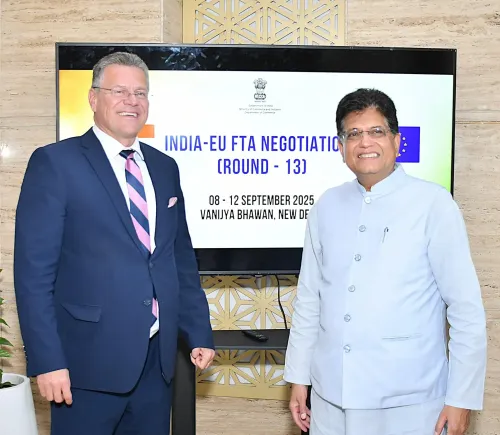
The India-EU agreement was announced this week in New Delhi. Leaders from both sides have characterized it as the largest trade pact in India’s history. European Commission President Ursula von der Leyen referred to it as “the mother of all deals.”
She mentioned that the pact establishes “a free-trade zone encompassing 2 billion people, with both parties poised to gain.”
The agreement links two of the world’s largest economies during a period of global trade tensions and geopolitical uncertainty.
Point of View
The India-EU trade agreement is a significant step toward fostering stronger economic ties and enhancing trade relations between two influential economies. While the concerns raised by the opposition are valid, the focus should remain on the long-term benefits and strategic collaboration that this agreement promises for India's growth trajectory.
NationPress
22 Sept 2026
Frequently Asked Questions
What is the India-EU trade deal?
The India-EU trade deal is a free trade agreement aimed at enhancing economic ties and trade relations between India and the European Union.
What are the main benefits of the trade deal?
The trade deal is expected to boost India's economic growth, create job opportunities, and open new markets for Indian businesses.
What concerns did Congress raise about the deal?
Congress raised concerns about the absence of exemptions for Indian aluminium and steel producers from the EU’s Carbon Border Adjustment Mechanism, and issues related to health and product safety standards.
How does the deal impact India's exports?
The deal is likely to enhance India's exports to the EU, particularly in sectors like refined fuels, while also addressing the challenges posed by EU regulations.
What did Piyush Goyal say about the deal?
Piyush Goyal emphasized that the deal is a win-win agreement that will accelerate economic growth and create numerous opportunities for Indian businesses and citizens.