PM Modi at IMC 2026: India building products, design, technology and IP indigenously
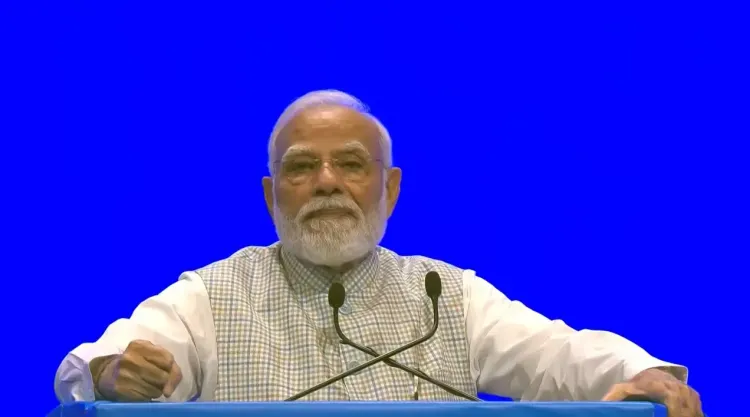
Synopsis
At the 10th India Mobile Congress, PM Modi moved the goalposts — not just 'Make in India' products, but India-owned technology and IP. With 5G at 5.5 lakh base stations nationwide and semiconductor production live at five sites, the next phase of the India Semiconductor Mission targeting a full supply chain is the headline. The ambition is clear; the execution will define whether India can shift from assembler to innovator.
Key Takeaways
PM Modi addressed the 10th India Mobile Congress (IMC) in New Delhi on 8 October 2026 .
Modi declared India's goal: products, design, technology, and intellectual property all developed and owned domestically.
5G networks now cover more than 5.5 lakh base stations , reaching every district in India; internet speeds have grown tenfold .
Semiconductor commercial production is underway at five locations ; the next phase of the India Semiconductor Mission will target full supply chain localisation.
The Telecommunications Act and the GatiShakti portal were cited as key reform instruments underpinning the sector's transformation.
Modi called the mobile phone the 'absolute core of the Digital India vision' over the past 10-12 years .
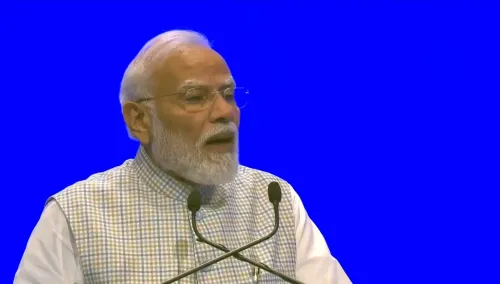
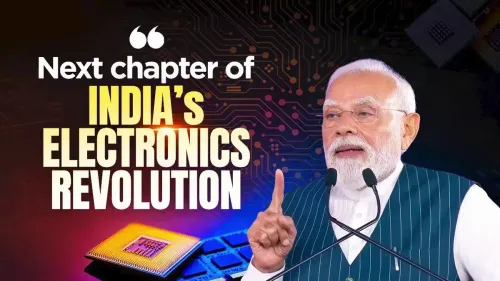
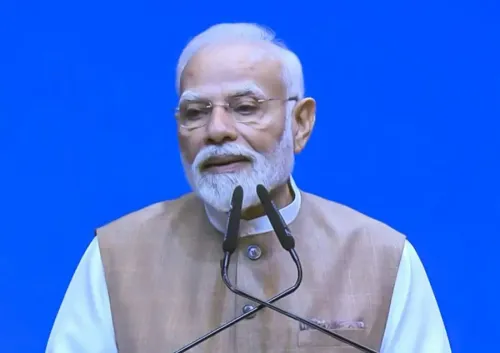
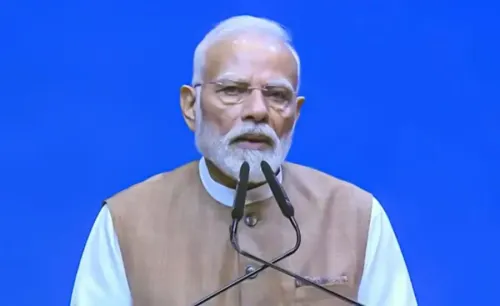
Prime Minister Narendra Modi on Thursday, 8 October declared that India is on a determined march toward a future where products, designs, underlying technology, and intellectual property are all developed and owned domestically. Addressing the 10th edition of the India Mobile Congress (IMC) in New Delhi, Modi said the country has decisively moved beyond being a technology consumer to becoming a creator and innovator of global standing.
The Vision: Made in India, Owned by India
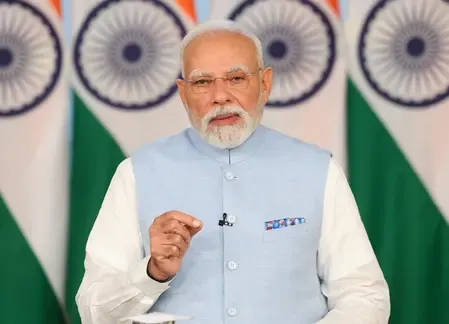
Spelling out his government's ambition, Prime Minister Modi said: 'India is marching towards the goal, where the product and design will be made in India, and its technology and IP will also belong to India.' This framing is a significant shift in official rhetoric — from assembly-led manufacturing to full-stack indigenisation that includes research, design, and intellectual property ownership.
The Prime Minister pointed to a multi-pronged strategy combining regulatory reforms, domestic manufacturing incentives, and intellectual property creation as the pillars driving the transformation in the telecom sector.
Telecom Reforms and the 5G Rollout
Modi highlighted the Telecommunications Act and the GatiShakti portal as flagship policy instruments aimed at creating an enabling environment across the telecom value chain. He described the government's approach as a 'reform express' moving rapidly toward greater technological self-reliance.
Recalling the launch of 5G at the India Mobile Congress in 2022, Modi noted that 5G networks have since expanded to more than 5.5 lakh base stations, reaching every district in the country. Internet speeds, he added, have increased tenfold over the same period.
Notably, this is the 10th consecutive edition of the IMC, and the forum has become a barometer of India's digital ambitions — from a largely import-dependent handset market a decade ago to a net exporter of mobile phones today.
Semiconductor Mission: Next Phase Targets Full Supply Chain
On semiconductor manufacturing — a strategic priority for India amid global chip supply disruptions — Modi said commercial production is already underway at five locations across the country. He announced that the next phase of the India Semiconductor Mission will focus on localising the entire semiconductor supply chain, a step beyond the current assembly and testing focus.
This comes amid intensifying global competition for chip manufacturing dominance, with the United States, the European Union, and China all committing hundreds of billions to domestic semiconductor capacity. India's entry into full-cycle production, if realised, would mark a structural shift in its technology standing.
Mobile Phones as Governance Tools
The Prime Minister asserted that 'in the last 10-12 years, the mobile phone has emerged as a vital tool of good governance, serving as the absolute core of the Digital India vision.' He credited mobile connectivity with transforming service delivery — from direct benefit transfers to digital health records — and described the device as central to India's broader development agenda.
What Comes Next
With the India Semiconductor Mission entering its next phase and the telecom sector's regulatory framework overhauled through the Telecommunications Act, the government's focus will now shift to execution — particularly on supply chain localisation and IP generation. Industry observers will watch whether domestic firms can move from producing handsets under foreign licences to filing original patents, which remains the harder half of Modi's stated goal.
Point of View
But filing original patents and monetising Indian IP globally is a different league. India's share of global technology patents remains negligible, and the gap between a well-attended mobile congress and a self-sufficient IP ecosystem is vast. The reform architecture — the Telecom Act, GatiShakti, semiconductor incentives — is being built, but the test is whether domestic firms can cross from licence-based manufacturing to genuine R&D leadership before the global technology order consolidates around existing players.
NationPress
8 Oct 2026
Frequently Asked Questions
What did PM Modi say at the India Mobile Congress 2026?
Prime Minister Narendra Modi, speaking at the 10th India Mobile Congress in New Delhi on 8 October 2026, said India is moving beyond being a technology consumer to becoming a creator and innovator. He declared that India's goal is to develop and own the product, design, technology, and intellectual property domestically.
How far has India's 5G rollout progressed?
As of Modi's address, India's 5G networks have expanded to more than 5.5 lakh base stations, reaching every district in the country. Internet speeds have increased tenfold since the rollout began, according to the Prime Minister.
What is the next phase of the India Semiconductor Mission?
The next phase of the India Semiconductor Mission will focus on localising the entire semiconductor supply chain, going beyond the current manufacturing and testing activity already underway at five locations across India. This is aimed at reducing import dependence and strengthening the domestic technology ecosystem.
Which policy reforms did Modi highlight for the telecom sector?
Modi cited the Telecommunications Act and the GatiShakti portal as the main instruments of reform, alongside domestic manufacturing incentives and intellectual property creation policies. He described the government's telecom reform push as a 'reform express' driving India toward technological self-reliance.
Why does India's push for indigenous IP matter?
Owning intellectual property in telecom and semiconductors would allow India to earn royalties, reduce licence payments to foreign firms, and gain strategic leverage in global technology supply chains. Currently, most Indian-manufactured devices are assembled under foreign IP licences, meaning the economic value of design and innovation flows elsewhere.