PM Modi Vows to Make India a Semiconductor Chip Manufacturer
Synopsis
Prime Minister Narendra Modi on 4 July 2026 declared that India will manufacture semiconductors — the chips powering modern technology — extending the country's electronics ambitions from mobile assembly into upstream chip fabrication, backed by the India Semiconductor Mission and PLI schemes.
Key Takeaways
PM Modi declared on 4 July 2026 that India will manufacture semiconductors, describing them as 'the next step of the electronics revolution.' The statement extends India's industrial policy sequence: the PLI scheme for electronics was launched in 2020 , followed by the India Semiconductor Mission approved in 2021 .
Semiconductors power defence systems, telecommunications, consumer electronics, and electric vehicles — making domestic production a strategic priority.
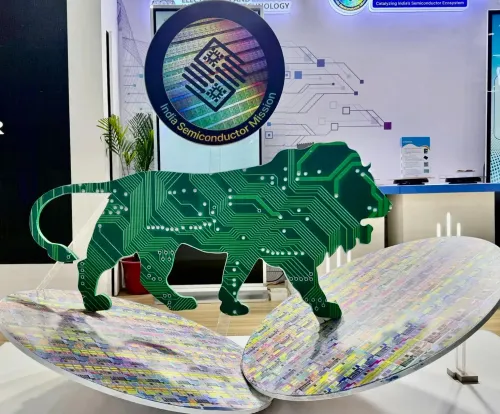
The India Semiconductor Mission targets the full chip value chain: design, fabrication, packaging, and testing.
Global semiconductor and electronics firms are key stakeholders, with India seeking to become an alternative production hub in diversified supply chains.
Progress on approved fabrication projects and new incentive announcements in the coming fiscal year will be the critical near-term indicators.
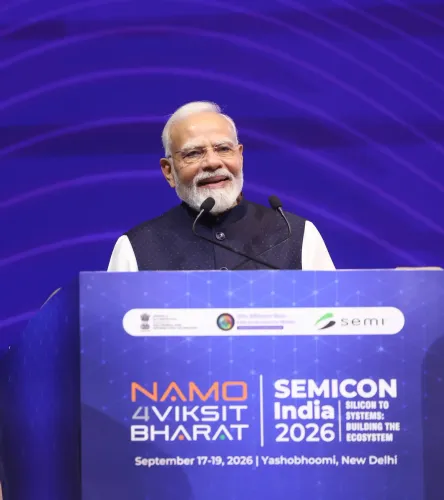
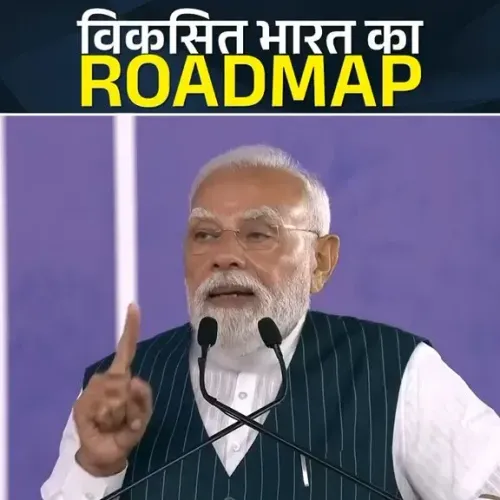
Prime Minister Narendra Modi declared on Saturday, 4 July 2026 that India will manufacture semiconductors — the chips that power the entire modern world — extending the country's electronics ambitions well beyond mobile phone assembly into the upstream technology supply chain.
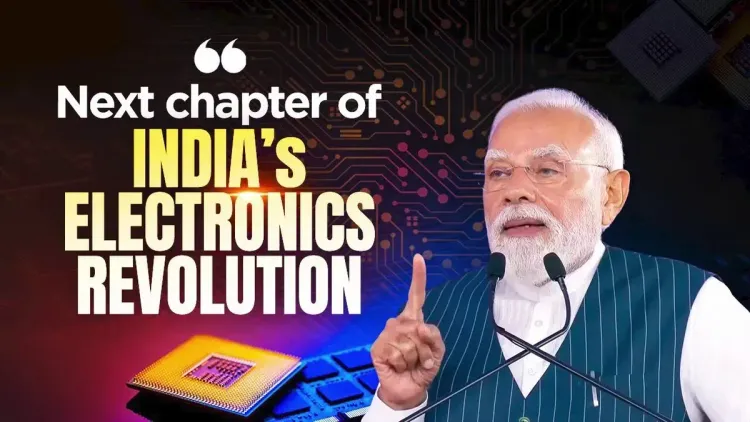
In a post on X, Modi stated in Hindi: 'सेमीकंडक्टर इलेक्ट्रॉनिक्स क्रांति का Next Step है।' ('Semiconductors are the next step of the electronics revolution.') He added that India would manufacture not only mobiles and electronics but also 'the chips that run this entire world.'
Context
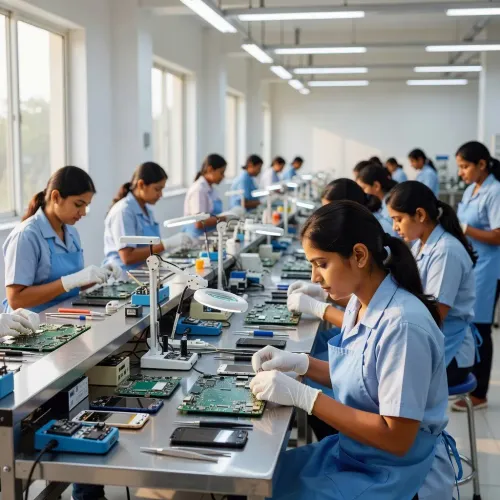
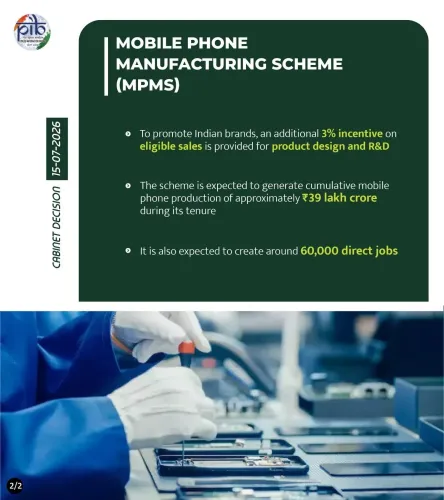
The statement positions semiconductor fabrication as the logical continuation of India's electronics manufacturing journey. Over the past several years, India has emerged as a significant mobile phone assembler, with domestic production rising sharply under targeted government incentives. Modi's framing signals that this foundation is now being used as a launchpad for deeper, more capital-intensive chip manufacturing.
Semiconductors underpin virtually every modern technology — from consumer smartphones and laptops to defence systems, telecommunications infrastructure, and electric vehicles. Dependence on imports for these components has long been identified as a strategic vulnerability for India.
Policy Backdrop
The government's push into semiconductors follows a deliberate sequencing of industrial policy. In 2020, the Production Linked Incentive (PLI) scheme for large-scale electronics and mobile manufacturing was launched to attract global and domestic investment into assembly operations. Building on that base, the India Semiconductor Mission was approved in 2021 with a dedicated financial outlay to support semiconductor fabrication units, chip design, and the broader ecosystem.
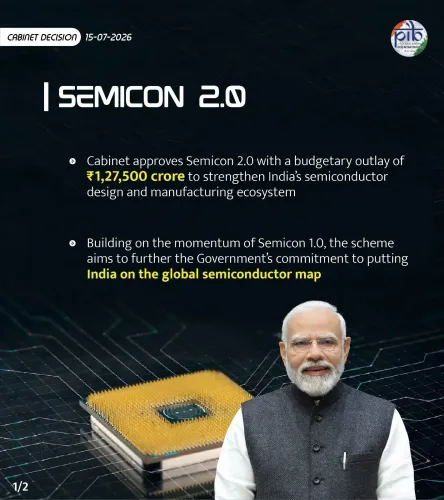
The India Semiconductor Mission is the central government's principal vehicle for developing domestic design, fabrication, and assembly capabilities. It targets the full spectrum of the semiconductor value chain — from advanced chip design to compound semiconductor manufacturing — with the aim of reducing import dependence for critical components.
Stakeholders and Impact
Electronics manufacturers and global semiconductor firms are the most direct stakeholders. A credible domestic chip-making capability would reduce input costs and supply-chain risks for India's fast-growing electronics sector, which spans consumer devices, industrial equipment, and defence hardware. It would also make India a more attractive destination for companies seeking to diversify production away from concentrated geographies.
For workers and engineers, a mature semiconductor ecosystem promises high-skill employment across chip design, fabrication, packaging, and testing — segments that command significant wage premiums globally. India's large pool of engineering graduates is frequently cited as a structural advantage in this regard.
What's Next
Attention will now focus on the pace of progress on approved semiconductor fabrication and assembly projects, as well as any new incentive outlays or international partnership announcements in the coming fiscal year. The government's ability to translate policy commitment into operational fabs — facilities that require billions of dollars in investment and highly specialised supply chains — will be the key measure of this ambition. India's trajectory in this space will also be watched closely by global technology firms recalibrating their supply chains.
Point of View
' the government is signalling to global investors and domestic industry that the semiconductor push is not aspirational but programmatic. The framing also serves a strategic-autonomy narrative that has become central to the administration's technology and defence posture. Whether the rhetoric translates into operational fabrication capacity will define this chapter of India's industrial ambition.
NationPress
3 Oct 2026
Frequently Asked Questions
What did PM Modi say about semiconductors?
PM Modi stated on 4 July 2026 that semiconductors are 'the next step of the electronics revolution' and that India will manufacture the chips that run the modern world, not just mobile phones and consumer electronics.
What is the India Semiconductor Mission?
The India Semiconductor Mission is a central government initiative approved in 2021 with a dedicated financial outlay to develop domestic semiconductor design, fabrication, and assembly capabilities and reduce India's dependence on imported chips.
What is India's PLI scheme for electronics?
The Production Linked Incentive scheme for large-scale electronics and mobile manufacturing was launched in 2020 to attract investment into domestic assembly operations, forming the foundation on which India's semiconductor ambitions are being built.
Why are semiconductors strategically important for India?
Semiconductors are essential components in defence systems, telecommunications infrastructure, consumer devices, and electric vehicles. Heavy import dependence for chips is considered a strategic vulnerability, making domestic manufacturing a national security and economic priority.
What should we watch for next in India's semiconductor push?
Key indicators include progress on approved semiconductor fabrication and assembly projects under the India Semiconductor Mission, new government incentive announcements, and international partnership deals expected in the coming fiscal year.