Kishan Reddy: Women Driving India's Mobile Manufacturing Boom
Synopsis
Union Minister G. Kishan Reddy spotlights the Cabinet-approved ₹62,500 crore Mobile Phone Manufacturing Scheme (2026–31), citing India's export surge from ₹1,500 crore in 2014–15 to ₹2.59 lakh crore in 2025–26 and crediting women workers — backed by PMKVY, Sakhi Niwas and labour reforms — as the engine of the transformation.
Key Takeaways
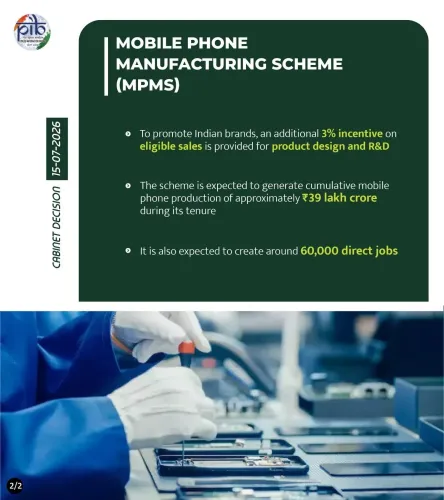
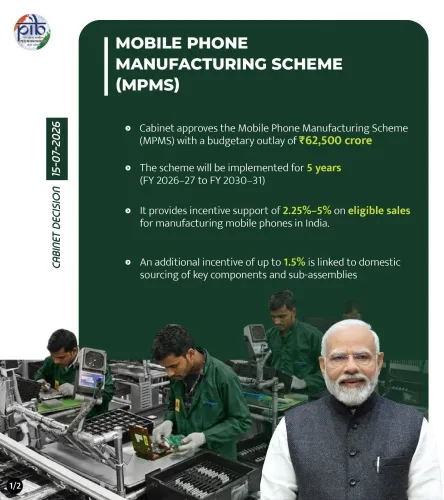
The Union Cabinet has approved the Mobile Phone Manufacturing Scheme with an outlay of ₹62,500 crore for the period 2026–27 to 2030–31 .
India's mobile phone exports grew from approximately ₹1,500 crore in 2014–15 to nearly ₹2.59 lakh crore in 2025–26 , driven by the PLI Scheme launched in 2020.
Domestic mobile phone production has reached ₹6.27 lakh crore .
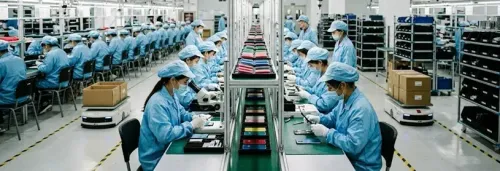
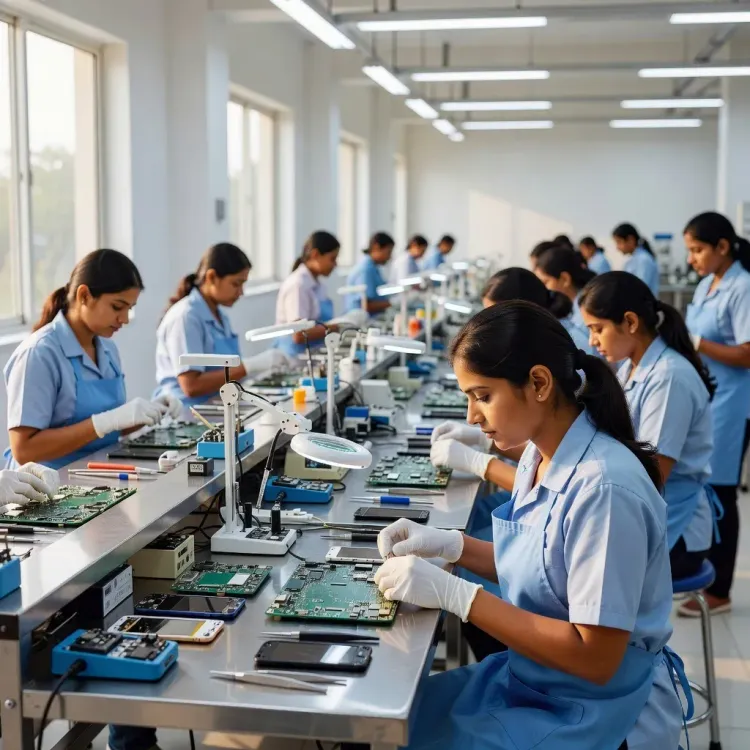
Women are entering electronics manufacturing in rising numbers, supported by the Employment Linked Incentive Scheme , PMKVY , Sakhi Niwas hostels, crèche facilities, and labour reforms.
The scheme is positioned as a pillar of the #ViksitBharat goal of making India a developed economy by 2047.
Formal scheme guidelines, beneficiary criteria, and employment targets are pending notification.
A ₹62,500 crore bet on India's factory future — and at its centre, not just machines or incentives, but women. Union Coal and Mines Minister G. Kishan Reddy highlighted the Union Cabinet's approval of the Mobile Phone Manufacturing Scheme on Monday, 3 August 2026, framing it as proof that NariShakti — women's power — is the real engine of India's electronics rise.
From ₹1,500 Crore to ₹2.59 Lakh Crore: The Export Surge
The numbers tell a story that would have seemed implausible a decade ago. India's mobile phone exports stood at roughly ₹1,500 crore in 2014–15. By 2025–26, that figure has climbed to nearly ₹2.59 lakh crore — a transformation built on the back of the Production Linked Incentive (PLI) Scheme, launched in 2020 to attract investment into large-scale electronics manufacturing and wean India off import dependence. Domestic production has tracked the same upward curve, reaching ₹6.27 lakh crore. The new Mobile Phone Manufacturing Scheme, with its outlay of ₹62,500 crore spanning 2026–27 to 2030–31, is designed as the next chapter — deepening what PLI started and pushing India further up the global electronics value chain.Women on the Factory Floor — and in the Export Numbers
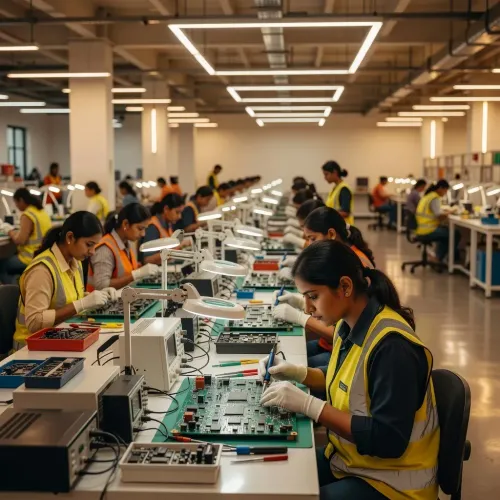
Minister Reddy's post zeroes in on a dimension that often gets buried under macro figures: who is actually doing the work. Women are entering electronics manufacturing 'in unprecedented numbers,' he wrote, backed by a cluster of targeted programmes. The Employment Linked Incentive Scheme ties financial benefits directly to new hires, creating a structural pull for manufacturers to recruit. Pradhan Mantri Kaushal Vikas Yojana (PMKVY), the flagship skill-development programme running since 2015, has channelled vocational training into manufacturing sectors. Sakhi Niwas — the Working Women Hostel initiative — addresses one of the oldest barriers to female industrial employment: safe, affordable accommodation near factory clusters. Crèche facilities and progressive labour reforms round out the support architecture. The logic is straightforward. Remove the friction — unsafe commutes, no childcare, no nearby housing — and the labour supply follows.The Bigger ViksitBharat Wager
Reddy's framing connects the scheme explicitly to the #ViksitBharat — Developed India — vision, the government's overarching goal of positioning India as a high-income economy by 2047. Electronics manufacturing is central to that wager: it is a sector where India can compete on scale, where export value is high, and where female labour force participation — historically low in India's formal economy — can be structurally raised. Scheme guidelines, beneficiary selection criteria, and formal employment targets are yet to be notified. Those details will determine whether the ambition translates into factory-floor reality. India built a ₹2.59 lakh crore export story in a decade. The next five years will test whether the women powering it can take the country further still.Point of View
The BJP is simultaneously addressing a persistent structural weakness in India's formal labour market and building a narrative that links manufacturing growth to social inclusion. The scheme's real test will come in its implementation details: whether employment targets are binding, whether Sakhi Niwas capacity scales with factory clusters, and whether the incentive structure pulls component manufacturing — not just final assembly — deeper into India. The export figures are real; the question is whether the next five years add depth to the supply chain or simply extend the assembly model.
NationPress
18 Sept 2026
Frequently Asked Questions
What is the Mobile Phone Manufacturing Scheme India 2026?
The Mobile Phone Manufacturing Scheme is a Union Cabinet-approved programme with a financial outlay of ₹62,500 crore covering 2026–27 to 2030–31 , designed to deepen India's electronics manufacturing base and boost mobile phone exports, building on the earlier PLI Scheme.
How much have India's mobile phone exports grown since 2014?
India's mobile phone exports have surged from approximately ₹1,500 crore in 2014–15 to nearly ₹2.59 lakh crore in 2025–26 , a growth largely attributed to the Production Linked Incentive (PLI) Scheme launched in 2020.
What is Sakhi Niwas and how does it help women in manufacturing?
Sakhi Niwas is the Working Women Hostel scheme that provides safe and affordable accommodation for women workers in urban areas, addressing one of the key barriers — lack of nearby housing — that limits female participation in industrial employment.
What is PMKVY and its role in electronics manufacturing?
Pradhan Mantri Kaushal Vikas Yojana (PMKVY) , launched in 2015, is India's flagship skill-development programme that provides vocational training across sectors including electronics and mobile phone manufacturing, helping equip women and youth for factory roles.
What is ViksitBharat and how does mobile manufacturing relate to it?
ViksitBharat — meaning 'Developed India' — is the government's vision to make India a high-income economy by 2047 . Electronics and mobile phone manufacturing, with its high export value and potential for mass employment, is positioned as a core pillar of achieving that goal.