India-New Zealand vow deeper counter-terrorism, cyber security ties
Synopsis
India and New Zealand didn't just exchange pleasantries — Modi and Luxon signed an MoA establishing a Joint Working Group on Counter-Terrorism, condemned both the Pahalgam and Red Fort attacks by name, and aligned on the Indo-Pacific rules-based order. The JWG is the most concrete institutional security bridge the two countries have built, and it arrives at a moment when cross-border terrorism and cyber threats are reshaping South Asia's security calculus.
Key Takeaways
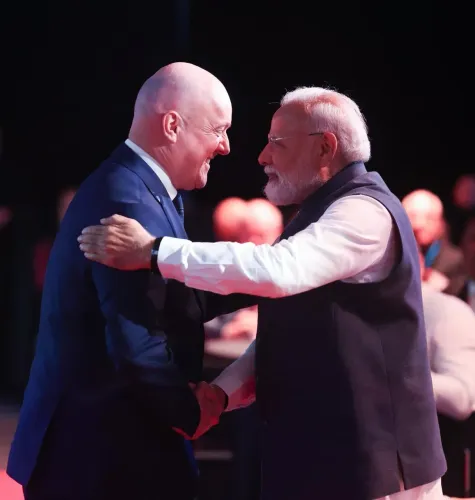
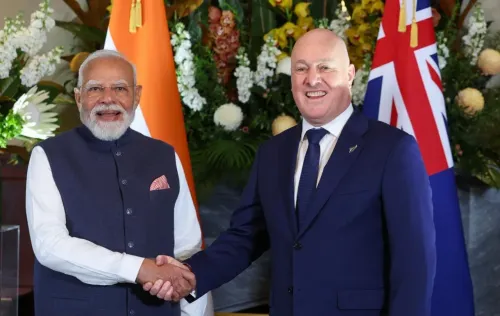
PM Narendra Modi and New Zealand PM Christopher Luxon met on 11 July 2025 , issuing a joint statement through India's MEA .
Both sides signed an MoA to establish a Joint Working Group (JWG) on Counter-Terrorism for information and knowledge sharing.
Leaders jointly condemned the Pahalgam, J&K terror attack (22 April 2025) and the Red Fort terror incident (10 November 2025) .
Cooperation pledged on transnational crime , including drug trafficking, cyber-enabled crime, people smuggling, and financial crime.
Both nations reaffirmed commitment to a free and open Indo-Pacific and to UNCLOS -based resolution of maritime disputes.
Early formalisation of counter-narcotics and law enforcement cooperation arrangements between the two countries was agreed upon.
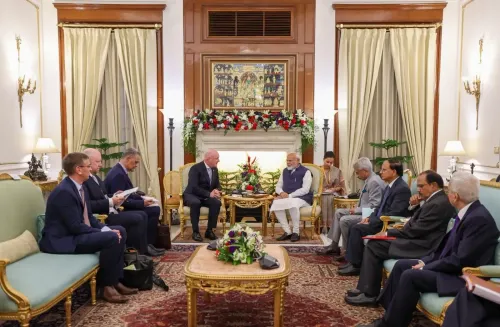
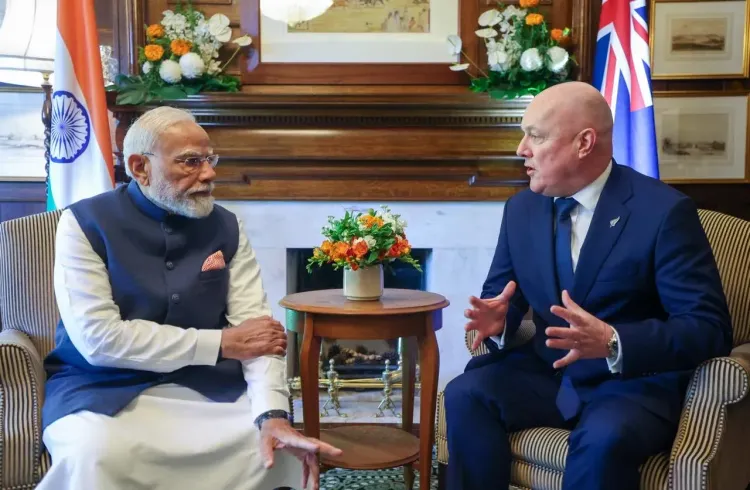
Prime Minister Narendra Modi and his New Zealand counterpart Christopher Luxon on Saturday, 11 July 2025 reaffirmed their shared commitment to deepening cooperation on counter-terrorism, cyber security, and a broad range of emerging security challenges. The two leaders met and issued a joint statement through India's Ministry of External Affairs (MEA), signalling a meaningful upgrade in bilateral security engagement between New Delhi and Auckland.
Key Commitments on Counter-Terrorism
Both leaders issued an unequivocal condemnation of terrorism in all its forms, including cross-border terrorism. Specifically, the joint statement condemned the terrorist attack in Pahalgam, Jammu & Kashmir, on 22 April 2025, and the terror incident near Red Fort, New Delhi, on 10 November 2025, demanding that those responsible be held accountable.
'They called for a zero-tolerance and consistent approach to terrorism, and called for the disruption of terrorism financing networks and safe havens, dismantling of terror infrastructure, including online, and bringing perpetrators of terrorism to justice swiftly,' the joint statement read. Notably, the two sides formalised this resolve by signing a Memorandum of Agreement (MoA) to establish a Joint Working Group (JWG) on Counter-Terrorism — a framework designed to institutionalise information and knowledge sharing between the two nations.
Tackling Transnational Crime and Cyber Threats
Beyond terrorism, both leaders pledged to strengthen practical law enforcement cooperation to combat transnational and organised crime, encompassing illicit drug trafficking, financial crime, cyber-enabled crime, people smuggling, and trafficking in persons. The joint statement noted that the two sides agreed to work towards the early formalisation of arrangements on counter-narcotics cooperation and broader law enforcement collaboration between relevant Indian and New Zealand agencies.
Indo-Pacific Alignment and Regional Security
Modi and Luxon also exchanged views on the Indo-Pacific, reaffirming their commitment to a free, open, peaceful, and prosperous region where sovereignty, territorial integrity, and the rules-based international order are upheld. The statement specifically reaffirmed freedom of navigation and overflight in accordance with international law, particularly the 1982 United Nations Convention on the Law of the Sea (UNCLOS).
Both leaders underscored the importance of pursuing peaceful resolution of maritime disputes under international law, and emphasised cooperation within ASEAN-led forums, including the East Asia Summit, the ASEAN Regional Forum, and the ASEAN Defence Ministers' Meeting Plus. They reaffirmed the principle of ASEAN centrality and the ASEAN Outlook on the Indo-Pacific.
What Comes Next
The establishment of the Joint Working Group on Counter-Terrorism marks the most concrete institutional outcome of the summit. Both governments are expected to operationalise the JWG and advance counter-narcotics and law enforcement arrangements in the months ahead. This deepening security partnership comes amid a broader regional context of rising cyber threats and persistent concerns over cross-border terrorism affecting South Asia.
Point of View
And its timing is deliberate. By naming both the Pahalgam and Red Fort attacks in a bilateral joint statement, New Zealand has effectively aligned itself with India's framing of cross-border terrorism as a shared global threat, not merely a regional grievance. That is a notable diplomatic gain for New Delhi. The harder question is whether the JWG translates into operational intelligence sharing, or remains a consultative forum that meets annually and produces communiqués. India's past counter-terrorism working groups with other partners have varied sharply in effectiveness. The inclusion of cyber-enabled crime and counter-narcotics in the same framework suggests ambition, but ambition without enforcement architecture is just paperwork.
NationPress
11 Jul 2026
Frequently Asked Questions
What did India and New Zealand agree on counter-terrorism?
India and New Zealand agreed to establish a Joint Working Group (JWG) on Counter-Terrorism through a signed Memorandum of Agreement (MoA), creating a formal framework for information and knowledge sharing. Both sides also called for zero tolerance on terrorism, disruption of financing networks, and swift accountability for perpetrators.
Which terror attacks did the India-New Zealand joint statement condemn?
The joint statement condemned the terrorist attack in Pahalgam, Jammu & Kashmir on 22 April 2025, and the terror incident near Red Fort, New Delhi on 10 November 2025. Both leaders stressed that those responsible must be held accountable.
What is the Joint Working Group on Counter-Terrorism between India and New Zealand?
It is a bilateral institutional mechanism established through an MoA signed during the Modi-Luxon summit on 11 July 2025. The JWG is designed to provide a structured framework for counter-terrorism information sharing, knowledge exchange, and coordinated engagement on security challenges.
What did India and New Zealand say about the Indo-Pacific?
Both leaders reaffirmed their commitment to a free, open, peaceful, and prosperous Indo-Pacific where sovereignty and the rules-based international order are upheld. They specifically endorsed UNCLOS-based resolution of maritime disputes and underscored ASEAN centrality in regional security architecture.
What areas of transnational crime did India and New Zealand agree to tackle together?
The two countries pledged cooperation on illicit drug trafficking, financial crime, cyber-enabled crime, people smuggling, and trafficking in persons. They also agreed to work towards early formalisation of counter-narcotics and law enforcement cooperation arrangements between relevant agencies of both nations.