CM Sawant Shares Glimpses of PM Modi's Australia Visit

Synopsis
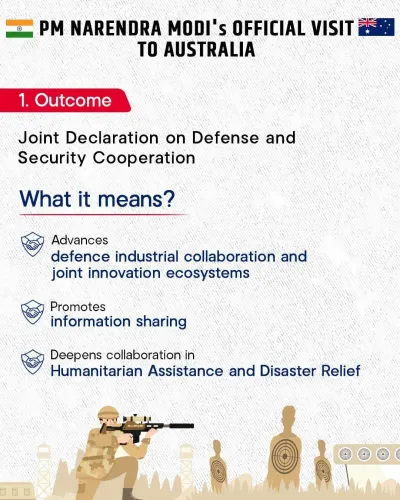
Goa Chief Minister Pramod Sawant shared video glimpses of Prime Minister Narendra Modi's visit to Australia on 11 July 2026, calling it 'highly outcome driven.' The visit builds on a decade of deepening India-Australia ties spanning trade, defence, critical minerals, and the Quad framework.
Key Takeaways
Goa CM Pramod Sawant shared a video on 11 July 2026 highlighting PM Modi 's visit to Australia as 'highly outcome driven.' India and Australia signed the Economic Cooperation and Trade Agreement (ECTA) in 2022 , reducing tariffs across a wide range of goods.
The two countries are Quad partners alongside the United States and Japan , with regular 2+2 ministerial-level dialogue.
Critical minerals , defence technology, education, and people-to-people ties are the key pillars of the bilateral relationship.
Specific outcomes of the July 2026 visit are pending official confirmation from the central government.
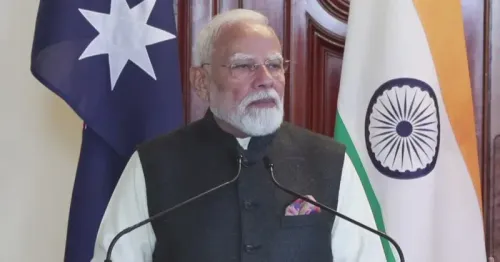
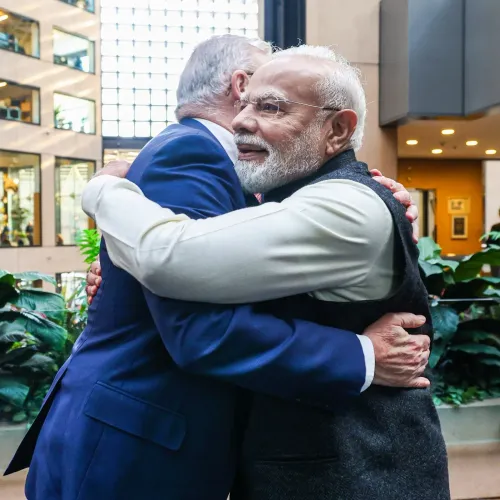
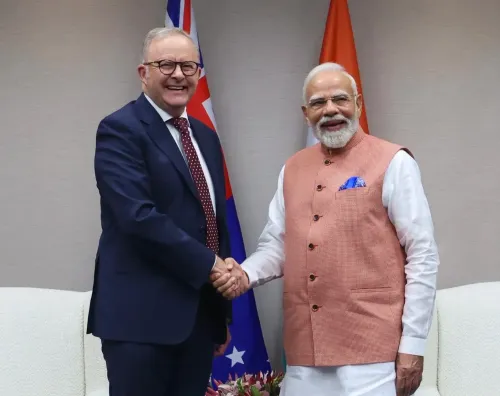
Goa Chief Minister Pramod Sawant on Saturday, 11 July 2026 shared video glimpses of Prime Minister Narendra Modi's visit to Australia, describing it as 'highly outcome driven' and underlining the significance of the bilateral engagement for India's Indo-Pacific partnerships.
Context
Sawant's post, shared via his official X account, highlighted what he called a 'highly outcome driven visit' by the Prime Minister to Australia. While the Chief Minister of Goa does not hold a direct role in foreign policy, senior BJP leaders and state-level figures have regularly amplified the central government's diplomatic engagements on social media, reinforcing the party's messaging around India's growing global stature.
The video shared in the post offered glimpses of the visit, though the specific outcomes, meetings, or agreements concluded during this trip remain subject to official confirmation from the central government.
Policy Backdrop
India and Australia have steadily elevated their bilateral relationship over the past decade. PM Modi's landmark 2014 visit to Australia — where he addressed the Parliament in Canberra — is widely credited with resetting ties after a period of diplomatic drift. That visit laid the groundwork for deeper cooperation across defence, trade, and education.
A major milestone followed in 2022, when the two countries signed the Economic Cooperation and Trade Agreement (ECTA), reducing tariffs on a broad range of goods and opening new avenues for Indian exporters. Australia has since emerged as a key partner within India's Indo-Pacific framework, participating in the Quad grouping alongside the United States and Japan, and conducting regular bilateral 2+2 ministerial-level talks covering defence and foreign affairs.
Cooperation on critical minerals — an area where Australia holds significant reserves and India has growing demand — has become a central pillar of the relationship, alongside defence technology sharing and people-to-people links through a large Indian diaspora community in Australia.
Stakeholders and Impact
High-level visits of this nature carry implications for several constituencies. The Indian diaspora in Australia, one of the fastest-growing migrant communities in the country, watches such engagements closely for signals on migration and education pathways. Trade and industry bodies on both sides track announcements related to ECTA implementation and new sectoral agreements.
The defence and strategic affairs community is particularly attentive to any outcomes related to technology-sharing arrangements or joint exercise frameworks, areas where the two countries have expanded cooperation under the broader Quad architecture. Educational institutions in both countries also stand to benefit from any new mobility or recognition agreements.
What's Next
Attention will now turn to formal readouts from New Delhi and Canberra detailing the specific outcomes of the visit — whether in the form of signed agreements, joint statements, or new frameworks on defence, critical minerals, or education. Any announcements on migration or skilled-worker pathways would be of particular interest to the Indian diaspora.
The visit, if it yields concrete deliverables, would mark another step in India's sustained effort to position Australia as a cornerstone partner in its Indo-Pacific strategy — a relationship that has moved from periodic engagement to structured, outcome-focused diplomacy over the past decade.
Point of View
Defence, or critical minerals, raising the bar for what counts as a successful engagement. The broader pattern suggests that India is using these visits not merely for optics but to lock in structural commitments that outlast any single government's tenure.
NationPress
11 Jul 2026
Frequently Asked Questions
Why did PM Modi visit Australia in July 2026?
The specific agenda of PM Modi's July 2026 Australia visit is pending official confirmation. Historically, India-Australia high-level visits have focused on advancing trade, defence cooperation, critical minerals, and Quad-related coordination.
What is India's trade agreement with Australia?
India and Australia signed the Economic Cooperation and Trade Agreement (ECTA) in 2022, which reduced tariffs on a broad range of goods and strengthened bilateral trade ties.
Why is Goa CM Pramod Sawant posting about PM Modi's Australia visit?
As a senior BJP leader, Goa Chief Minister Pramod Sawant shared the post to amplify the central government's diplomatic outreach, a common practice among BJP state leaders on social media.
What is the Quad and how does Australia fit in?
The Quad is a strategic grouping of India, Australia, the United States, and Japan focused on a free and open Indo-Pacific. Australia is one of India's key partners within this framework, participating in joint exercises and ministerial-level 2+2 talks.
What areas of cooperation are India and Australia focusing on?
Key areas include defence technology sharing, critical minerals, the Economic Cooperation and Trade Agreement, education exchanges, and people-to-people ties through India's large diaspora in Australia.