India-New Zealand Strategic Partnership Roadmap to 2030: Trade, defence agenda set
Synopsis
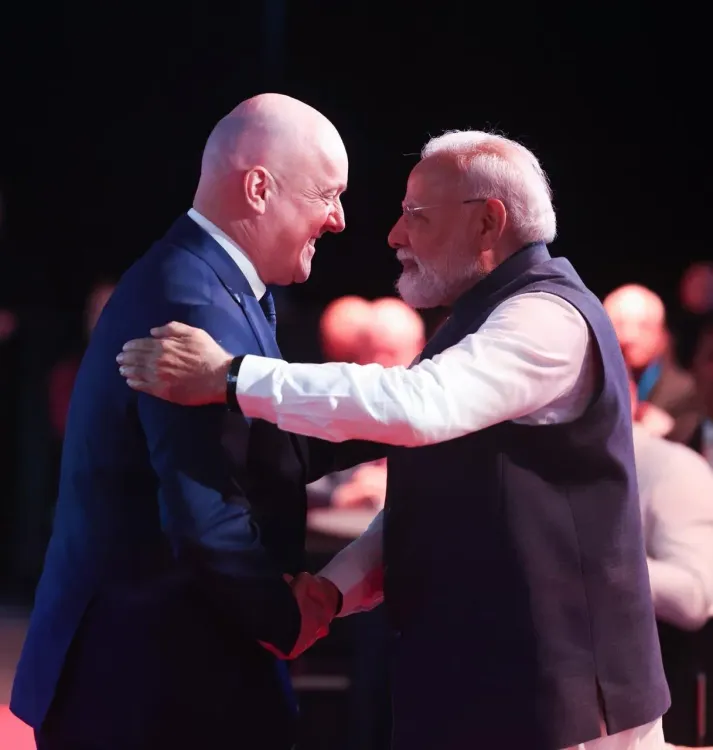
Modi and Luxon's Auckland meeting produced more than a photo-op — it delivered a six-pillar Roadmap to 2030 that puts a NZ$7 billion trade target, a counter-terrorism working group, and India's UN Security Council bid on the same document. The non-binding framing is honest, but the ambition is real.
Key Takeaways
India and New Zealand announced a Strategic Partnership and the 'Roadmap to 2030' in Auckland on 11 July .
PM Narendra Modi and PM Christopher Luxon jointly endorsed the framework covering six pillars .
Bilateral trade target set at NZ$7 billion (₹35,000 crore) by 2030 , double current levels.
Both sides will advance the India-New Zealand Free Trade Agreement (FTA) for early implementation.
Defence cooperation to expand through military exercises, a Maritime Security Dialogue , and a Joint Working Group on Counter-Terrorism .
New Zealand committed to backing India's permanent membership bid at a reformed UN Security Council .
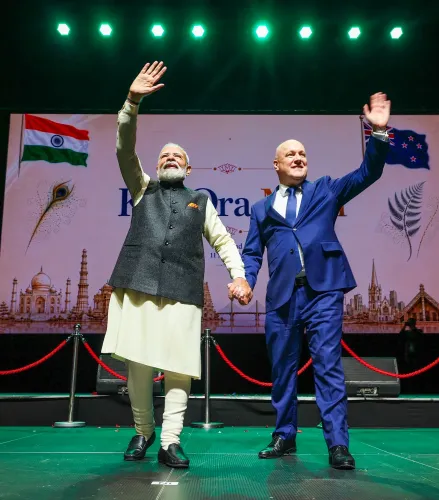
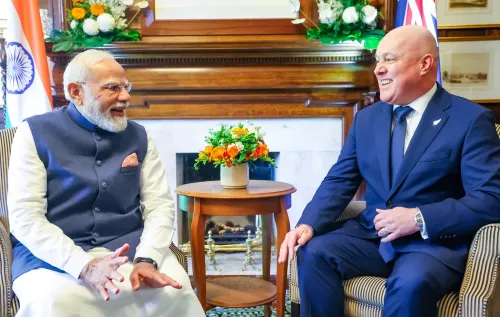
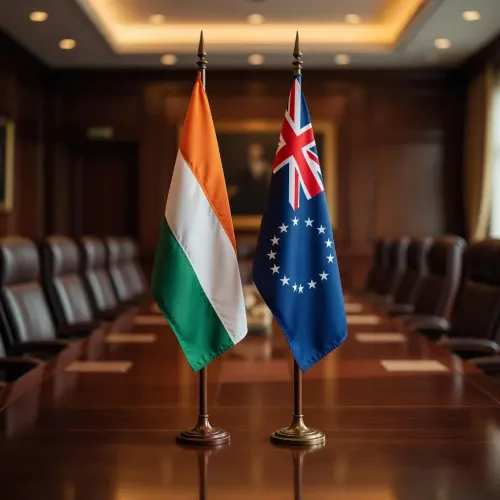
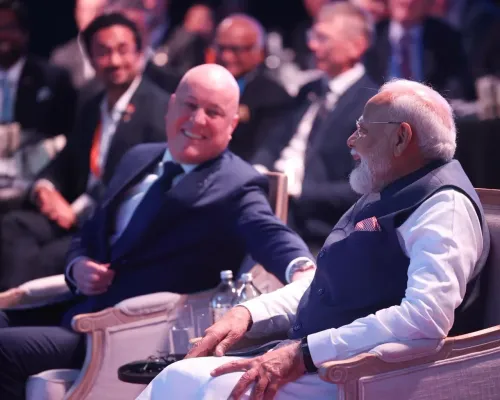
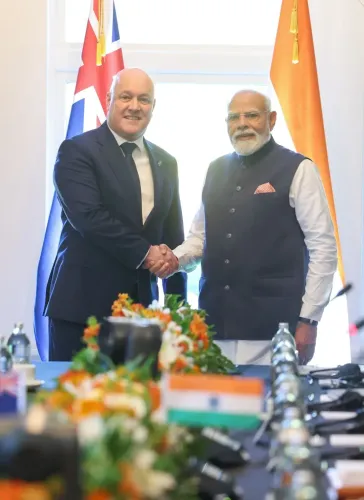
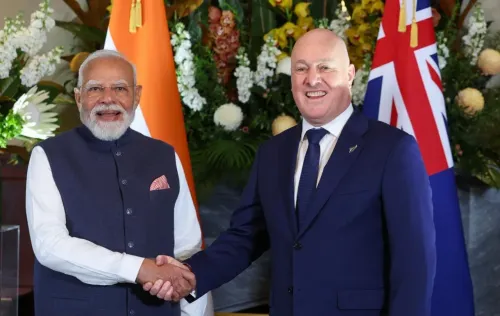
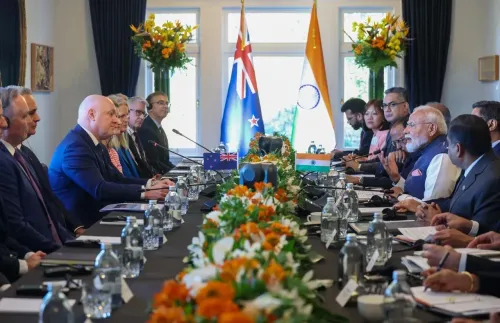
India and New Zealand on Saturday, 11 July formally announced a Strategic Partnership and unveiled the 'India-New Zealand Strategic Partnership: Roadmap to 2030' — a comprehensive framework covering political engagement, defence and security, trade, education, science and technology, culture, and regional cooperation. The announcement was made in Auckland, where Prime Minister Narendra Modi and New Zealand Prime Minister Christopher Luxon met and jointly endorsed the roadmap as a shared blueprint to deepen bilateral ties.
Six Pillars of the Partnership
The roadmap is structured around six key pillars: political and diplomatic engagement, defence and security cooperation, trade and economic partnership, people-to-people links, education and innovation, and regional and multilateral cooperation. According to India's Ministry of External Affairs (MEA), both sides have committed to regular high-level engagements, including meetings between Prime Ministers, Cabinet Ministers, and senior officials.
The framework also envisages strengthening the Foreign Ministers' Dialogue, parliamentary exchanges, and annual Secretary-level consultations between India's MEA and New Zealand's Ministry of Foreign Affairs and Trade to oversee implementation.
Defence and Security Cooperation
On defence, India and New Zealand agreed to expand cooperation through military exercises, maritime, air, and land unit visits, personnel exchanges, defence staff college interactions, and high-level defence dialogues. Both sides will 'continue to implement the 2025 India–New Zealand Memorandum of Understanding on Defence Cooperation' and maintain structured engagement at Defence Ministry and service levels.
The roadmap also includes plans to enhance maritime security under the Indo-Pacific Oceans Initiative, establish an annual Maritime Security Dialogue, operationalise a Joint Working Group on Counter-Terrorism, and deepen cybersecurity cooperation. Both countries will additionally work towards agreements on combating narcotics trafficking and strengthening law enforcement cooperation between India's National Investigation Agency (NIA) and New Zealand Police.
Trade Target: NZ$7 Billion by 2030
On the economic front, India and New Zealand have set an aspirational target of doubling bilateral trade in goods and services to NZ$7 billion (approximately ₹35,000 crore) by 2030. The two sides agreed to advance the next steps for the India-New Zealand Free Trade Agreement (FTA) to ensure its early entry into force and effective implementation.
Cooperation in primary industries — including horticulture, forestry, animal husbandry, and dairying — will be strengthened through joint research, technical exchanges, and market development. Tourism cooperation will be expanded, with both sides encouraging airlines to introduce direct non-stop flights under the updated Air Services Agreement.
People, Education, and Climate
Both countries recognised the role of diaspora communities in strengthening people-to-people connections and committed to cooperation in sports, cultural exchanges, and traditional medicine. The 2025 Education Cooperation Arrangement will be implemented, encouraging greater institutional partnerships.
On climate, the roadmap highlights cooperation in low-emission transitions, renewable energy, and sustainable development through the International Solar Alliance and the Global Biofuels Alliance. Disaster management cooperation will also be formalised between India's National Disaster Management Authority (NDMA) and New Zealand's National Emergency Management Agency.
Regional and Multilateral Commitments
At the multilateral level, both countries committed to strengthening cooperation at the United Nations, supporting UN reforms, and backing India's candidature for permanent membership of a reformed UN Security Council. They also agreed to extend mutual support for candidatures in international organisations and to cooperate within ASEAN-led and other regional forums.
Notably, the roadmap explicitly clarifies that it does not create legally binding obligations under domestic or international law and does not involve financial commitments — it serves as a structured political framework. With sectoral working groups expected to operationalise the pillars in the months ahead, the real test will be the pace of FTA negotiations and the trajectory of defence engagements.
Point of View
But its explicit non-binding, no-financial-commitment clause means delivery will depend entirely on political will across successive governments in both countries. The NZ$7 billion trade target is aspirational — current bilateral trade sits well below that figure, and an FTA that has been in discussion for years still lacks a ratified text. India's push to secure New Zealand's support for its UN Security Council bid is the sharpest strategic gain here, reflecting New Delhi's broader pattern of leveraging bilateral upgrades for multilateral endorsements. The real test arrives in the FTA timeline and whether the counter-terrorism working group produces operational outcomes or remains a framework on paper.
NationPress
9 Oct 2026
Frequently Asked Questions
What is the India-New Zealand Strategic Partnership Roadmap to 2030?
It is a comprehensive bilateral framework announced on 11 July in Auckland by Prime Ministers Narendra Modi and Christopher Luxon, covering six pillars: political engagement, defence and security, trade, people-to-people links, education and innovation, and regional cooperation. The roadmap is non-binding and does not involve financial commitments, but sets a structured agenda for cooperation through 2030.
What is the bilateral trade target India and New Zealand have set?
The two countries have set an aspirational target of doubling bilateral trade in goods and services to NZ$7 billion (approximately ₹35,000 crore) by 2030. They also agreed to advance the India-New Zealand Free Trade Agreement for early entry into force.
What does the defence cooperation agreement between India and New Zealand involve?
It involves military exercises, maritime, air, and land unit visits, personnel exchanges, and high-level defence dialogues under the 2025 India-New Zealand MoU on Defence Cooperation. The roadmap also establishes an annual Maritime Security Dialogue and a Joint Working Group on Counter-Terrorism.
Did New Zealand support India's UN Security Council membership bid?
Yes. The roadmap includes a commitment by both sides to support UN reforms, including India's candidature for permanent membership of a reformed UN Security Council, and to extend mutual support for candidatures in international organisations.
Is the India-New Zealand Roadmap to 2030 legally binding?
No. The roadmap explicitly states it does not create legally binding obligations under domestic or international law and does not involve financial commitments. It functions as a political and diplomatic framework to guide bilateral cooperation.