Assam declares Boirjuli its third Biodiversity Heritage Site
Synopsis
Assam has declared Boirjuli a Biodiversity Heritage Site — its third — to protect a rare wild rice habitat whose genetic traits could help breed climate-resilient crop varieties. The move links conservation law with food-security and climate-adaptation priorities in a region globally recognised for rice genetic diversity.
Key Takeaways
Boirjuli has been declared Assam's third Biodiversity Heritage Site under the Biological Diversity Act, 2002.
The site protects a rare wild rice habitat carrying genetic traits linked to drought and flood tolerance.
The declaration connects protected-area policy with climate-resilient agriculture and national food-security goals.
Northeast India is a globally recognised centre of genetic diversity for rice, making such sites scientifically significant.
Local farming communities, agricultural researchers, and future seed-development programmes are the primary beneficiaries.
Formal research tie-ups with national or international rice research bodies are a likely next step.
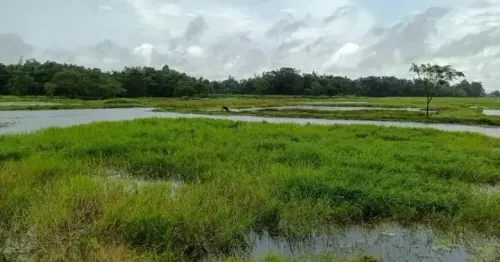
The Chief Minister's Office of Assam announced on Saturday, 11 July 2026 that the state government has formally declared Boirjuli a Biodiversity Heritage Site, recognising it as a rare habitat for wild rice with genetic traits that scientists believe could underpin climate-resilient crop varieties.
Context
Boirjuli becomes Assam's third Biodiversity Heritage Site, a designation conferred under India's Biological Diversity Act, 2002, which empowers state governments to protect unique ecosystems and their genetic resources through in-situ conservation. The official announcement described the move as standing at the intersection of 'conservation and the future of agriculture.' The site's significance lies specifically in its population of wild rice, whose genetic traits are of active interest to agricultural researchers working on drought and flood tolerance.
Policy Backdrop
The Biological Diversity Act, 2002 established the legal framework for Biodiversity Heritage Site notifications, directing state biodiversity boards to identify and protect areas of outstanding biological value. Northeast India is globally recognised as a centre of genetic diversity for rice — the crop that sustains the food security of hundreds of millions across South and Southeast Asia. Indian states have progressively used the BHS mechanism to safeguard crop wild relatives as climate variability intensifies pressure on cultivated varieties, linking protected-area policy directly to national food-security and climate-adaptation goals.
Wild rice relatives found in the northeastern region are known to carry traits associated with resilience to abiotic stresses such as flooding, drought, and temperature fluctuation — characteristics that plant breeders seek to introduce into high-yield cultivated varieties through conventional and molecular breeding programmes.
Stakeholders and Impact
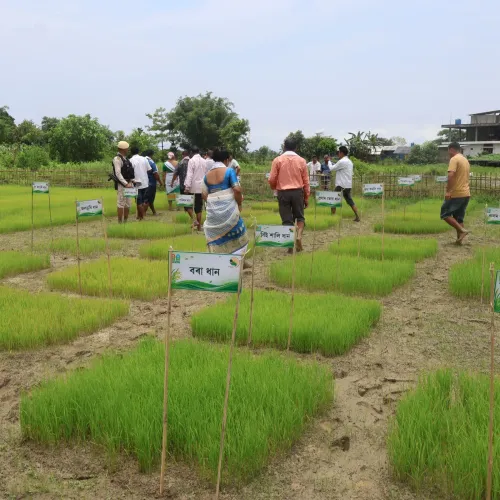
Local farming communities in and around Boirjuli stand to benefit from the site's protected status, which can formalise traditional stewardship practices and open pathways for community-based benefit-sharing under biodiversity law. Agricultural researchers gain a legally secured field laboratory for studying and documenting wild rice germplasm before habitat loss or climate stress erodes it. For the broader scientific community, the declaration signals that the Assam government is willing to deploy conservation law as a tool of agricultural innovation, not merely ecological preservation.
The move also carries implications for farmers across rice-growing belts who could, in the longer term, access improved seed varieties derived from traits preserved at sites like Boirjuli — varieties better equipped to withstand the increasingly erratic monsoons and flood cycles that characterise the region.
What's Next
The declaration raises the prospect of formal research partnerships between the Assam State Biodiversity Board and national or international rice research institutions for systematic trait evaluation of the Boirjuli wild rice populations. Observers will watch whether the state moves to notify additional Biodiversity Heritage Sites, building a network of protected genetic reservoirs across its ecologically diverse landscape. The Boirjuli notification may also prompt other northeastern states to accelerate similar declarations for their own wild crop-relative habitats, reinforcing the region's emerging role as a living gene bank for South Asia's food future.
Point of View
' the Chief Minister's Office frames biodiversity protection as an economic and food-security imperative, not merely an ecological one. This positions Assam within a broader national pattern of states using the Biological Diversity Act as a forward-looking instrument rather than a reactive one. The real test will be whether the declaration is followed by funded research partnerships and community benefit-sharing arrangements that give local stakeholders a tangible stake in the site's long-term protection.
NationPress
11 Jul 2026
Frequently Asked Questions
What is a Biodiversity Heritage Site in India?
A Biodiversity Heritage Site is an area notified by a state government under India's Biological Diversity Act, 2002, to protect unique or threatened ecosystems, species, and genetic resources through in-situ conservation. State biodiversity boards identify and manage these sites, which can include forests, wetlands, and agricultural landscapes of exceptional ecological value.
Why has Assam declared Boirjuli a Biodiversity Heritage Site?
Boirjuli has been declared a Biodiversity Heritage Site because it harbours a rare wild rice habitat whose genetic traits — including potential resilience to drought and flooding — are considered valuable for developing climate-resilient rice varieties. The declaration protects this germplasm in situ for scientific research and sustainable agriculture.
How many Biodiversity Heritage Sites does Assam now have?
With the declaration of Boirjuli, Assam now has three Biodiversity Heritage Sites. The state has been progressively using this legal instrument to safeguard its rich and ecologically diverse landscapes.
What is the significance of wild rice in Northeast India?
Northeast India is globally recognised as a centre of genetic diversity for rice, hosting wild relatives of the cultivated crop that carry traits associated with flood tolerance, drought resistance, and other stress adaptations. These genetic resources are of significant interest to plant breeders working to develop varieties suited to a changing climate.
Who benefits from the Boirjuli Biodiversity Heritage Site declaration?
Local farming communities, agricultural researchers, and the broader rice-growing population stand to benefit. The declaration provides legal protection for a valuable gene pool, creates opportunities for community-based stewardship and benefit-sharing, and could eventually contribute to improved seed varieties for farmers across climate-stressed regions.