NBA grants Biodiversity Heritage Site tag to Assam's Borjuli
Synopsis
The National Biodiversity Authority has granted Biodiversity Heritage Site status to Borjuli in Assam, the Chief Minister's Office announced on 3 July 2026. The designation under the Biological Diversity Act, 2002 provides a formal conservation framework for the ecologically significant area in one of India's most biodiverse regions.
Key Takeaways
The National Biodiversity Authority has granted Biodiversity Heritage Site status to Borjuli in Assam .
The announcement was made by the Chief Minister's Office of Assam on 3 July 2026 .
The designation is governed by Section 37 of the Biological Diversity Act, 2002 , which empowers state governments to notify BHS areas in consultation with the NBA.
The NBA was established in 2003 under the Ministry of Environment, Forest and Climate Change to implement the Biological Diversity Act.
Northeastern India is a global biodiversity hotspot, making such designations especially significant for the region.
Next steps include a formal gazette notification and preparation of a community-involved site management plan.
The Chief Minister's Office of Assam announced on Friday, 3 July 2026 that the National Biodiversity Authority (NBA) has granted Biodiversity Heritage Site (BHS) status to Borjuli in Assam, marking a significant conservation milestone for the northeastern state.
Context
The designation of Borjuli as a Biodiversity Heritage Site places it within a nationally recognised framework for protecting ecologically sensitive areas that fall outside conventional protected area networks such as wildlife sanctuaries and national parks. The announcement was shared by the CMO Assam official account, signalling the state government's active role in facilitating the recognition.
Under Section 37 of the Biological Diversity Act, 2002, state governments are empowered to notify Biodiversity Heritage Sites in consultation with the National Biodiversity Authority, a statutory body established in 2003 under the Ministry of Environment, Forest and Climate Change.
Policy Backdrop
The Biological Diversity Act, 2002 was enacted to give domestic effect to India's obligations under the Convention on Biological Diversity, the landmark 1992 international treaty that India ratified, committing the country to conservation, sustainable use of biodiversity, and equitable benefit sharing.
The National Biodiversity Authority serves as the apex body overseeing implementation of the Act, including the process of notifying and regulating Biodiversity Heritage Sites. Such designations are intended to protect areas of ecological, cultural, or traditional significance that may not qualify — or may not need — the stricter regime of a formal wildlife reserve.
India has progressively notified Biodiversity Heritage Sites across multiple states, with northeastern India contributing significantly to these efforts. The region's high levels of endemism and its overlap with global biodiversity hotspots make it a priority zone for such designations.
Stakeholders and Impact
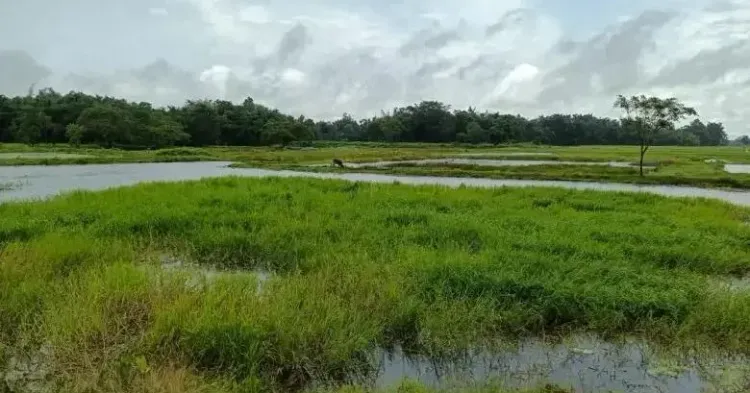
Assam is home to extensive forest cover, wetlands, and riverine ecosystems that support exceptional biodiversity. The BHS tag for Borjuli is expected to benefit local communities, conservation researchers, and the state's forest department by providing a formal legal framework for site protection and sustainable management.
Unlike strict protected areas, Biodiversity Heritage Sites typically allow for continued community engagement and traditional practices, making the designation particularly relevant for areas where local populations have historically served as stewards of natural resources. The recognition also strengthens the case for integrating traditional ecological knowledge into formal conservation planning.
What's Next
Following the NBA's grant of BHS status, the next steps typically include publication of a formal gazette notification and the preparation of a site-specific management plan developed with local community participation. These processes are crucial for translating the designation into on-ground conservation outcomes.
Assam's addition of Borjuli to the national BHS network reinforces the broader national push to expand biodiversity conservation beyond tiger reserves and elephant corridors, and signals that the state government views community-centred ecological protection as a key plank of its environmental policy going forward.
Point of View
A state that already hosts globally significant ecosystems, such designations carry both ecological and political weight, signalling that the state government is actively leveraging central statutory mechanisms to protect its natural capital. The move fits a broader national pattern of using the Biological Diversity Act's community-friendly provisions to bring ecologically sensitive areas under a lighter-touch but legally binding protective umbrella. The real test, as with most BHS notifications, will be whether a credible management plan with genuine local participation follows the announcement.
NationPress
1 Oct 2026
Frequently Asked Questions
What is a Biodiversity Heritage Site in India?
A Biodiversity Heritage Site (BHS) is an area notified under Section 37 of the Biological Diversity Act, 2002 to protect areas of significant biological, ecological, or cultural importance. State governments notify these sites in consultation with the National Biodiversity Authority.
Which body granted Biodiversity Heritage Site status to Borjuli in Assam?
The National Biodiversity Authority (NBA), a statutory body under India's Ministry of Environment, Forest and Climate Change, granted the Biodiversity Heritage Site status to Borjuli in Assam.
Where is Borjuli located?
Borjuli is located in Assam, a northeastern Indian state known for its rich biodiversity including wetlands, riverine ecosystems, and forest cover.
What is the National Biodiversity Authority of India?
The National Biodiversity Authority (NBA) is a statutory body established in 2003 under the Biological Diversity Act, 2002 to regulate access to biological resources and oversee conservation measures including the notification of Biodiversity Heritage Sites.
What happens after a place is declared a Biodiversity Heritage Site?
After a BHS designation, a formal gazette notification is typically published and a site-specific management plan is prepared, usually with participation from local communities, to guide conservation and sustainable use of the area.