Yadav: India now world's 3rd largest startup ecosystem

Synopsis
Union Environment Minister Bhupender Yadav credited over a decade of central government policy — including Startup India, Digital India, and Make in India — for elevating India to the position of the world's third-largest startup ecosystem, behind only the United States and China.
Key Takeaways
Bhupender Yadav declared India the world's third-largest startup ecosystem in a post on X on 14 June 2026 .
He attributed the growth to a strong innovation infrastructure built over 11 to 12 years of central government policy.
Key programmes cited in this policy arc include Startup India (2016) , Digital India (2015) , and Make in India (2014) .
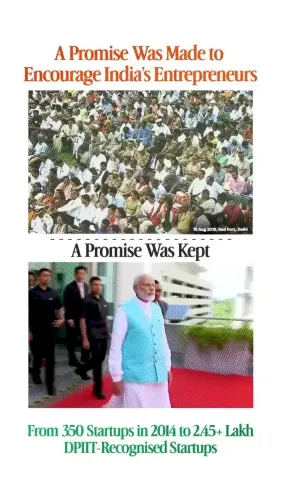
India has grown from single-digit unicorns to over 100 , consistently ranking third globally after the United States and China .
UPI and other digital public goods have been central to enabling fintech and consumer-tech startup growth.
Upcoming Union Budget provisions and DPIIT norm revisions could further shape the ecosystem's next phase.
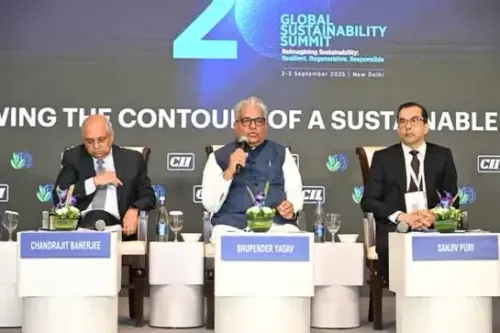
Union Environment Minister Bhupender Yadav on Sunday, 14 June 2026, highlighted India's rise as the world's third-largest startup ecosystem, attributing the growth to a robust innovation infrastructure built over the past 11 to 12 years under the central government's policy push.
Posting on X, Yadav wrote: 'बीते 11-12 वर्षों में भारत ने innovation के लिए मजबूत ecosystem तैयार किया।' ('In the last 11-12 years, India has built a strong ecosystem for innovation.') He added that India today stands as the world's third-largest startup ecosystem.
Context
The claim reflects a sustained government narrative linking the post-2014 policy era to India's emergence as a global startup powerhouse. Since 2014, successive central government programmes — Make in India, Digital India, and Startup India — have been credited with creating the regulatory and infrastructural conditions for venture creation at scale.
India's startup count has grown dramatically over this period, moving from a handful of unicorns to over 100, placing the country consistently behind only the United States and China in global startup rankings.
Policy Backdrop
The Startup India initiative, announced in 2016, introduced tax benefits, simplified compliance norms, and a fund-of-funds mechanism to channel capital into early-stage ventures. The Digital India programme, rolled out in 2015, built the digital public infrastructure — including the Unified Payments Interface (UPI) — that underpins much of the fintech and consumer-tech startup activity today.
The Department for Promotion of Industry and Internal Trade (DPIIT) has been the nodal body for recognising startups and administering incentives. Ease-of-doing-business reforms across this period have also reduced regulatory friction for new ventures.
Stakeholders and Impact
India's startup ecosystem spans sectors from fintech and agritech to healthtech and deeptech, with millions of jobs created directly and indirectly. Entrepreneurs, angel investors, venture capital funds, and technology workers are among the primary stakeholders who have benefited from the policy environment described by Yadav.
The third-place global ranking signals India's competitive position in attracting foreign venture capital and talent, reinforcing the government's pitch to global investors that India is a preferred destination for innovation-led growth.
What's Next
Observers will watch for the next Economic Survey chapter on startups, which typically provides updated data on DPIIT-recognised entities and sectoral distribution. Any revision to startup tax incentives or recognition norms in the upcoming Union Budget could further shape the trajectory of the ecosystem that Yadav has highlighted.
As India deepens its push into semiconductors, artificial intelligence, and green technology, the startup policy framework is expected to evolve to support these capital-intensive frontier sectors.
Point of View
Framing innovation as an electoral and governance achievement ahead of potential budget announcements. The choice of a senior environment minister — rather than the IT or commerce portfolio — to amplify this message signals a party-wide effort to own the startup narrative across all wings of government. The reference to '11-12 years' is a pointed timestamp anchoring the story to 2014, the year the current ruling dispensation came to power. This kind of cross-portfolio amplification suggests the startup economy will remain a central plank in the BJP's governance pitch going into the next electoral cycle.
NationPress
13 Sept 2026
Frequently Asked Questions
Is India really the third-largest startup ecosystem in the world?
India is widely recognised as the third-largest startup ecosystem globally, behind the United States and China, based on the number of DPIIT-recognised startups and unicorns. The country has crossed the milestone of over 100 unicorns, a benchmark that underpins this ranking.
What government schemes helped India build its startup ecosystem?
The central government launched three flagship programmes that shaped India's startup growth: Startup India in 2016 (tax benefits and compliance ease), Digital India in 2015 (digital infrastructure including UPI), and Make in India in 2014 (investment and manufacturing promotion).
What did Bhupender Yadav say about India's startup ecosystem?
Bhupender Yadav posted on X that India has built a strong innovation ecosystem over the last 11 to 12 years and that India today stands as the world's third-largest startup ecosystem.
What is the Startup India initiative?
Startup India is a central government programme launched in January 2016 to support new ventures through tax exemptions, simplified regulatory compliance, and a fund-of-funds mechanism. It is administered by the Department for Promotion of Industry and Internal Trade (DPIIT).
How many unicorns does India have?
India has produced over 100 unicorn startups — privately held companies valued at over one billion dollars — making it one of the top three unicorn-producing nations alongside the United States and China.