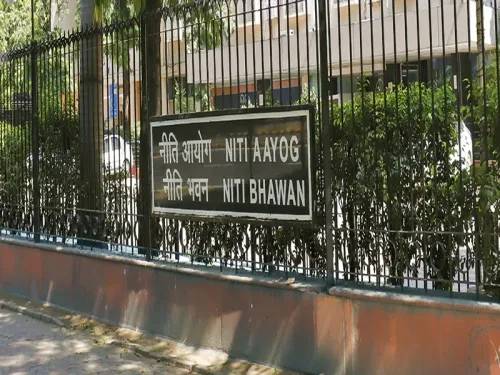
Ayurveda global healthcare push by 2047: NITI Aayog-PwC roadmap unveiled

Synopsis
NITI Aayog and PwC have mapped out an ambitious three-phase plan to make Ayurveda a globally recognised healthcare pillar by 2047 — but the roadmap is as revealing for what it admits as for what it proposes. With exports still classified as dietary supplements and 95 per cent of practitioners confined to India, the gap with Traditional Chinese Medicine's state-backed global reach is stark, and closing it will require far more than diplomatic goodwill.
Key Takeaways
NITI Aayog and PwC released the 'Strategic Roadmap for Making Ayurveda Global' on 2 July , targeting global healthcare recognition by 2047 .
Ayurveda exports doubled from USD 1.09 billion (2014) to USD 2.16 billion (2023) , reaching 150 countries , but most are classified as dietary supplements, not medicines.
Over 3,55,000 trained Ayurveda practitioners exist in India; 95 per cent remain within the country.
The roadmap benchmarks against Traditional Chinese Medicine (TCM) , which has over 30 overseas centres and ISO-backed recognition — advantages Ayurveda currently lacks.
A three-phase plan runs from 2025–2029 (GMP certification, global centres) through 2035 (EU directive registration, insurance pilots) to 2047 (formal recognition in at least 20 national health systems).
Governance would be led by a Mission Steering Group chaired by the Minister of Ayush , supported by a Global Ayurveda Forum.
NITI Aayog, in collaboration with PwC, has released a report titled 'Strategic Roadmap for Making Ayurveda Global', outlining a phased plan to transform Ayurveda from a largely India-centric traditional practice into a globally recognised healthcare framework by 2047 — the centenary of India's Independence. The report charts a three-phase strategy spanning research, regulation, diplomacy, and branding to position Ayurveda alongside established global medical systems.
Where Ayurveda Stands Today
Ayurveda currently holds formal recognition in nearly 30 countries, with varying degrees of licensing and integration into national health policies. India maintains a substantial domestic base of over 3,55,000 trained practitioners, though 95 per cent of them remain within the country — a structural constraint on international outreach.
Exports of Ayurvedic products have doubled over the past decade, rising from USD 1.09 billion in 2014 to USD 2.16 billion in 2023, reaching approximately 150 countries. However, most shipments are classified as dietary supplements rather than medicines, reflecting persistent regulatory barriers in destination markets.
The TCM Benchmark India Must Catch Up With
The report draws a pointed comparison with Traditional Chinese Medicine (TCM), which has achieved significantly greater global penetration. China has reportedly established over 30 overseas TCM centres, integrated TCM into free trade agreements, and secured recognition through ISO standards. TCM's advance is attributed to mission-scale state support, sustained research funding, and proactive diplomatic engagement.
Ayurveda, by contrast, suffers from fragmented regulation, limited practitioner licensure abroad, and insufficient harmonised pharmacopeial standards — gaps the roadmap directly addresses.
What India Has Already Done
Since the creation of the Ministry of Ayush in 2014, India has signed over 75 MoUs with foreign governments and institutions, established Ayush Information Cells in 39 countries, and launched the Ayush Visa in 2022 to facilitate medical value travel. The WHO Global Traditional Medicine Centre in Jamnagar has added institutional credibility, and Ayurveda has been integrated into the WHO's ICD-11 classification system. Digital initiatives such as the Ayush Grid and the m-Yoga app are also part of the outreach effort.
International research collaboration is expanding, with nearly 70 countries now engaged in Ayurveda-related studies. Educational outreach includes scholarships for international students and the establishment of Ayush academic chairs in foreign universities, though standardised global curricula remain a work in progress.
The Three-Phase Roadmap
In the short term (2025–2029), the roadmap calls for fast-tracking WHO-GMP certification for major manufacturers, launching flagship international Ayurveda centres in priority markets, developing standardised clinical protocols for evidence generation, and establishing a Global Ayurveda Register with WHO-aligned credentials.
In the medium term (up to 2035), it urges securing registrations under the European Union's Traditional Herbal Medicinal Products Directive, piloting insurance programmes in select countries, and implementing professional mobility programmes for practitioners.
In the long term (up to 2047), the roadmap seeks formal recognition in at least 20 national health systems, sustainable evidence-generation ecosystems, and robust global quality assurance frameworks.
Key Challenges and the Path Forward
The report acknowledges that acceptability remains uneven. Insurance coverage for Ayurvedic services is rare outside India, quality assurance gaps persist, GMP adoption is inconsistent, and concerns over contaminants have slowed wider adoption. Regulatory harmonisation across countries is limited, and evidence-based clinical research is described as inadequate.
To address these, the roadmap recommends a unified global branding strategy, culturally adaptable communication campaigns, myth-busting initiatives, and transparent sourcing practices. Medical Value Travel (MVT) is identified as a high-growth area, with proposals for international Ayurveda hubs, domestic wellness zones, and bundled Ayush Visa packages covering diagnostics, treatment, and tele-follow-ups.
The report also proposes that Indian embassies serve as proactive Ayurveda information nodes, and envisions premium Ayurveda Experience Centres at landmarks including the WHO headquarters in Geneva, the UN Headquarters in New York, and Trafalgar Square in London. Governance would be overseen by a Mission Steering Group chaired by the Minister of Ayush, supported by a Global Ayurveda Forum and transparent progress dashboards.
Whether Ayurveda can close the gap with TCM by 2047 will ultimately depend on India's ability to move beyond fragmented exports and wellness tourism toward a cohesive, evidence-driven global health ecosystem.
Point of View
Negligible insurance penetration, and a practitioner base almost entirely confined to India. The TCM comparison is instructive but also sobering: China's global reach was built on decades of state-directed investment and treaty-level diplomacy, not phased roadmaps. India's 75 MoUs and 39 Ayush Information Cells have not yet moved the needle on overseas practitioner licensing or regulatory recognition. The 2047 target is aspirational by design, but without binding milestones, independent verification mechanisms, and a credible research pipeline that satisfies international evidence standards, this risks becoming another well-intentioned document that generates headlines without systemic change.
NationPress
3 Jul 2026
Frequently Asked Questions
What is the NITI Aayog-PwC Ayurveda global roadmap?
It is a strategic report released on 2 July by NITI Aayog in collaboration with PwC, outlining a phased plan to make Ayurveda a globally recognised healthcare system by 2047. The roadmap covers regulation, research, branding, medical value travel, and diplomatic outreach across three phases running from 2025 to 2047.
How large are India's Ayurveda exports currently?
Ayurvedic product exports reached USD 2.16 billion in 2023, up from USD 1.09 billion in 2014, and now reach approximately 150 countries. However, most exports are classified as dietary supplements rather than medicines due to regulatory barriers in destination markets.
Why does the report compare Ayurveda with Traditional Chinese Medicine?
Traditional Chinese Medicine (TCM) is cited as a benchmark because it has achieved far greater global penetration, with over 30 overseas TCM centres, integration into free trade agreements, and ISO-backed international standards. The report attributes TCM's success to mission-scale state support, deep R&D funding, and proactive diplomacy — areas where Ayurveda currently lags.
What are the three phases of the Ayurveda global roadmap?
The short-term phase (2025–2029) focuses on WHO-GMP certification, launching international Ayurveda centres, and establishing a Global Ayurveda Register. The medium-term phase (up to 2035) targets EU directive registration and insurance pilots. The long-term phase (up to 2047) seeks formal recognition in at least 20 national health systems and a robust global quality assurance framework.
What are the main challenges facing Ayurveda's global expansion?
Key challenges include limited regulatory harmonisation across countries, inadequate evidence-based clinical research, rare insurance coverage outside India, inconsistent GMP adoption, concerns over contaminants, and the fact that 95 per cent of India's 3,55,000 trained practitioners remain within the country, leaving a thin international workforce.