Department of Posts launches drone mail delivery in Himachal, cuts transit to 7 minutes

Synopsis
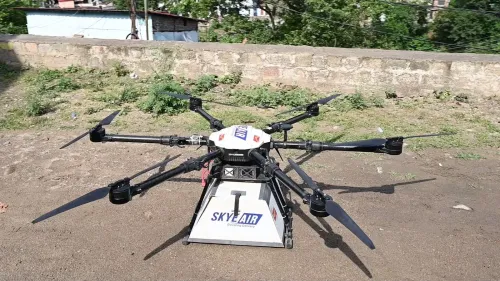
India's postal network has gone airborne in the hills. The Department of Posts has cut a two-hour mail run to seven minutes on the Mandi–Rehardhar route using drones — and plans to scale to 150 routes across Himachal Pradesh and Assam within months. It is the first route-level drone mail service in Indian postal history.
Key Takeaways
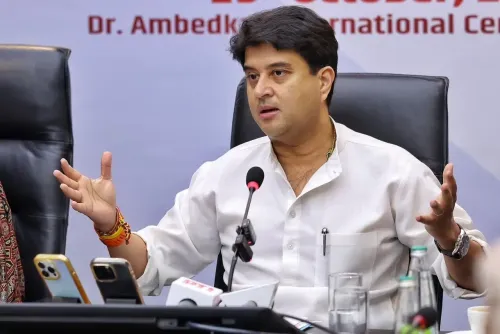
The Department of Posts launched drone-based mail delivery in Himachal Pradesh on 13 June , announced by Union Minister Jyotiraditya M.
The Mandi–Rehardhar route is the first to go live, cutting transit time from over 2 hours to just 7 minutes across 12 km .
Around 150 routes in Himachal Pradesh and Assam are earmarked for drone mail deployment over the next 2–3 months .
The service offers real-time tracking and is described as an environmentally sustainable alternative to road transport.
The ICAR-Central Potato Research Institute in Shimla has separately been running drone-based crop management trials since 2020 , with demonstrated gains in precision and reduced water use.
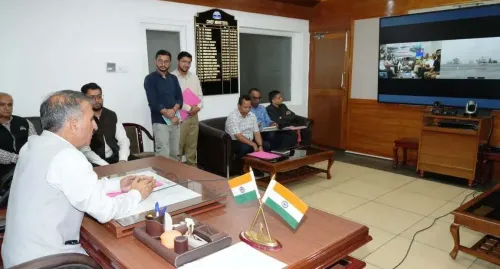
The Department of Posts has launched drone-based transmission of mail and parcels in Himachal Pradesh, slashing transit time from over two hours to just seven minutes on its inaugural route. Union Minister of Communications Jyotiraditya M. Scindia announced the initiative on Saturday, 13 June, describing it as a direct outcome of field-level feedback from Gramin Dak Sevaks and Postal Assistants who flagged the need for faster connectivity in remote, mountainous terrain.
The First Route: Mandi to Rehardhar
The Mandi–Rehardhar corridor has been operationalised as the pilot route. The Rehardhar branch post office, situated roughly 12 km from the Mandi head post office, previously required more than two hours to connect through conventional road-based arrangements. Drone transmission has compressed that journey to approximately seven minutes, according to an official statement.
Scale-Up Plan: 150 Routes Across Two States
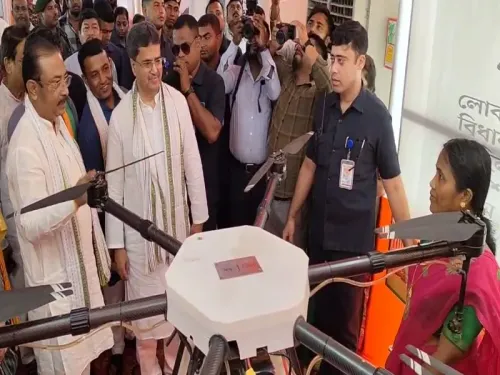
The Department of Posts has identified around 150 routes in Himachal Pradesh and Assam for drone-based mail delivery, with full deployment targeted over the next two to three months. The expansion signals a national intent to use unmanned aerial vehicles (UAVs) as a structural fix for last-mile postal connectivity — not a one-off pilot.
The service offers real-time tracking of consignments and is positioned as an environmentally sustainable alternative to road transport in ecologically sensitive hill zones. Officials say the initiative is expected to strengthen social and economic inclusion by improving access to essential postal services for isolated communities.
Drones Already at Work in Himachal's Orchards
The postal drone push arrives in a state already warming to aerial logistics. Apple growers in remote areas of Himachal Pradesh have been using drones to transport fruit from orchards to collection points — a practice that has helped reduce post-harvest losses on difficult terrain.
Separately, the ICAR-Central Potato Research Institute in Shimla has been developing drone-based crop management technologies since 2020, in collaboration with Bayer Crop Science Ltd. India and General Aeronautics Pvt. Ltd. Two years of trials at regional stations in Modipuram and Jalandhar — covering fungicide, insecticide, and weedicide spraying — demonstrated increased precision, lower water consumption, reduced environmental hazards, and no phytotoxicity in potato crops. Permissions were obtained from the Directorate General of Civil Aviation (DGCA), the Ministry of Civil Aviation, and local authorities before trials commenced.
What This Means for Remote Communities
For villages cut off by landslides, snow, or simply the absence of motorable roads, drone mail delivery could mean faster access to documents, medicines, and government correspondence that currently arrive days late — or not at all. This is the first time the Department of Posts has operationalised drone logistics at a route level, moving beyond demonstration flights to scheduled service. Whether the 150-route target holds within the stated two-to-three-month window will be the first real test of execution.
Point of View
Not just a headline — the Mandi–Rehardhar route is live, not announced. But the 150-route target in two to three months is ambitious for a department that has historically struggled with last-mile execution at scale. The deeper question is sustainability: drone logistics in mountain terrain depend on weather windows, maintenance infrastructure, and trained operators that hill districts do not yet have in abundance. If the Department of Posts can hold the rollout schedule and publish route-level performance data, this could become a replicable model for Uttarakhand, the Northeast, and Jammu and Kashmir. If it stalls at the pilot stage, it joins a long list of government tech-for-inclusion announcements that never moved beyond the ribbon-cutting.
NationPress
14 Sept 2026
Frequently Asked Questions
What is the Department of Posts drone mail delivery service in Himachal Pradesh?
It is a drone-based mail and parcel transmission service launched by the Department of Posts in Himachal Pradesh, reducing transit time on the Mandi–Rehardhar route from over two hours to approximately seven minutes. The service was announced by Union Minister of Communications Jyotiraditya M. Scindia on 13 June.
Which is the first drone mail route launched in Himachal Pradesh?
The Mandi–Rehardhar route is the first to be operationalised. The Rehardhar branch post office is about 12 km from the Mandi head post office and previously took over two hours to connect by road.
How many drone mail routes are planned and when will they launch?
The Department of Posts has identified around 150 routes across Himachal Pradesh and Assam for drone-based mail delivery. Full deployment is targeted over the next two to three months.
What are the benefits of drone mail delivery in remote areas?
Drone delivery dramatically cuts transit time, offers real-time tracking, overcomes terrain challenges such as mountain roads and seasonal closures, and provides an environmentally sustainable transport mode. It is expected to improve access to postal services and support social and economic inclusion in isolated communities.
Are drones being used for other purposes in Himachal Pradesh?
Yes. Apple growers in remote areas of Himachal Pradesh have been using drones to transport fruit from orchards. The ICAR-Central Potato Research Institute in Shimla has also been developing drone-based crop management technologies since 2020, with successful trials on fungicide and insecticide spraying in potato crops.