India-UK FTA live: Nasscom, FICCI hail zero-duty deal as Viksit Bharat milestone

Synopsis
The India–UK FTA is no longer a promise — it is operational law. With zero duties on 99% of India's exports, a Double Contribution Convention protecting IT professionals, and the Nasscom UK Forum already in place, this is the most consequential bilateral trade move for Indian technology since the US H-1B era began. The Viksit Bharat framing signals that New Delhi sees this as a development milestone, not just a trade deal.
Key Takeaways
The India–UK Free Trade Agreement (CETA) came into force on 15 July 2025 , granting zero-duty access to nearly 99% of India's exports.
A Double Contribution Convention (DCC) allows Indian professionals on short-term UK postings to pay social security in India — not the UK — for up to five years .
Nasscom launched the Nasscom UK Forum in November 2025 to drive bilateral digital trade and advance the Vision 2035 roadmap.
Indian tech firms already support more than 35,000 jobs in the UK, with 62% of employees based outside London.
FICCI President Anant Goenka linked the agreement to the Viksit Bharat vision of sustained economic growth and global competitiveness.
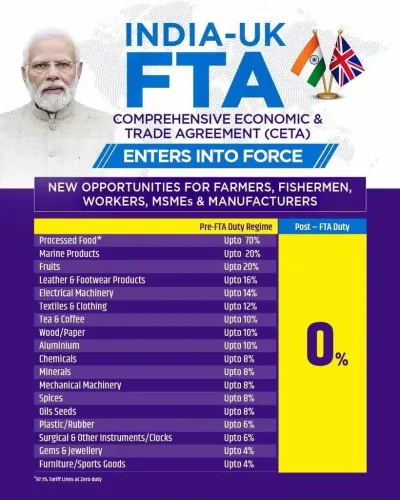
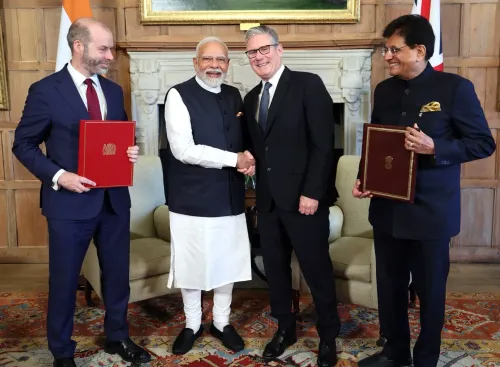
The India–UK Free Trade Agreement (FTA) came into force on Wednesday, 15 July 2025, drawing swift endorsements from industry bodies Nasscom and FICCI, who called it a watershed moment for digital trade, investment, and talent mobility between the two nations. The agreement — formally termed the Comprehensive Economic and Trade Agreement (CETA) — grants zero-duty market access for nearly 99 per cent of India's exports, covering almost 100 per cent of trade value.
What the Agreement Unlocks
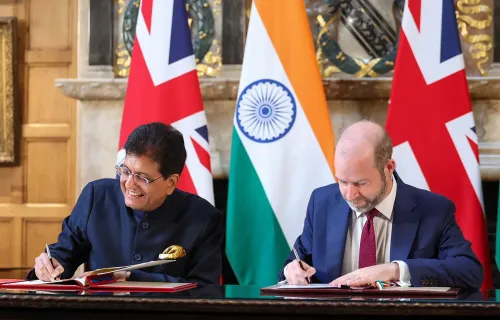
Union Commerce and Industry Minister Piyush Goyal confirmed that the India–UK CETA, along with the accompanying Agreement on Social Security, became operational on Wednesday. The dual package is designed to remove tariff barriers while also addressing the movement of skilled professionals — a long-standing demand from India's technology sector.
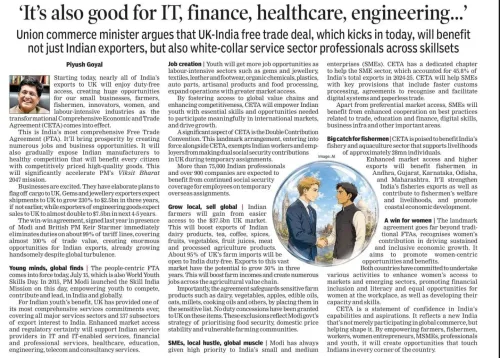
Alongside the FTA, a Double Contribution Convention (DCC) has been concluded, allowing Indian professionals on short-term UK assignments to continue their social security contributions in India — rather than the UK — for up to five years. The outcome was secured with direct support from the Government of India and is expected to reduce costs and administrative burden for Indian IT firms deploying talent in the UK.
Nasscom's Response and the UK Forum
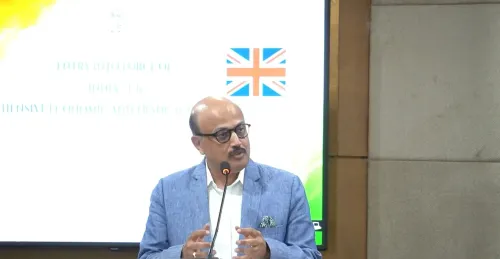
Rajesh Nambiar, President of Nasscom, said the body remains 'committed to working with both governments and industry to translate the FTA into tangible outcomes through greater trade, investment, innovation, and talent collaboration.' He noted that the agreement opens a new chapter for the India–UK technology corridor.
Nasscom also highlighted the launch of the Nasscom UK Forum in November 2025, a strategic platform bringing together leading Indian technology companies with significant UK investments. Manish Malhotra, Chair of the Nasscom UK Forum, described it as a 'long-term platform for industry and government to jointly shape the future of this strategic corridor.'
The Forum is mandated to deepen bilateral digital trade, advance the India–UK Technology Security Initiative and the Vision 2035 roadmap, and strengthen engagement with policymakers and innovation ecosystems on both sides.
Jobs, Regional Spread, and AI Capability
A sample of leading Indian technology companies already supports more than 35,000 jobs across the UK, with nearly 62 per cent of those employees based outside London — underscoring a contribution that extends well beyond the capital into regional economies and local talent development, including AI capability building, according to the statement.
FICCI on Viksit Bharat
Anant Goenka, President of FICCI, described the agreement as a 'landmark' that 'complements the vision of Viksit Bharat, reinforcing the country's aspirations for sustained economic growth, global competitiveness, and deeper integration with international markets.' He added that as India advances toward becoming a developed economy, 'high-quality economic partnerships will play an important role in expanding business opportunities, strengthening industrial capabilities, and enhancing the country's participation in global trade and investment networks.'
What Comes Next
With the CETA now operational, attention shifts to implementation — particularly how quickly the DCC benefits reach Indian professionals already deployed in the UK and whether the Nasscom UK Forum can convert the strategic roadmap into measurable trade and investment flows. The Vision 2035 roadmap and the Technology Security Initiative are expected to serve as the principal frameworks guiding the bilateral technology relationship in the years ahead.
Point of View
But the hard work begins now. Zero-duty access means little if Indian exporters cannot navigate UK standards and certification regimes — areas the CETA text addresses in principle but implementation will test in practice. The Double Contribution Convention is the more immediately tangible win: it directly reduces the cost of deploying Indian IT talent in the UK, and that benefit will be felt in quarterly earnings before any tariff saving is. The Viksit Bharat framing by FICCI is politically useful but risks setting expectations that a single bilateral deal cannot meet. India's trade-to-GDP ratio and export basket diversification will matter far more than any one agreement in determining whether the developed-economy target is credible.
NationPress
13 Oct 2026
Frequently Asked Questions
What is the India–UK Free Trade Agreement (CETA)?
The India–UK Comprehensive Economic and Trade Agreement (CETA) is a bilateral trade deal that came into force on 15 July 2025, granting zero-duty market access for nearly 99% of India's exports and covering almost 100% of trade value between the two countries. It also includes an Agreement on Social Security to facilitate the movement of skilled professionals.
What is the Double Contribution Convention and who does it benefit?
The Double Contribution Convention (DCC) allows Indian professionals on short-term assignments in the UK to continue paying social security contributions in India — rather than the UK — for up to five years. It directly benefits Indian IT and services professionals deployed in the UK, reducing dual-contribution costs for both employees and their employers.
What is the Nasscom UK Forum?
The Nasscom UK Forum is a strategic industry platform launched in November 2025 to bring together leading Indian technology companies with UK investments. It aims to deepen bilateral digital trade, advance the India–UK Technology Security Initiative and Vision 2035 roadmap, and strengthen engagement with governments and innovation ecosystems.
How many jobs do Indian tech firms support in the UK?
According to Nasscom, a sample of leading Indian technology companies supports more than 35,000 jobs across the UK, with nearly 62% of those employees based outside London, contributing to regional economic growth and AI capability building.
Why have FICCI and Nasscom welcomed the India–UK FTA?
Both bodies see the FTA as a catalyst for expanded digital trade, investment, and talent mobility. FICCI President Anant Goenka linked it to the Viksit Bharat vision of India becoming a developed economy, while Nasscom highlighted the DCC and the new UK Forum as concrete mechanisms to translate the agreement into business outcomes.