India-UK FTA goes live: FICCI sees gains in goods, services and talent mobility
Synopsis
The India-UK Free Trade Agreement went live on 15 July 2025, unlocking zero-duty access for nearly 99 per cent of India's exports. FICCI and Nasscom both welcomed the pact, with the Double Contribution Convention offering a concrete win for Indian IT professionals on UK assignments — signalling that this deal goes well beyond tariff cuts.
Key Takeaways
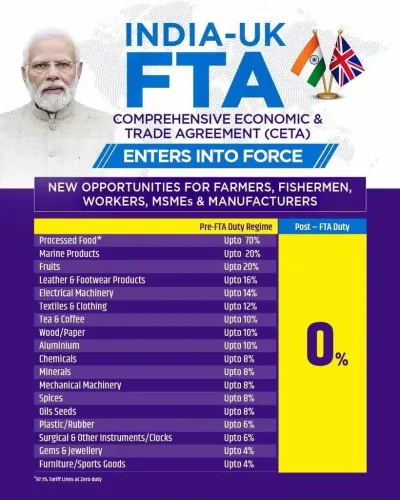
The India-UK Free Trade Agreement (CETA) became operational on 15 July 2025 , covering nearly 100 per cent of bilateral trade value.
Nearly 99 per cent of India's exports to the UK will now attract zero duty .
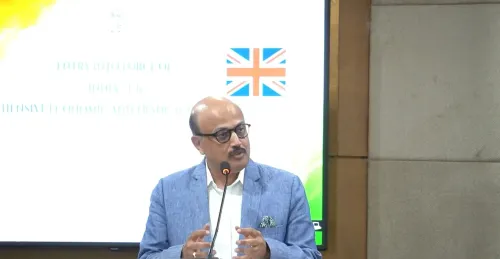
FICCI Secretary General Anant Swarup called it a major milestone in India's FTA journey, citing gains in goods, services, innovation and talent mobility.
FICCI President Anant Goenka linked the pact to the Viksit Bharat vision and India's goal of becoming a developed economy.
Nasscom welcomed the Double Contribution Convention (DCC) , which lets Indian professionals on short-term UK assignments pay social security in India for up to five years .
The FTA is India's most significant bilateral trade deal in recent years, complementing ongoing negotiations with the EU and GCC .
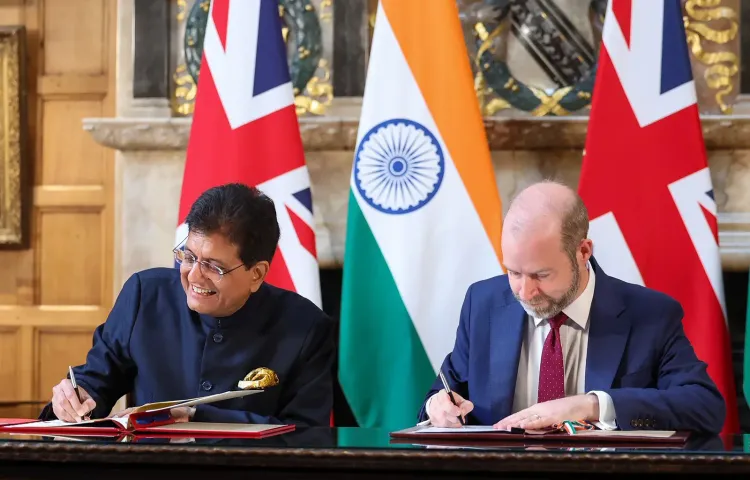
The India-UK Free Trade Agreement (FTA) became operational on Wednesday, 15 July 2025, providing zero-duty market access for nearly 99 per cent of India's exports and covering almost 100 per cent of bilateral trade value — a development the Federation of Indian Chambers of Commerce and Industry (FICCI) has described as a landmark milestone in India's trade liberalisation journey. The pact, formally titled the India-UK Comprehensive Economic and Trade Agreement (CETA), is expected to deepen India's integration with global value chains and open fresh avenues across both goods and services.
FICCI's Reaction
FICCI Secretary General Anant Swarup congratulated Prime Minister Narendra Modi on the agreement coming into force, calling it a transformative step for Indian industry. 'Heartiest congratulations from FICCI to PM Modi on the operationalisation of India-UK Free Trade Agreement. This agreement would open up new opportunities for the Indian industry in both goods and services. The cooperation in innovation, technology and talent mobility will enhance Indian industry's competitiveness,' Swarup said.
He further described the pact as a major milestone in India's FTA journey, adding that it would promote the country's participation in global value chains while encouraging innovation-led growth in both India and the United Kingdom.
Vision of Viksit Bharat
FICCI President Anant Goenka said the agreement complements the vision of Viksit Bharat by strengthening India's aspirations for sustained economic growth and deeper integration with international markets. 'As India advances towards becoming a developed economy, high-quality economic partnerships will play an important role in expanding business opportunities, strengthening industrial capabilities, and enhancing the country's participation in global trade and investment networks,' Goenka said.
The industry body characterised the agreement as a forward-looking framework that will support India's trajectory toward greater prosperity, innovation and economic transformation.
Tech Sector and Talent Mobility
IT industry body Nasscom also welcomed the implementation of the agreement, stating it would unlock new opportunities in digital trade, investment, innovation and talent mobility. Notably, Nasscom hailed the conclusion of the Double Contribution Convention (DCC), which will allow Indian professionals on short-term assignments in the UK to continue making social security contributions in India instead of the UK for up to five years — a significant relief for Indian IT workers deployed abroad.
What the FTA Means for Indian Industry
The operationalisation of the India-UK CETA is the most significant bilateral trade development for India in recent years, coming after negotiations that spanned multiple years and political transitions on both sides. For Indian exporters, near-universal zero-duty access to one of Europe's largest consumer markets represents a structural competitive advantage. For the services sector — particularly IT, professional services and education — provisions on talent mobility and digital trade could prove equally consequential. This comes amid India's broader push to conclude FTAs with major economies, including ongoing negotiations with the European Union and the Gulf Cooperation Council (GCC).
With sectoral guidelines and implementation frameworks now expected to be fleshed out in the coming weeks, industry bodies and exporters will be watching closely to see how quickly the agreement translates from policy milestone to on-the-ground market gains.
Point of View
But the headline numbers — 99 per cent zero-duty coverage — need context. Tariff elimination on paper does not automatically translate into export growth; non-tariff barriers, logistics costs and regulatory alignment will determine real-world gains. The Double Contribution Convention is arguably the more immediately impactful clause for Indian industry, directly benefiting the large pool of IT professionals rotating through UK client sites. India's FTA track record has been mixed — the ASEAN deal, for instance, widened the trade deficit rather than shrinking it. The test for the UK pact will be whether Indian exporters, particularly in textiles, pharma and engineering goods, can actually capture the market access on offer, or whether structural competitiveness gaps blunt the advantage.
NationPress
13 Oct 2026
Frequently Asked Questions
What is the India-UK Free Trade Agreement (FTA)?
The India-UK FTA, formally called the Comprehensive Economic and Trade Agreement (CETA), is a bilateral trade pact that became operational on 15 July 2025. It provides zero-duty market access for nearly 99 per cent of India's exports to the UK and covers almost 100 per cent of bilateral trade value.
What does the India-UK FTA mean for Indian exporters?
Indian exporters gain near-universal zero-duty access to the UK market, one of Europe's largest consumer economies. Sectors expected to benefit include textiles, pharmaceuticals, engineering goods, IT services and professional services, according to industry bodies FICCI and Nasscom.
What is the Double Contribution Convention (DCC) under the India-UK FTA?
The Double Contribution Convention allows Indian professionals on short-term work assignments in the UK to continue paying social security contributions in India rather than the UK for up to five years. Nasscom has described this as a significant win for Indian IT workers deployed at UK client sites.
How has FICCI responded to the India-UK FTA going live?
FICCI Secretary General Anant Swarup congratulated Prime Minister Narendra Modi and called the agreement a major milestone in India's FTA journey. FICCI President Anant Goenka linked it to the Viksit Bharat vision, saying high-quality economic partnerships are critical as India advances toward becoming a developed economy.
How does the India-UK FTA fit into India's broader trade strategy?
The India-UK CETA is India's most significant bilateral trade deal in recent years and complements ongoing FTA negotiations with the European Union and the Gulf Cooperation Council (GCC). It signals a broader push by India to deepen integration with global value chains and major consumer markets.