Are India-US Relations Experiencing Strain Due to Trump Tariffs?
Synopsis
The relationship between India and the US is facing challenges due to trade negotiations and geopolitical tensions, according to Ram Madhav. Despite these issues, he emphasizes India's commitment to the partnership, highlighting the importance of bilateral discussions over external influences.
Key Takeaways
India and US relations are currently strained due to tariffs and geopolitical issues.
Ram Madhav emphasizes India's commitment to the partnership.
Trade negotiations are ongoing and have been for several months.
India rejects any third-party involvement in India-Pakistan relations.
The current challenges are seen as temporary and personality-driven.
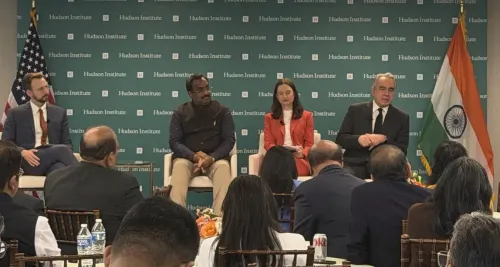
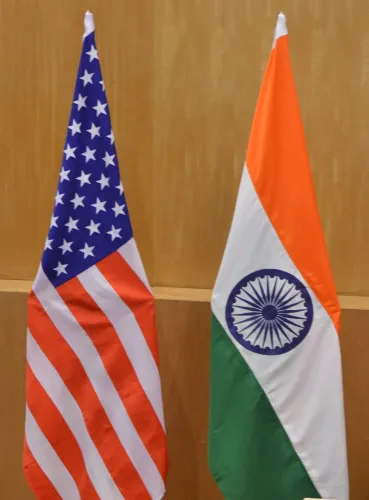
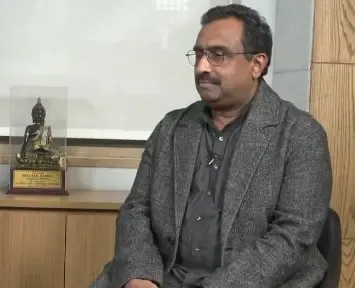
Washington, Jan 12 (NationPress) The bilateral relationship between India and the United States is currently in a challenging yet possibly temporary phase, marked by trade negotiations, tariff disputes, and geopolitical tensions, according to senior BJP leader Ram Madhav. He emphasized that New Delhi is steadfastly dedicated to the partnership.
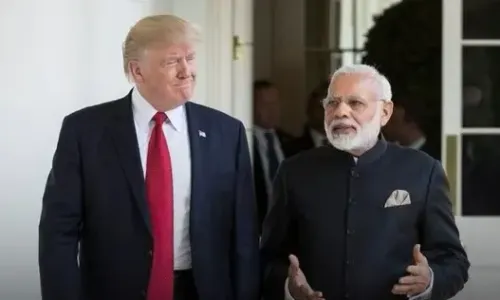
During an interaction with the Overseas Friends of BJP (OFBJP) here, Madhav, who is the president of the India Foundation and a former national general secretary of the BJP, noted that expectations were high in India following President Donald Trump's return to office, yet the subsequent developments have been "unexpected."
"This was unforeseen. Our party had expressed enthusiasm when Trump 2.0 commenced," he remarked, highlighting the significant support Trump has in India.
Madhav explained that India's experience with Trump is not unique. "Many nations share similar experiences with Trump. The President has his own approach to dealing with countries and issues," he noted.
Regarding tariffs, Madhav pointed out that India has shown a willingness to negotiate, with discussions ongoing for several months. "Our commerce ministry and department of commerce have been engaged in talks for nearly eight to nine months," he stated, adding that they are "very close to a deal."
However, he warned that trade discussions become complicated when intertwined with geopolitical matters. "Trade issues become more complex when mixed with geopolitics," he noted, referring to attempts to link trade with India-Pakistan tensions.
Madhav clearly stated India's position on such linkages. "On the India-Pakistan issue, we maintain a clear policy that it should remain a bilateral matter, without any involvement from third countries," he asserted.
He conveyed this stance explicitly to Washington. "We have kindly advised that geopolitics should not interfere with trade negotiations," he added, noting that trade discussions are now being managed separately.
Madhav also seemed to critique the idea that policy decisions could be informally concluded. "India takes matters seriously. Trade agreements cannot merely be settled over a phone call," he emphasized, highlighting the need for thorough negotiations.
Despite the current challenges, Madhav stated there is no intent in India to harm the relationship. "This relationship is crucial for us, far more significant than individual leaders," he said.
He credited former Prime Minister Atal Bihari Vajpayee for establishing the groundwork for modern India-US ties. "He described India and the US as natural allies," Madhav recalled, emphasizing that the relationship has been cultivated over decades.
Madhav also underscored the significance of the Indian diaspora. "Indian Americans are a vital component of this relationship," he stated.
He suggested that the current phase should be regarded as temporary. "There are some hiccups that are more personality-driven than policy-driven," he concluded, reaffirming India's commitment to regaining momentum.
Point of View
It is evident that the relationship between India and the United States is at a critical juncture. While challenges persist, it is essential to recognize the commitment of both nations to navigate through these issues. The focus should remain on fostering dialogue and understanding rather than allowing external factors to dictate the narrative.
NationPress
18 Sept 2026
Frequently Asked Questions
What challenges are currently impacting India-US relations?
India-US relations are facing challenges due to tariff disputes, trade negotiations, and geopolitical tensions.
What is India's stance on trade discussions with the US?
India has expressed a willingness to negotiate and has been engaged in talks for several months.
What did Ram Madhav say about the influence of third countries on India-Pakistan issues?
Madhav stated that India maintains a clear policy that the India-Pakistan issue should remain a bilateral matter without third-party involvement.
How does Madhav view the current phase of India-US relations?
Madhav views the current phase as temporary, driven more by personalities than policies.