India-Vietnam summit: UPI payments, health sector and tech cooperation inked
Synopsis
PM Modi and Vietnamese President To Lam signed a clutch of MoUs in New Delhi — most notably linking UPI-based retail payments via QR codes and opening India's pharma sector to Vietnam's public healthcare procurement from 2027. The breadth of the agenda, from rare earths to 6G to Ayurveda chairs, signals a Comprehensive Strategic Partnership moving from declaration to execution.
Key Takeaways
RBI and State Bank of Vietnam signed an MoU on financial innovation and digital payments , including UPI-QR code linkage for tourism and trade.
Indian pharma companies may participate in Vietnamese public healthcare procurement from 2027 , as mutually agreed.
Leaders agreed to cooperate on 6G, AI, space, nuclear technology, biotechnology, advanced materials , and critical minerals .
IREL (India) Limited and VINATOM signed an MoU on Rare Earths cooperation.
Vietnam invited India to participate in its nuclear power sector ; India expressed appreciation.
Vietnam expressed interest in joining the Global Biofuels Alliance (GBA) .
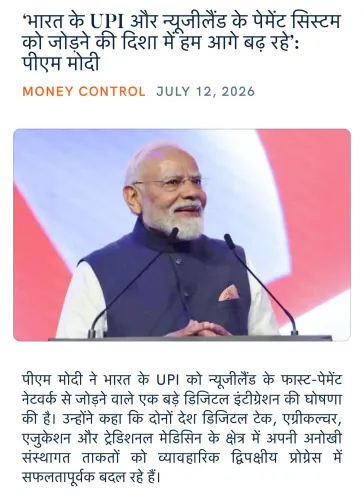
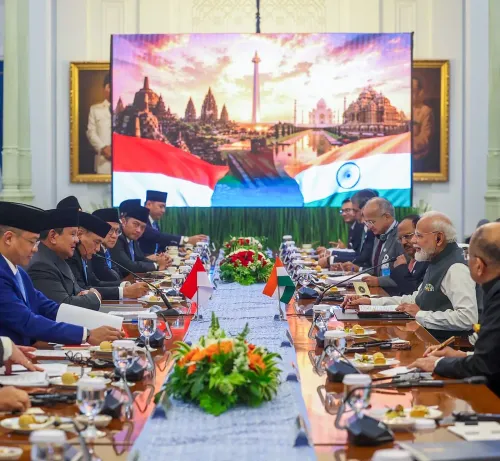
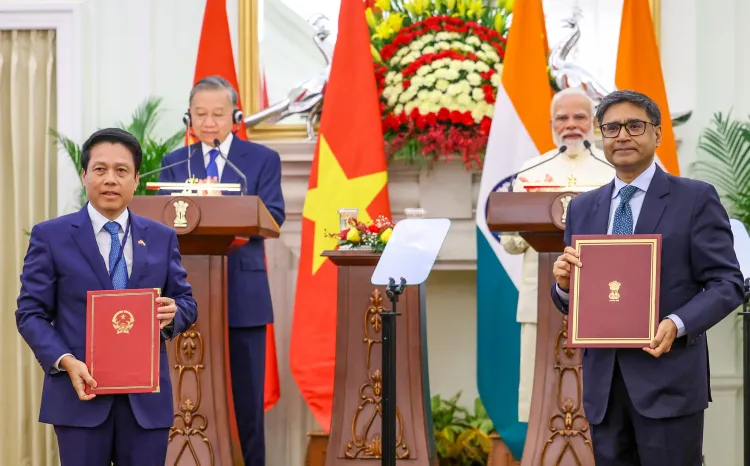
Prime Minister Narendra Modi and visiting Vietnamese President To Lam on Wednesday, 6 May jointly reaffirmed a broad-based cooperation agenda spanning digital payments, healthcare, nuclear energy, and critical technologies, issuing a joint statement in New Delhi after a bilateral press meet. The two leaders welcomed the signing of a landmark Memorandum of Understanding (MoU) between the Reserve Bank of India (RBI) and the State Bank of Vietnam on financial innovation and digital payments, including the potential linking of UPI-based retail payment platforms via QR codes to facilitate tourism and cross-border commerce.
Digital Payments and Financial Innovation
The MoU between the RBI and the State Bank of Vietnam marks a significant step toward interoperable retail payment infrastructure between the two nations. Both sides agreed to promote linkages for retail payment platforms via QR codes, a move that could ease transactions for tourists and businesses operating across the two countries. This comes amid India's active push to internationalise UPI, which has already been linked with payment systems in countries including Singapore, UAE, and France.
Health Sector Cooperation and Pharmaceuticals
The two leaders acknowledged the advancements made by the Indian pharmaceutical industry and agreed to explore the potential participation of Indian companies in the procurement of medicines for Vietnamese public healthcare facilities from 2027, as mutually agreed. They also encouraged cooperation in the digital transformation of healthcare, including the application of Artificial Intelligence (AI) in the health sector. Recognising the shared heritage of traditional medicine in both countries, the leaders agreed to promote exchange of knowledge, research, and best practices, while encouraging closer institutional linkages. They welcomed progress towards the completion of the MoU on Traditional Medicine and the proposed MoU on the establishment of an Academic Chair in Ayurveda in Vietnam.
Critical and Emerging Technologies
The leaders agreed to facilitate greater collaboration in critical and emerging technology areas such as Digital Public Infrastructure, 6G, Artificial Intelligence, space, nuclear technology, marine sciences, biotechnology, advanced materials, and critical minerals. According to the official joint statement, cooperation will focus on practical initiatives such as joint research, R&D centres, and product development as mutually beneficial. They also encouraged further collaboration in applying digital and advanced technologies in smart agriculture, sustainable water management, and air pollution control.
Nuclear Energy and Rare Earths
The leaders noted with satisfaction the ongoing collaboration in the field of peaceful uses of atomic energy and agreed to intensify follow-up on various avenues of cooperation emerging from the 4th India-Vietnam Joint Committee Meeting on atomic energy. India appreciated Vietnam's invitation to participate in its nuclear power sector. They also welcomed the signing of an MoU between IREL (India) Limited and the Institute for Technology of Radioactive and Rare Elements, VINATOM, on mutual cooperation in the field of Rare Earths, emphasising its early and full implementation.
Climate, Environment and Multilateral Initiatives
The two sides recognised the relevance of Mission LiFE (Lifestyle for Environment) and institutions such as the International Solar Alliance (ISA). India welcomed Vietnam's interest in joining the Global Biofuels Alliance (GBA). The leaders also acknowledged the importance of the Coalition for Disaster Resilient Infrastructure (CDRI) in promoting international cooperation in disaster risk reduction. Both sides agreed to enhance collaboration in oceanography, including ocean observing platforms, data management, ocean prediction, capacity building, and maritime scientific research. The wide-ranging agreements signal a deepening of the India-Vietnam Comprehensive Strategic Partnership, with implementation timelines and institutional follow-ups expected to be detailed in the months ahead.
Point of View
Timelines, and institutional mechanisms. The RBI-State Bank of Vietnam digital payments MoU fits India's broader strategy of exporting UPI as soft power and financial infrastructure. The pharma procurement agreement, if operationalised by 2027, could open a structured government-to-government channel that bypasses intermediary procurement layers. The rare earths MoU with VINATOM is perhaps the most strategically underreported element — as India seeks to diversify critical mineral supply chains away from China, Vietnam's rare earth reserves make it a pivotal partner. Whether these agreements translate into measurable outcomes will depend on follow-through mechanisms that past India bilateral summits have sometimes lacked.
NationPress
23 Sept 2026
Frequently Asked Questions
What did India and Vietnam agree on regarding digital payments?
India and Vietnam welcomed the signing of an MoU between the Reserve Bank of India (RBI) and the State Bank of Vietnam on financial innovation and digital payments. The two sides agreed to promote linkages for retail payment platforms via QR codes, facilitating UPI-based transactions for tourism and cross-border business.
When will Indian pharma companies be able to supply medicines to Vietnam?
The two sides agreed to explore the potential participation of Indian pharmaceutical companies in the procurement of medicines for Vietnamese public healthcare facilities from 2027, as mutually agreed. The move acknowledges the advancements of India's pharmaceutical industry.
What is the significance of the IREL-VINATOM MoU on Rare Earths?
The MoU between IREL (India) Limited and VINATOM's Institute for Technology of Radioactive and Rare Elements covers mutual cooperation in the field of Rare Earths. It is significant as India seeks to diversify critical mineral supply chains, and Vietnam holds substantial rare earth reserves.
Which multilateral initiatives did India and Vietnam discuss?
The leaders discussed Mission LiFE, the International Solar Alliance (ISA), the Global Biofuels Alliance (GBA) — which Vietnam expressed interest in joining — and the Coalition for Disaster Resilient Infrastructure (CDRI). They also noted cooperation on atomic energy through the 4th India-Vietnam Joint Committee Meeting.
What technology sectors are covered under India-Vietnam cooperation?
The two sides agreed to collaborate on Digital Public Infrastructure, 6G, Artificial Intelligence, space, nuclear technology, marine sciences, biotechnology, pharmaceuticals, advanced materials, and critical minerals, with a focus on joint research, R&D centres, and product development.