How Did the Indian Army's Judge Advocate General's Department Celebrate Its Corps Day?
Click to start listening
Synopsis
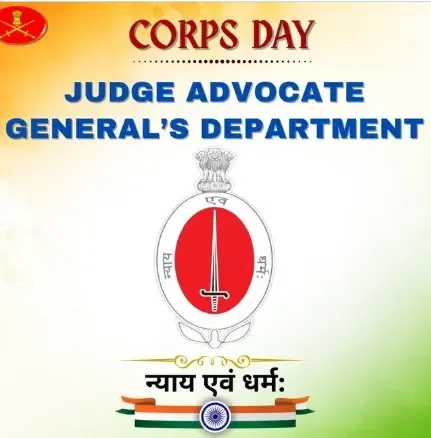
On December 21, the Indian Army honored the Judge Advocate General's Department on its 42nd Corps Day, spotlighting the essential legal framework that upholds discipline and justice. This celebration marks a significant milestone in military history and highlights the evolving role of women in the armed forces.
Key Takeaways
- 42nd Corps Day celebrates the legacy of the Judge Advocate General’s Department.
- The Department plays a crucial role in military justice and legal advice.
- Recent rulings promote gender equality within the military.
- The Judge Advocate General advises the Chief of Army Staff on legal matters.
- Discipline and compliance with law are fundamental to military operations.
New Delhi, Dec 21 (NationPress) The Indian Army commemorated the 42nd Corps Day of the Judge Advocate General’s Department on Sunday, while the Ministry of Defence honored the legal framework that fortifies the Force from within.
On this milestone of the Judge Advocate General Branch, the Ministry released a podcast emphasizing the vital role of this institution in maintaining discipline, justice, and the rule of law within the Indian Army.
“In a thought-provoking discussion, Major General Sandeep Kumar, JAG of the Indian Army, elaborates on the responsibilities, roles, and evolving challenges faced by the JAG Branch—from military justice and operational legal advice to new domains of warfare,” the Ministry noted about the podcast in a message on X.
The history of the Judge Advocate General’s Department dates back to the British Articles of War-1385. The Army Act Bill was introduced in Parliament on December 21, 1949, which is why this date is celebrated as the Corps Day of the Judge Advocate General’s Department.
As the legal arm of the Indian Army, it handles military-related disciplinary cases and litigation. The Judge Advocate General serves as the legal consultant to the Chief of Army Staff on military, martial (in its combat aspect), and international law, and also aids the Adjutant General in matters concerning discipline regarding the application of military law.
Earlier this year, the Supreme Court invalidated the restriction on the number of women seats in the JAG Branch, declaring it a violation of the right to equality.
A bench comprising Justices Dipankar Datta and Manmohan stated that selection should solely depend on merit.
The apex court was addressing a writ petition from two women who ranked fifth and sixth in merit and contested the Army's gender-based vacancy allocation (six for men, three for women) in the JAG Entry Scheme, arguing it unjustly denied them selection despite their higher qualifications.
"The executive cannot reserve positions for men. The allocation of six seats for men and three for women is arbitrary and must not be permitted under the guise of induction. The essence of gender neutrality and the 2023 regulations is that the Union should select the most deserving candidates. Limiting the number of women is a violation of the right to equality," the bench asserted.
Point of View
It is vital to recognize the significant developments within the Indian Army's Judge Advocate General's Department. This celebration of its 42nd Corps Day reflects our commitment to legal integrity and equality. The recent Supreme Court ruling emphasizes the necessity for merit-based selection, ensuring that all deserving candidates, regardless of gender, have a fair opportunity in serving our nation. This approach not only strengthens our military but also reinforces our foundational values of justice and equality.
NationPress
22/12/2025
Frequently Asked Questions
What is the significance of the 42nd Corps Day?
The 42nd Corps Day commemorates the establishment of the Judge Advocate General's Department, recognizing its vital role in upholding military law and discipline within the Indian Army.
How does the JAG Department influence military operations?
The JAG Department provides crucial legal advice, ensuring that military operations comply with national and international laws, thereby upholding justice and discipline.
What did the Supreme Court ruling entail?
The Supreme Court ruling removed the gender-based vacancy restrictions in the JAG Branch, emphasizing that selection should only be based on merit, thus promoting equality.