Indian LPG Tankers Set to Navigate Strait of Hormuz
Synopsis
New developments arise as more Indian-flagged LPG tankers are set to cross the Strait of Hormuz, following Iran's assurance of safe passage. This crucial waterway is vital for global oil and gas exports, and the Indian government is taking measures to ensure the safety of its vessels and crew.
Key Takeaways
Indian LPG tankers are set to cross the Strait of Hormuz following safe passage assurances from Iran.
The Strait of Hormuz is critical for global energy exports.
India has 28 vessels in the Persian Gulf, all under close monitoring.
The government is enhancing maritime safety measures.
Two Indian oil tankers are expected to arrive soon, escorted by the Indian Navy.
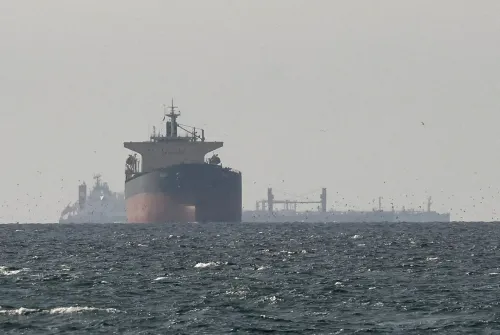
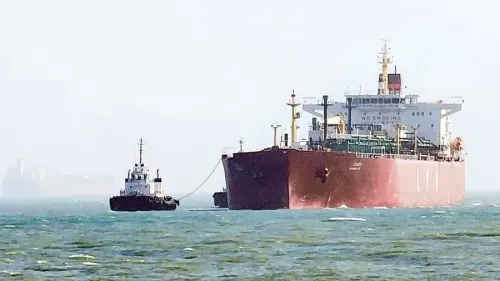
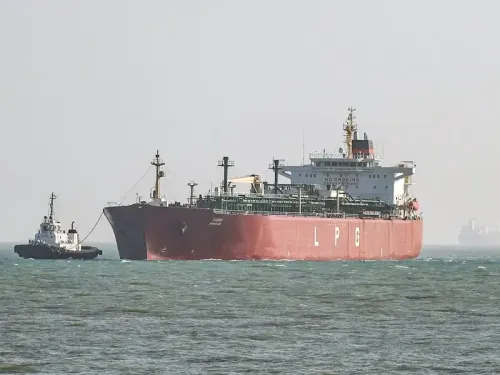
New Delhi, March 14 (NationPress) Following the successful transit of two LPG carriers through the Strait of Hormuz, a new fleet of LPG tankers is preparing to navigate the conflict-ridden area after Iran authorized the safe passage for Indian-flagged vessels, as confirmed by trustworthy sources on Saturday.
Currently, there are 28 Indian-flagged ships operating within the Persian Gulf, and their safety and security are being closely monitored.
Of these, 24 vessels are positioned west of the Strait, carrying 677 Indian sailors, while four ships are stationed to the east, with 101 Indian crew members aboard.
Recent information from the Directorate General of Shipping (DGS) dated March 12 indicates that these ships are transporting approximately 215,000 tonnes of liquefied natural gas (LNG), 415,000 tonnes of liquefied petroleum gas (LPG), and around 1.75 million tonnes of crude oil.
The Ministry of Ports, Shipping and Waterways is actively overseeing the current maritime conditions in the Persian Gulf, enhancing monitoring and preparedness strategies due to the evolving maritime landscape.
The Strait of Hormuz is recognized as one of the most crucial shipping passages globally, accounting for 20% of the world's oil and gas exports.
In related developments, two oil tankers, named Shivalik and Nanda Devi, are expected to reach India within a few days. These vessels are owned by the state-operated Shipping Corporation of India Ltd.
Government officials have reported that the Shivalik is under the protection of the Indian Navy, anticipated to dock at an Indian port within two days, likely in Mumbai or Kandla. The ship has successfully entered open waters and is proceeding safely under naval supervision.
Meanwhile, Nanda Devi is transporting over 46,000 metric tonnes of liquefied petroleum gas (LPG), which is vital for India's energy infrastructure.
Sources confirm that both ships are being carefully escorted by naval assets to ensure their safe passage through these strategically significant waters.
This initiative follows a high-level dialogue between Prime Minister Narendra Modi and Iranian President Masoud Pezeshkian concerning the movement of goods and energy resources.
Iran's Ambassador to India, Mohammad Fathali, suggested on Friday that Indian vessels might soon have secure passage through the Strait of Hormuz amid escalating tensions in the Middle East, which have previously hindered transit through this essential waterway.
Point of View
The safe passage of Indian-flagged LPG tankers through the Strait of Hormuz is a critical step in ensuring energy security for India and maintaining maritime safety amid rising geopolitical tensions. The government's proactive measures reflect a commitment to protect national interests and safeguard its maritime assets.
NationPress
5 Oct 2026
Frequently Asked Questions
Why are Indian LPG tankers crossing the Strait of Hormuz?
Indian LPG tankers are crossing the Strait of Hormuz following Iran's assurance of safe passage, crucial for transporting liquefied petroleum gas and other energy resources.
How many Indian vessels are currently in the Persian Gulf?
There are currently 28 Indian-flagged vessels operating in the Persian Gulf region.
What is the significance of the Strait of Hormuz?
The Strait of Hormuz is one of the world's most vital shipping lanes, through which 20% of global oil and gas exports transit.
What measures is the Indian government taking for vessel safety?
The Indian government is closely monitoring the maritime situation and has enhanced safety protocols for its vessels and crew in the Persian Gulf.
Which Indian vessels are expected to arrive soon?
The oil tankers Shivalik and Nanda Devi are expected to reach India within a couple of days, with naval escort for safe passage.