Indian LPG Carrier 'Nanda Devi' Navigates Strait of Hormuz After 'Shivalik'
Synopsis
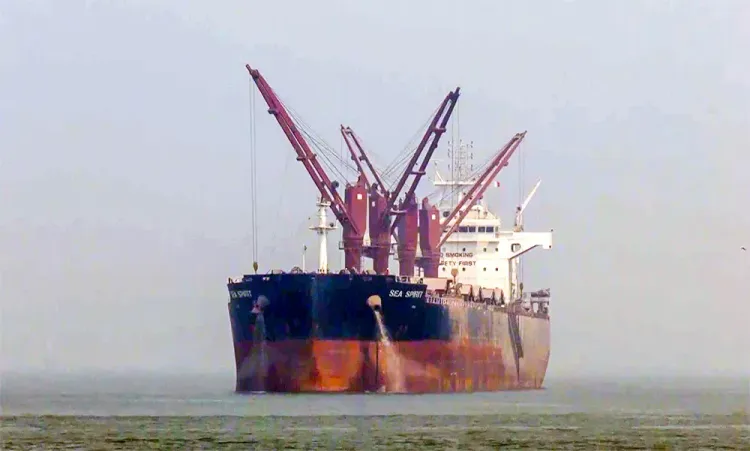
In a significant development, the Indian LPG tanker 'Nanda Devi' has successfully navigated the critical Strait of Hormuz, following the safe passage of 'Shivalik'. This advancement is crucial for India's energy supply, ensuring the continuous flow of vital resources amid regional tensions.
Key Takeaways
'Nanda Devi' has successfully crossed the Strait of Hormuz.
The tanker is carrying over 46,000 metric tonnes of LPG.
Indian Navy is escorting both vessels to ensure safety.
Ongoing talks between India and Iran are crucial for maritime security.
The Strait of Hormuz is a critical shipping lane for global energy exports.
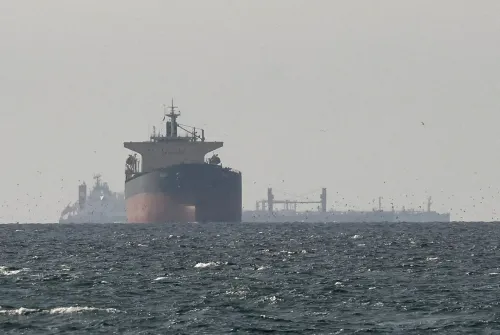
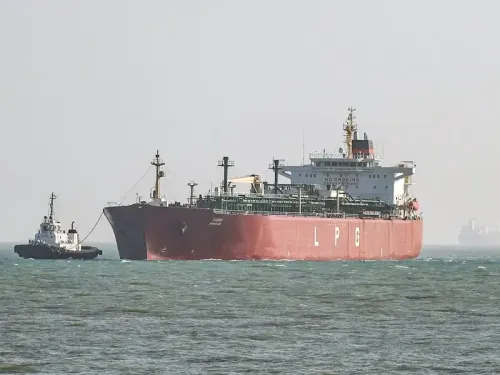
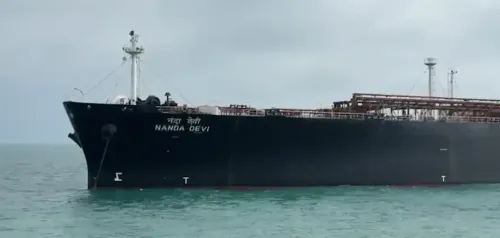
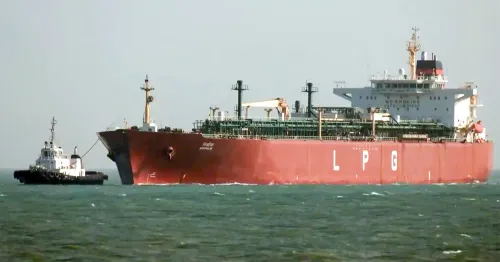
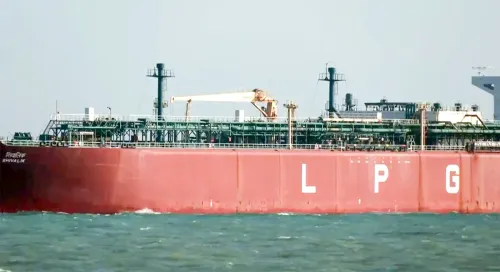
New Delhi, March 14 (NationPress) Following Iran's approval for Indian-flagged tankers to navigate the Strait of Hormuz amidst the ongoing US-Israel conflict, the Indian LPG tanker 'Shivalik' has successfully traversed the strategic waterway, with the second LPG vessel, 'Nanda Devi', also making a safe passage.
Government officials announced on Saturday that 'Shivalik' is under the protection of the Indian Navy and is anticipated to dock at an Indian port within the next couple of days, with Mumbai or Kandla being the likely destinations. The vessel is now in open waters, navigating securely with naval supervision.
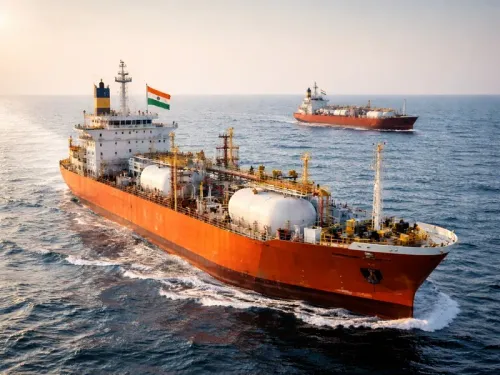
In parallel, 'Nanda Devi' is transporting over 46,000 metric tonnes of liquefied petroleum gas (LPG), which is vital for India's energy infrastructure, as reported by sources.
Both vessels are being closely monitored by military assets to guarantee secure passage through these geopolitically sensitive waters.
This development follows high-level talks between Prime Minister Narendra Modi and Iranian President Masoud Pezeshkian about maintaining the flow of goods and energy.
Additionally, Iran's Ambassador to India, Mohammad Fathali, suggested on Friday that Indian vessels could soon receive safe passage through the Strait of Hormuz, despite rising tensions in the Middle East that have disrupted transit through this essential shipping lane.
Fathali emphasized that India and Iran have mutual interests in the region, stating, "Yes, because India is our friend. You will see it within two or three hours. We believe that Iran and India share common interests in the region."
He further noted, "As ambassador in India, I say that the Indian government in this situation, after the war, helped us in different fields."
This statement aligns with comments from Iranian Deputy Foreign Minister Majid Takht-Ravanchi, who confirmed that Tehran has allowed ships from select countries to pass through the Strait of Hormuz.
The Strait of Hormuz is among the globe's most crucial maritime routes, facilitating the transit of 20% of the world's oil and gas exports.
The Ministry of Ports and Shipping reported on Thursday that the number of Indian-flagged vessels in the Persian Gulf remains steady at 28, with all Indian ships and crews being actively monitored for safety.
Among these vessels, 24 were located west of the Strait of Hormuz, carrying 677 Indian seafarers, while four were on the eastern side with 101 Indian seafarers aboard.
Point of View
The safe passage of Indian-flagged vessels through the Strait of Hormuz underscores the importance of maritime security and international cooperation. This event not only highlights India's strategic interests but also reinforces its relationship with Iran amidst regional tensions.
NationPress
26 Sept 2026
Frequently Asked Questions
What is the significance of the Strait of Hormuz?
The Strait of Hormuz is a vital maritime corridor, crucial for global oil and gas shipments, accounting for approximately 20% of the world's energy exports.
Who are the key political figures involved in this development?
Indian Prime Minister Narendra Modi and Iranian President Masoud Pezeshkian have been instrumental in facilitating safe passage for Indian vessels through the Strait.
What cargo is the 'Nanda Devi' transporting?
'Nanda Devi' is carrying over 46,000 metric tonnes of liquefied petroleum gas (LPG), essential for India's energy needs.
How many Indian-flagged vessels are currently in the Persian Gulf?
There are currently 28 Indian-flagged vessels operating in the Persian Gulf region.
What measures are being taken to ensure the safety of these vessels?
Both 'Shivalik' and 'Nanda Devi' are being closely monitored and escorted by the Indian Navy to ensure safe transit through the strategically sensitive waters.