India's auto industry now world's third largest at ₹22 lakh crore, says Gadkari
Synopsis
India's automobile sector has leapfrogged from seventh to third in the world by value — overtaking Japan — with its size nearly doubling to ₹22 lakh crore. Union Minister Nitin Gadkari revealed the milestone at Prawas 5.0 in Gandhinagar, crediting technology reforms and government-industry collaboration, while calling for a full pivot to alternative fuels.
Key Takeaways
India's automobile industry is now the world's third largest by value , overtaking Japan , with US first and China second.
The sector's size has grown from ₹14 lakh crore to ₹22 lakh crore , according to Union Minister Nitin Gadkari .
The industry contributes approximately ₹4.5 lakh crore annually in Central and State GST revenues.
Around 4.5 crore people are employed in the automobile sector.
Gadkari called for wider adoption of alternative fuels including ethanol, methanol, LNG, electricity and hydrogen to reduce fossil fuel dependence.
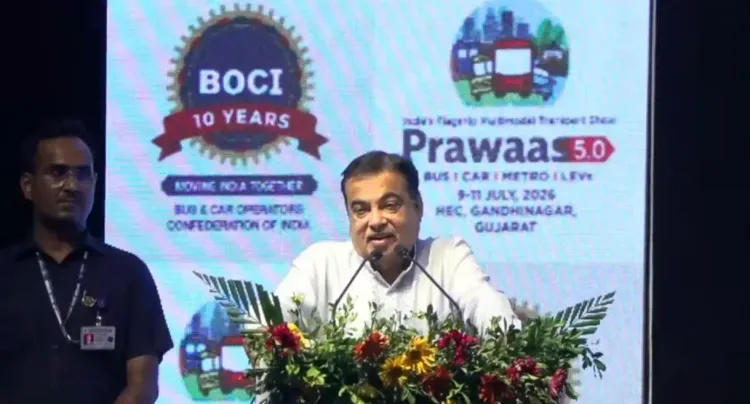
The announcement was made at Prawas 5.0 , organised by BOCI in Gandhinagar on 9 July .
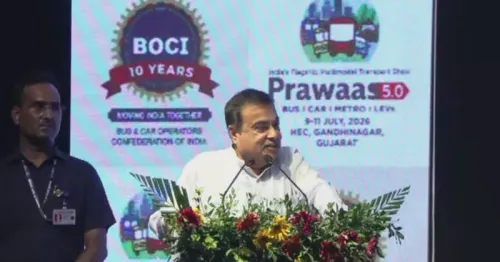
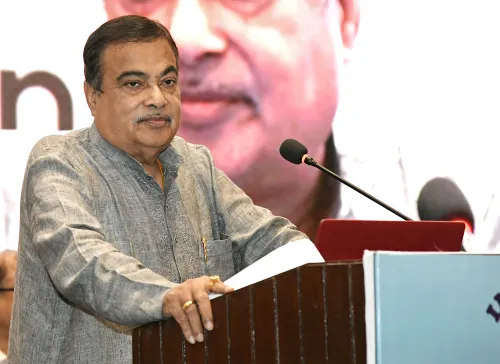
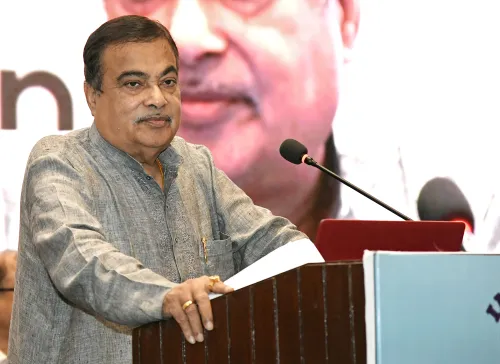
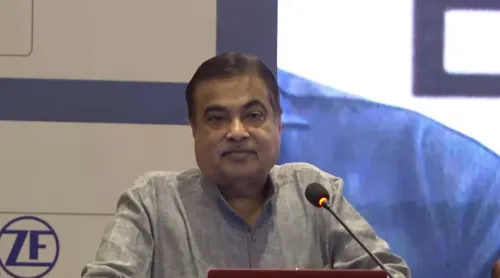
Union Road Transport and Highways Minister Nitin Gadkari on Thursday, 9 July declared that India's automobile industry has surpassed Japan to become the world's third largest by value, with its size expanding from ₹14 lakh crore to ₹22 lakh crore. He made the announcement while inaugurating 'Prawas 5.0', a multimodal transport exhibition organised by the Bus and Car Operators Confederation of India (BOCI) in Gandhinagar.
From Seventh to Third: The Rise in Rankings
Gadkari credited the sector's transformation to policy reforms and government-industry collaboration on new technologies and alternative fuels. 'When I took charge as a Minister, the size of this industry was ₹14 lakh crore and our rank in the world was seventh. Today, we have moved forward, surpassing Japan, and our rank is third in the world. The size of this industry is ₹22 lakh crore. The US ranks first and China ranks second,' he said.
Tax Revenue and Employment Impact
According to Gadkari, the automobile sector now contributes approximately ₹4.5 lakh crore annually through Central and State GST combined, making it one of the largest sources of tax revenue for both the Union and state governments. The industry has also generated employment for around 4.5 crore people, underscoring its role as a critical economic driver across manufacturing and ancillary services.
Vision for Clean and Sustainable Mobility
The Minister outlined the Union government's transport vision as rooted in the principles of ethics, economy and ecology. He called for an accelerated shift toward alternative fuels — including bio-fuels, ethanol, methanol, bio-diesel, LNG, electricity and hydrogen — to cut pollution and reduce India's dependence on imported fossil fuels. 'Public transport must increasingly adopt technologies that reduce pollution and dependence on imported fossil fuels while remaining economically viable,' he noted.
Gadkari also stressed that four pillars underpin sustainable industrial growth: proven technology, availability of raw materials, economic viability, and effective marketing. He linked stronger transport infrastructure directly to job creation and poverty reduction, describing transport as 'central to India's economic development.'
About Prawas 5.0
The 'Prawas 5.0' exhibition brought together transport operators, vehicle manufacturers, and industry representatives to deliberate on the future of public transport and mobility in India. The inaugural session was attended by Gujarat state ministers Jitu Vaghani and Kantilal Amrutiya, ministers from Uttarakhand and West Bengal, BOCI President Prasanna Patwardhan, and other senior industry stakeholders.
India's ascent to third place globally in automobile value marks a significant inflection point for a sector that was ranked seventh just years ago — and the next milestone, closing the gap with China, will depend on how quickly the industry scales alternative-fuel and electric vehicle manufacturing.
Point of View
Not just a headline number — but the ₹22 lakh crore figure reflects value, not volume or export competitiveness, and those distinctions matter. India's auto sector remains heavily domestic-demand driven; its global ranking by exports would tell a different story. The ₹4.5 lakh crore GST contribution also reveals a sector that is as much a fiscal workhorse as an industrial one — which creates a tension: the same government pushing alternative fuels stands to lose significant GST revenue as the fuel mix shifts. That contradiction deserves more scrutiny than it typically receives in industry forums like Prawas.
NationPress
10 Jul 2026
Frequently Asked Questions
How did India's automobile industry become the world's third largest?
India's automobile industry rose from seventh to third globally by value after overtaking Japan, with its size growing from ₹14 lakh crore to ₹22 lakh crore. Union Minister Nitin Gadkari attributed the growth to reforms in automobile engineering and government-industry cooperation on new technologies and alternative fuels.
What is the current size of India's automobile industry?
The industry is currently valued at ₹22 lakh crore, up from ₹14 lakh crore when Nitin Gadkari assumed charge as Union Road Transport and Highways Minister. Only the US and China rank ahead of India in global automobile industry value.
How much tax revenue does India's auto sector generate?
The automobile sector contributes approximately ₹4.5 lakh crore annually through Central GST and State GST, making it one of the largest sources of tax revenue for both the Union and state governments.
How many people does India's automobile industry employ?
According to Nitin Gadkari, the automobile industry has generated employment for around 4.5 crore people, making it one of the country's biggest economic drivers alongside its manufacturing and tax contributions.
What is Prawas 5.0 and why was it significant?
Prawas 5.0 is a multimodal transport exhibition organised by the Bus and Car Operators Confederation of India (BOCI) in Gandhinagar, bringing together transport operators, vehicle manufacturers, and policymakers. It was the platform where Gadkari made the announcement about India's rise to third place in global automobile industry rankings.