Has India’s Bullet Train Project Achieved a Major Milestone with a 1.5 km Tunnel Breakthrough in Palghar?
Synopsis
The recent breakthrough of a 1.5 km tunnel for India's bullet train project marks a significant advancement in modern transportation. With a focus on environmental sustainability, the project promises to connect major cities and drastically cut travel time. Railway Minister Ashwini Vaishnaw's insights reveal the project's potential economic and ecological impact.
Key Takeaways
India's bullet train project marks a significant advancement in transportation.
The breakthrough of a 1.5 km tunnel is a major milestone.
Environmental sustainability is a key focus, with 95% carbon savings .
The project aims to connect major cities, reducing travel time.
Set to commence operations by August 15, 2027 .
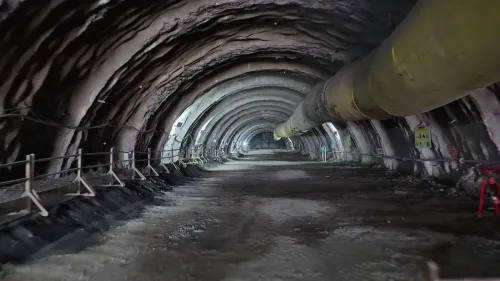
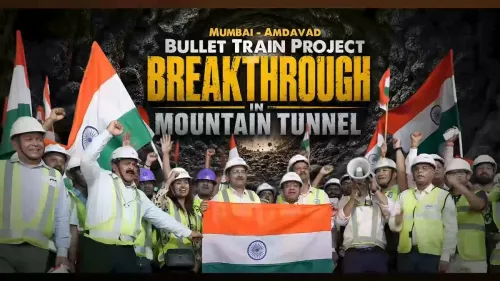
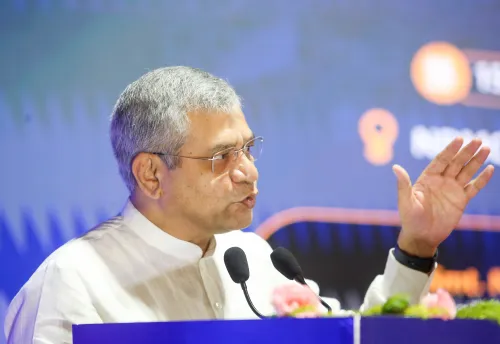
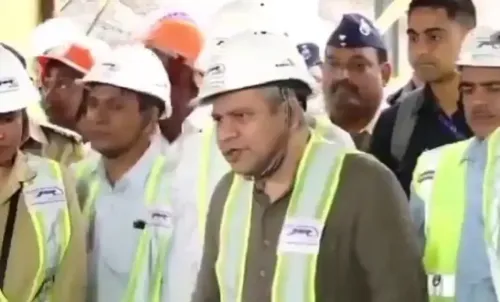
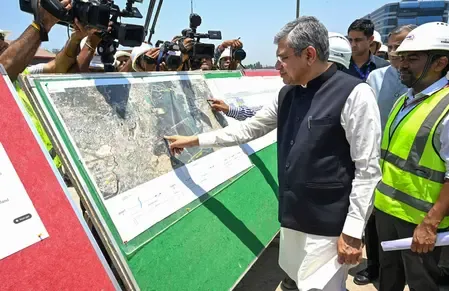
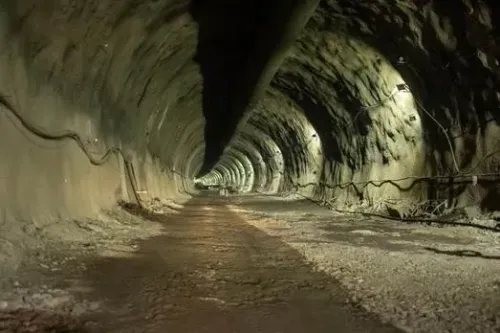
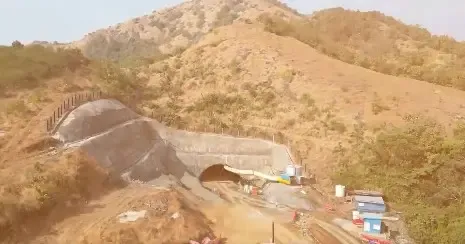
New Delhi, Jan 2 (NationPress) Railway Minister Ashwini Vaishnaw on Friday remotely celebrated a significant milestone in the bullet train project, witnessing the breakthrough of a 1.5-km-long tunnel in Maharashtra's Palghar district from Rail Bhawan in the national capital, accompanied by chants of ‘Bharat Mata ki Jai!’
The 1.5-km-long mountain tunnel ranks as one of the longest in the Palghar district, situated between the Virar and Boisar stations along the bullet train path. This marks the second tunnel breakthrough in Maharashtra; the first was a 5-km-long underground tunnel connecting Thane and BKC, completed in September 2025, as reported by the Ministry of Railways.
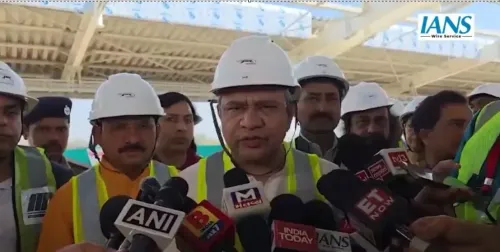
Vaishnaw noted, “The bullet train aims for nearly 95% carbon dioxide savings compared to traditional highways, highlighting its environmental significance. Many nations have adopted bullet train initiatives primarily for ecological benefits.”
“For example, South Korea has reaped considerable economic rewards from such projects. In addition to economic growth, the environmental advantages are noteworthy. The train directly connects city centers, reducing disruption to local communities and traffic while traversing densely populated areas,” the minister elaborated.
He also announced that India is expected to welcome its first bullet train on August 15, 2027.
The inaugural bullet train project spans 508 km between Mumbai and Ahmedabad, with 352 km situated in Gujarat and Dadra and Nagar Haveli, alongside 156 km in Maharashtra.
The corridor will link major urban centers such as Ahmedabad, Vadodara, Bharuch, Surat, Vapi, Thane, and Mumbai, and is projected to reduce travel time between the two metropolitan areas to approximately two hours, significantly enhancing inter-city connectivity.
According to the National High-Speed Rail Corporation Ltd. (NHSRCL), over 85% of the corridor—around 465 km—is being constructed on elevated viaducts, with 326 km already completed.
Vaishnaw remarked, “For spans exceeding 40 meters, we utilize steel bridges due to their lightweight nature and superior strength capabilities. Thus, bridges spanning 40 meters to nearly 100-130 meters are primarily steel structures.”
The prime minister continually advocates for embracing innovative work methods and establishing new standards in quality and technology. This project exemplifies that vision. It is crucial that traffic remains uninterrupted, and trains continue to operate,” he added.
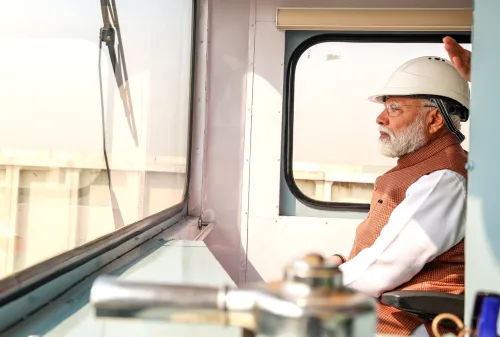
In November 2025, Prime Minister Narendra Modi conducted an in-depth review of the Mumbai-Ahmedabad High-Speed Rail (MAHSR) project during his visit to Gujarat, marking a pivotal step in India’s advancement towards modern transport infrastructure.
During this visit, the Prime Minister examined the Surat station—a structure inspired by the city’s globally renowned diamond industry. Standing at a height of 26.3 meters with a built-up area of 58,352 square meters, the station features three levels: the ground floor for parking and security checks, the concourse level for lounges, restrooms, kiosks, and ticketing, and the platform level for passenger boarding.
Point of View
I emphasize that this transformative project not only reflects India's commitment to modern infrastructure but also showcases a serious approach to sustainability and technological advancement. The government's initiative aligns with global trends in high-speed rail systems, promising significant benefits for urban connectivity and environmental conservation.
NationPress
17 Oct 2026
Frequently Asked Questions
What is the length of the newly constructed tunnel?
The newly constructed tunnel is 1.5 km long.
When is the first bullet train expected to operate in India?
India's first bullet train is expected to commence operations on August 15, 2027.
What are the environmental benefits of the bullet train?
The bullet train is designed to achieve nearly 95% carbon dioxide savings compared to highway transport.
Which cities will be connected by the bullet train?
The bullet train will connect major cities including Ahmedabad, Vadodara, Bharuch, Surat, Vapi, Thane, and Mumbai.
What percentage of the corridor is being built on elevated viaducts?
Over 85% of the corridor, approximately 465 km, is being constructed on elevated viaducts.