India's counterterrorism resolve grew sharply under PM Modi: The Diplomat
Synopsis
From the 2016 Uri surgical strikes to Operation Sindoor's 96-hour campaign against nine terror camps in 2025, The Diplomat charts how India moved from strategic restraint to calibrated military retaliation under PM Modi — capped by the launch of PRAHAAR, the country's first formal national counterterrorism strategy, in February 2026.
Key Takeaways
India's counterterrorism posture shifted decisively after 2014 , with cross-border strikes replacing strategic restraint, according to The Diplomat .
The Uri attack (18 September 2016) prompted India's first cross-border surgical strikes, destroying terrorist camps in Pakistan.
After the Pulwama attack (14 February 2019) killed 40 soldiers , the Indian Air Force struck a JeM camp in Balakot, Pakistan — the first such IAF incursion into Pakistani airspace.
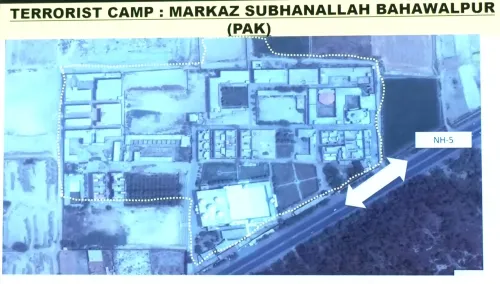
The Pahalgam terror attack (22 April 2025) triggered Operation Sindoor on 7 May 2025 , which reportedly destroyed nine terrorist camps and struck Pakistani military assets within 96 hours .
PRAHAAR , India's first comprehensive National Counter Terrorism Policy and Strategy , was unveiled on 23 February 2026 .
The report warns that Pakistan's state-sponsored terrorism means India's threat landscape will continue to evolve with newer challenges.
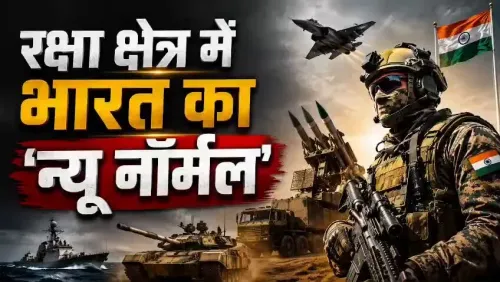
India's counterterrorism posture underwent a fundamental transformation after 2014, when Prime Minister Narendra Modi's government assumed office, adopting a doctrine of decisive retaliation against terror rather than strategic restraint, according to a report published in online magazine The Diplomat. Operations in Jammu and Kashmir gained fresh operational momentum, and measures to check infiltration across the Line of Control (LoC) were significantly reinforced during this period.
From Uri to Balakot: A Shift in Rules of Engagement
The shift began in earnest after a Jaish-e-Mohammed (JeM) attack on an army camp in Uri, Kashmir, on 18 September 2016. India responded with cross-border surgical strikes by the Indian Army, destroying multiple terrorist camps and infrastructure inside Pakistan — the first such operation, and a signal that New Delhi's rules of engagement had changed, according to The Diplomat.
The deterrence, however, proved incomplete. On 14 February 2019, JeM terrorists struck a police convoy in Pulwama, Kashmir, killing 40 soldiers. India's response this time was airborne: on 26 February 2019, the Indian Air Force launched strikes on a JeM camp in Balakot, Pakistan — the first instance of the IAF crossing into Pakistani airspace to target a terror facility, the report noted.
Pahalgam Attack and Operation Sindoor
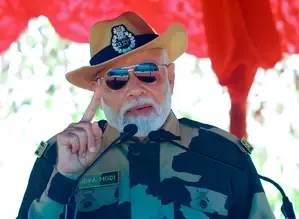
The Pahalgam terror attack of 22 April 2025 triggered what the report described as an unprecedented wave of national outrage and marked another turning point in India's counterterrorism response. Prime Minister Modi publicly vowed to pursue those responsible 'to the ends of the Earth'.
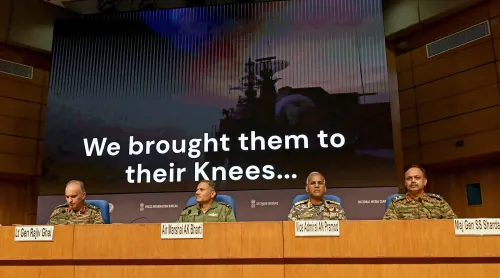
On 7 May 2025, the Indian Armed Forces launched Operation Sindoor, targeting the Pakistan-based terror network. Within 96 hours, India reportedly destroyed nine major terrorist camps and struck critical military infrastructure, including airfields and radar stations, according to the report. Pakistan subsequently sought a ceasefire, the report stated.
PRAHAAR: India's First National Counter Terrorism Strategy
At the centre of India's evolving framework is PRAHAAR, described as the country's first comprehensive National Counter Terrorism Policy and Strategy, unveiled on 23 February 2026. The policy establishes a national framework to prevent and respond to terrorism and radicalisation through coordinated 'whole of government' and 'whole of society' approaches, The Diplomat highlighted.
The report noted that Pakistan's continued reliance on state-sponsored terrorism means India's threat landscape is likely to evolve, with newer and more complex challenges emerging over time.
India's Long Arc Against Terrorism
As the world marked 25 years since the 9/11 attacks, The Diplomat observed that India's battle against terrorism predates that milestone by several years and continues today — 'strengthened now with a new political-military resolve and constantly evolving methods of deterrence', the magazine said. The central question, the report argued, is no longer whether terrorism has been defeated, but whether nations are sufficiently prepared to disrupt, deter, and respond to emerging threats.
India's trajectory from strategic restraint to calibrated military response represents one of the more consequential doctrinal shifts in South Asian security in the past decade, and how that posture evolves — particularly in relation to Pakistan — will shape the region's security architecture in the years ahead.
Point of View
And that framing matters. The surgical strikes and Balakot airstrikes were undeniably consequential doctrinal shifts, but the report acknowledges they did not end Pakistan's terror campaign — raising a pointed question about deterrence efficacy that the piece does not fully pursue. PRAHAAR is presented as a landmark, yet its 'whole of government' language is familiar in Indian security documents; whether it translates into institutional change or remains a framework on paper is the real test. Twenty-five years after 9/11, India has clearly moved from restraint to retaliation — but durable counterterrorism success demands more than military audacity: it requires sustained intelligence depth, deradicalisation infrastructure, and regional diplomatic leverage that no single policy document can guarantee.
NationPress
14 Sept 2026
Frequently Asked Questions
What is Operation Sindoor and why was it launched?
Operation Sindoor was a military operation launched by the Indian Armed Forces on 7 May 2025, following the Pahalgam terror attack of 22 April 2025. According to reports, it destroyed nine major terrorist camps and struck Pakistani military assets including airfields and radar stations within 96 hours, compelling Pakistan to seek a ceasefire.
What is PRAHAAR, India's national counterterrorism strategy?
PRAHAAR is India's first comprehensive National Counter Terrorism Policy and Strategy, unveiled on 23 February 2026. It establishes a national framework to prevent and respond to terrorism and radicalisation through coordinated 'whole of government' and 'whole of society' approaches, according to The Diplomat.
What were India's surgical strikes after the Uri attack?
Following the JeM attack on an army camp in Uri, Kashmir, on 18 September 2016, the Indian Army carried out cross-border surgical strikes that destroyed multiple terrorist camps and infrastructure in Pakistan. It was India's first such cross-border operation and signalled a major shift in its rules of engagement on cross-border terrorism.
What happened during the Balakot airstrikes in 2019?
On 26 February 2019, the Indian Air Force launched strikes on a JeM terrorist camp in Balakot, Pakistan, following the Pulwama attack that killed 40 soldiers on 14 February 2019. It was the first time the IAF crossed into Pakistani airspace to strike a terror target, according to The Diplomat report.
Has India's tougher counterterrorism approach ended the threat from Pakistan?
According to The Diplomat, Pakistan's continued reliance on state-sponsored terrorism means the threat landscape is likely to evolve, with newer forms of challenges emerging despite India's increasingly assertive posture. The report notes that while cross-border strikes deterred Pakistan to some extent, they did not end its terror campaign.