India's Electricity Transition: A Multi-Speed Progress Across States
Synopsis
India's electricity landscape is transforming rapidly, with significant advancements seen across various states, although progress remains uneven. A new report by IEEFA and Ember reveals the dynamics of this transition, highlighting both achievements and challenges in the path towards a greener future.
Key Takeaways
India's electricity transition is progressing unevenly across states.
Karnataka, Himachal Pradesh, and Kerala are at the forefront of decarbonization.
Challenges such as grid readiness and DISCOM health need to be addressed.
Proactive policies in states like Bihar can accelerate the transition.
A multi-speed transition calls for targeted policies.
New Delhi, Feb 24 (NationPress) The transition of India’s electricity sector at the sub-national level is experiencing significant momentum, with advancements seen across numerous states, albeit unevenly, as revealed by a recent collaborative report from the Institute for Energy Economics and Financial Analysis (IEEFA) and the independent think tank Ember.
The third iteration of the Indian States’ Electricity Transition (SET) report by IEEFA and Ember employs a comprehensive three-dimensional framework to illustrate that while certain states are making consistent progress in the fiscal year (FY) 2025, others have laid the groundwork for accelerated advancement.
This varied pace of progress stems from disparities in resources, developmental priorities, and institutional capabilities.
“All 21 states evaluated have made strides across multiple dimensions, although the speed and areas of focus differ,” states Vibhuti Garg, Director – South Asia at IEEFA and a co-author of the report.
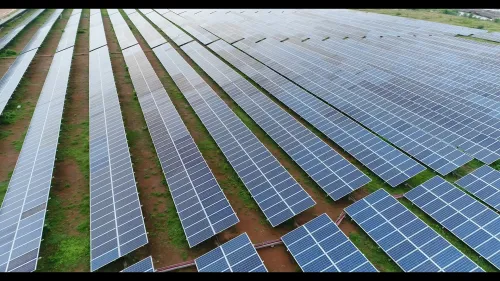
Karnataka, Himachal Pradesh, and Kerala are notable for their substantial strides in decarbonizing their electricity systems, achieving higher shares of renewable energy in their procurement mixes and demonstrating lower emissions intensity in the power sector.
The report suggests that these states can enhance their transition by addressing challenges related to grid readiness, the operational health of distribution companies (DISCOMs), and market-enabling conditions.
Delhi and Haryana are leading in terms of power ecosystem readiness and performance, bolstered by strong adoption of distributed solar power, dependable electricity supply, and relatively efficient DISCOM performance.
Chhattisgarh also stands out as an effective performer, with a minimal power shortage of 0.07 percent in FY2025, aided by moderate DISCOM performance, according to the report.
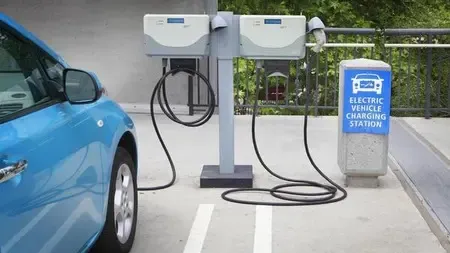
Bihar has showcased proactive policies, including the introduction of green tariffs, solar-hour-aligned time-of-day (ToD) tariffs, an increase in electric vehicle (EV) adoption, and various auctions aimed at integrating energy storage into its energy portfolio, setting the stage for an expedited transition.
The report highlights that focusing on harnessing more of its renewable potential and boosting participation in short-term green markets can yield significant benefits.
Andhra Pradesh, Uttar Pradesh, and Rajasthan have also implemented strong policies, making progress in green hydrogen and witnessing notable EV adoption.
Rajasthan has particularly excelled, supported by a well-structured renewable policy framework and the lowest green tariff premium. These states should now aim to translate these advancements into substantial renewable energy shares and robust overall performance, the report adds.
Ruchita Shah, Energy Analyst at Ember and co-author of the report, remarks, “India’s electricity transition is evolving into a multi-speed transformation, where we are seeing new leaders in specific areas rather than a singular leader across all fronts. This necessitates a more focused approach to policies and interventions to ensure that progress is evenly distributed.”
Point of View
It becomes clear that India's electricity transition is not just a story of a few leading states but a broader narrative of varied progress across the nation. This diverse advancement underlines the importance of tailored policies and interventions to ensure all states can keep pace in the shift towards a more sustainable energy future.
NationPress
30 Sept 2026
Frequently Asked Questions
What is the main finding of the IEEFA and Ember report?
The report indicates that India's electricity transition is advancing at a sub-national level with significant, albeit uneven, progress across various states.
Which states are leading in the electricity transition?
Karnataka, Himachal Pradesh, and Kerala are making notable advancements in decarbonizing their electricity systems.
What factors contribute to the uneven progress among states?
Disparities in resources, development priorities, and institutional capabilities contribute to the uneven progress in the electricity transition.
How can states enhance their electricity transition?
States can enhance their transition by addressing grid readiness, improving the health of DISCOMs, and creating market-enabling conditions.
What role do policies play in the transition?
Strong policies are crucial for supporting advancements in renewable energy, green hydrogen, and electric vehicle adoption across states.