Strengthened Fiscal Position Offers RBI Greater Policy Flexibility, Says FM Sitharaman

Synopsis
Finance Minister Nirmala Sitharaman emphasizes India's robust fiscal standing and foreign reserves, granting the RBI enhanced policy flexibility. As the monetary policy review approaches, she highlights prudent fiscal management and strategies to combat rising prices amid global uncertainties.
Key Takeaways
India's fiscal strength allows for enhanced policy flexibility.
The RBI is expected to maintain key interest rates amid inflation risks.
Prudent fiscal management has led to targeted support measures.
India's debt-to-GDP ratio remains low and is projected to decline.
Foreign exchange reserves cover imports for approximately 11 months.
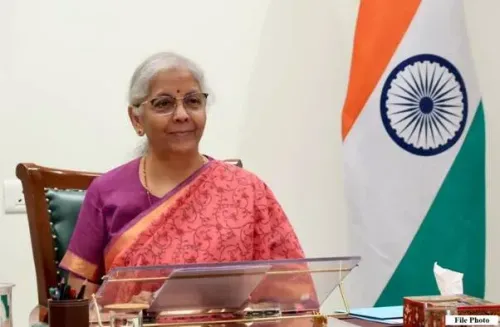
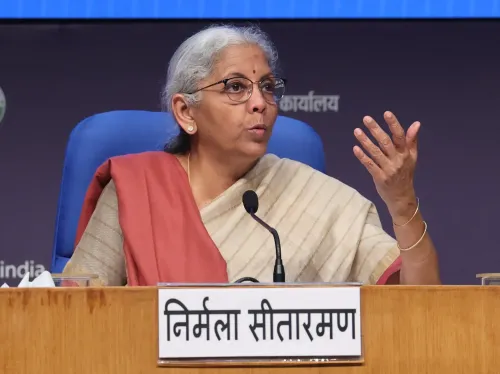
New Delhi, April 6 (NationPress) Finance Minister Nirmala Sitharaman stated on Monday that India's solid fiscal standing and substantial foreign exchange reserves grant the Reserve Bank of India greater flexibility in policy-making.
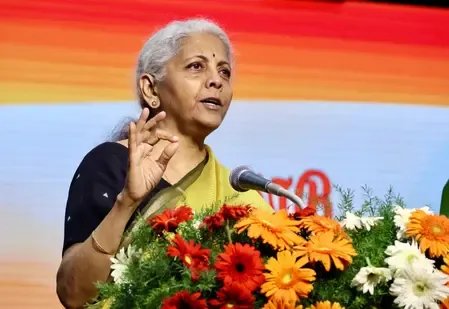
While speaking at the golden jubilee celebrations of the National Institute of Public Finance and Policy, she remarked: "India possesses fiscal space that allows for the continuation of the government's capital expenditure program, provides room for the RBI to lower rates, and enables targeted support for sectors in distress. This is the result of a decade of fiscal discipline that is yielding results."
Her remarks come just ahead of the monetary policy review scheduled for announcement by the RBI on Wednesday.
Sitharaman also pointed out that India's debt-to-GDP ratio is among the lowest in the world, with the International Monetary Fund forecasting a further decrease by 2030. The current foreign exchange reserves are adequate to cover the nation’s imports for approximately 11 months, acting as a buffer against external shocks, she noted.
She emphasized that prudent fiscal management has allowed the government to implement measures such as reducing excise duties on petrol and diesel, aimed at easing the burden on consumers facing rising fuel prices due to the conflict in Iran. Furthermore, targeted exemptions for essential petrochemical products and SEZ operations have been introduced to safeguard jobs amidst global market uncertainties.
The Finance Minister described the West Asia conflict as a "systemic tremor," contributing to a global landscape characterized by volatility, uncertainty, and ambiguity. She cautioned that escalating crude prices and currency pressures could complicate the inflation landscape, making it more challenging for policy adjustments.
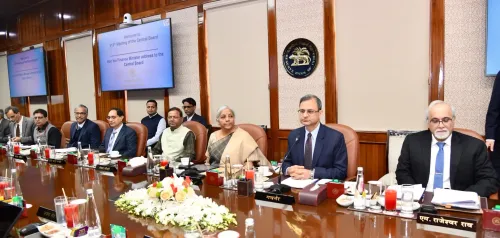
The RBI’s monetary policy committee commenced its review meetings on Monday, planning to discuss monetary policy actions to be unveiled on Wednesday. Analysts anticipate that the RBI will maintain its stance on key interest rates, as inflation risks remain elevated due to repercussions from the Iran conflict, which has spurred a significant rise in prices of petroleum products, fertilizers, and petrochemicals.
Last month, in consultation with the RBI, the government outlined its borrowing strategy for the first half of the upcoming financial year, aiming to raise Rs 8.2 lakh crore within six months—accounting for around 51 percent of the total budgeted borrowing for the year.
According to the official borrowing schedule, the total gross borrowing has been adjusted to Rs 16.09 lakh crore, down from an earlier projection of Rs 17.2 lakh crore. This strategic phasing of the borrowing program is expected to ensure sufficient liquidity in the banking system, enabling businesses to pursue investments and generate employment opportunities within the economy.
Point of View
Finance Minister Nirmala Sitharaman's remarks on India's fiscal health are both reassuring and timely. The government's ability to provide targeted support amidst rising global tensions highlights a commitment to maintaining economic stability. It is crucial to monitor how these fiscal strategies will influence upcoming monetary policy decisions.
NationPress
9 Oct 2026
Frequently Asked Questions
What did Finance Minister Nirmala Sitharaman say about India's fiscal position?
She stated that India's strong fiscal position and substantial foreign reserves provide the Reserve Bank of India with more policy flexibility.
How does India's debt-to-GDP ratio compare globally?
India's debt-to-GDP ratio is among the lowest in the world, with projections for further decline by 2030 from the International Monetary Fund.
What measures has the government taken to manage rising fuel prices?
The government has implemented excise duty cuts on petrol and diesel to alleviate the financial burden on consumers.
What is the expected impact of the West Asia conflict on India's economy?
The conflict poses risks of rising crude prices and currency pressures, complicating the inflation outlook and challenging monetary policy calibration.
What is the government’s borrowing plan for the upcoming financial year?
The government plans to raise Rs 8.2 lakh crore in the first half of the next financial year, which constitutes about 51% of the total budgeted borrowing.