India's Fuel Reserves Adequate to Address Middle East Disruptions: Government
Synopsis
With escalating tensions in the Middle East, the Indian government reassures citizens of its robust fuel reserves. Minister Hardeep Singh Puri confirms that India is well-equipped to manage any short-term disruptions in crude oil and petroleum products, ensuring consumer interests remain safeguarded.
Key Takeaways
India has sufficient fuel reserves to handle disruptions.
Minister Hardeep Singh Puri emphasizes preparedness.
India ranks high in global crude oil import and export.
Diversification of crude oil sources is a key strategy.
24/7 monitoring ensures supply stability.
New Delhi, March 3 (NationPress) The Indian government announced on Tuesday that the nation possesses sufficient reserves of crude oil and essential petroleum products, including petrol, diesel, and aviation turbine fuel (ATF), to effectively manage any short-term disruptions caused by the ongoing conflicts in the Middle East.
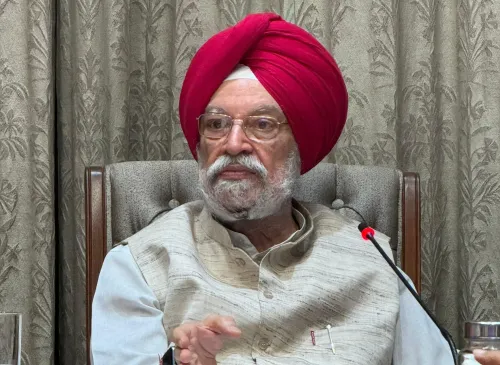
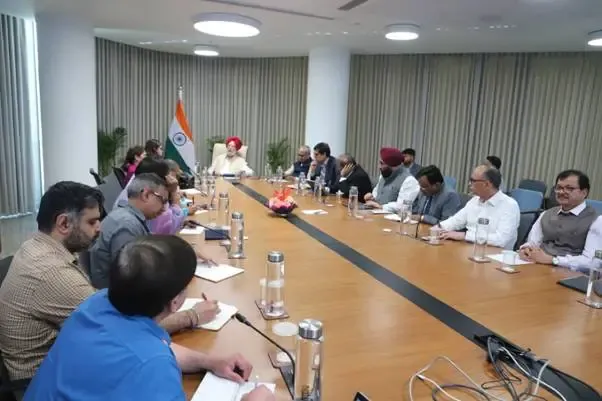
During a press briefing, Petroleum and Natural Gas Minister Hardeep Singh Puri emphasized that the country is well-equipped to respond to the dynamic global energy landscape. He reassured the public that there is no immediate cause for alarm as India is closely monitoring developments and remains adequately stocked.
“India ranks as the world’s third-largest importer of crude oil, the fourth-largest refiner, and the fifth-largest exporter of petroleum products,” he stated.
Due to its robust position in the international energy market, India has established ample inventories to navigate temporary supply disruptions.
The minister highlighted that in recent years, India has made significant progress in diversifying its crude oil sources to ensure both availability and affordability for its consumers.
“Indian energy companies now have access to supplies that do not traverse the Strait of Hormuz, a crucial global oil transit route that could potentially be affected by tensions in the Middle East,” he noted.
“These alternative routes will serve to mitigate any short-term supply challenges,” he added.
To keep a vigilant eye on the situation, the Ministry of Petroleum and Natural Gas has established a 24/7 control room to oversee the supply and stock status of petroleum products throughout the nation.
Officials are consistently assessing the situation to guarantee that there are no interruptions in availability.
The government expressed confidence in current stock levels and remains dedicated to protecting the interests of Indian consumers. Based on ongoing evaluations, it is cautiously optimistic that phased measures can be implemented, if necessary, to further stabilize the situation.
Point of View
I find that the government's proactive measures regarding fuel reserves are commendable. Their commitment to ensuring energy security amidst global uncertainties reflects a responsible approach to safeguarding consumer interests. This readiness to adapt to evolving situations is crucial for national stability.
NationPress
20 Sept 2026
Frequently Asked Questions
What measures is India taking to ensure fuel availability?
India is diversifying its crude oil sources and has set up a 24/7 control room to monitor petroleum supply and stock levels.
How does India's fuel import ranking compare globally?
India is the third-largest importer of crude oil, fourth-largest refiner, and fifth-largest exporter of petroleum products in the world.
Is there any cause for concern regarding India's fuel supply?
The government has assured that there is no immediate cause for concern as India is well-stocked and closely monitoring developments.