Indian Army gets ₹770 crore radar deal to counter drone threats via BEL
Synopsis
India's Ministry of Defence has handed BEL a ₹770 crore contract for radars that can track everything from fighter jets to micro-drones — a direct response to the UAS threat reshaping modern battlefields. The deal is a snapshot of a defence sector that has grown fourfold in a decade, now targeting ₹3 lakh crore in annual production by 2029.
Key Takeaways
The Ministry of Defence signed a ₹770 crore contract with Bharat Electronics Limited (BEL) on 21 October 2026 for Improved Low-Level Lightweight Radars (LLLR-I) .
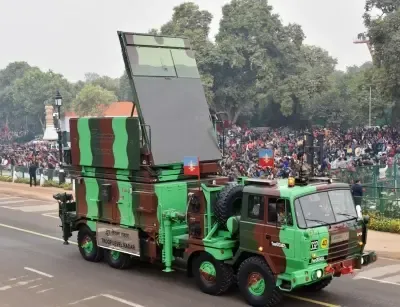
The radar can detect and track targets from fighter jets down to mini and micro drones , with built-in aerial target prioritisation.
India's defence production has grown over fourfold to ₹1.78 lakh crore in FY2025-26 from ₹4,746 crore in FY2013-14 .
Defence exports surged to ₹38,424 crore in FY2025-26 , up from ₹686 crore in FY2013-14 , reaching buyers in over 80 countries .
The government targets ₹3 lakh crore in annual defence production and ₹50,000 crore in exports by 2029 .
Defence R&D spending rose over 112 per cent to ₹29,100 crore in FY2026-27 ; 25 per cent of the budget is now open to private firms, start-ups, and academia.
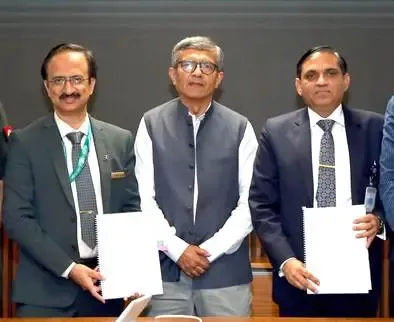
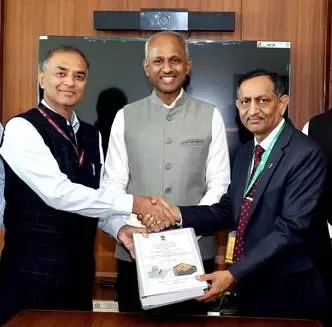
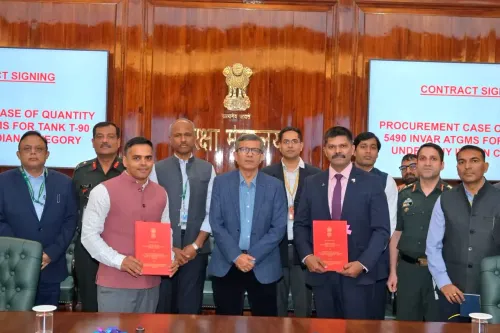
The Ministry of Defence on 21 October 2026 signed a ₹770 crore contract with state-owned Bharat Electronics Limited (BEL) to supply Improved Low-Level Lightweight Radars (LLLR-I) to the Indian Army, significantly bolstering its air defence capability against drone threats. The contract was formalised in the presence of Defence Secretary Rajesh Kumar Singh.
What the LLLR-I Radar Can Do
The LLLR-I system is designed to detect and track targets ranging from fighter jet-sized aircraft down to mini and micro drones. Crucially, the radar has an in-built capability to prioritise aerial targets, enabling ground commanders to sequence responses against multiple simultaneous threats. According to the Ministry, this will directly enhance the Army's ability to counter Unmanned Aerial Systems (UAS) — a category of threat that has grown sharply in recent conflicts globally.
Indigenisation Push and the Viksit Bharat Vision
The procurement aligns with the government's Viksit Bharat @2047 roadmap and is framed as a meaningful step toward self-reliance in air defence platforms. Officials noted that the deal will benefit Micro, Small, and Medium Enterprises (MSMEs) within the defence manufacturing ecosystem, contributing to a broader goal of building a resilient and globally competitive indigenous defence industry.
India's Defence Production Surge: The Numbers
The contract comes against the backdrop of a dramatic transformation in India's defence manufacturing landscape. Official figures show that domestic military hardware production has risen more than fourfold, from ₹4,746 crore in FY2013-14 to ₹1.78 lakh crore in FY2025-26. Public-sector entities accounted for 76 per cent of this output, with the private sector contributing the remaining 24 per cent.
Defence exports have seen an even sharper climb — from ₹686 crore in FY2013-14 to ₹38,424 crore in FY2025-26 — with Indian military hardware now reaching buyers in more than 80 countries. The private sector's share of exports stood at ₹17,353 crore (45.16 per cent), while Defence Public Sector Undertakings contributed ₹21,071 crore (54.84 per cent).
R&D Investment and Future Targets
The government has set an ambitious target of ₹3 lakh crore in annual defence production and ₹50,000 crore in exports by 2029. To accelerate innovation, defence R&D allocation has grown from ₹13,716 crore in FY2014-15 to ₹29,100 crore in FY2026-27, a rise of over 112 per cent. Since FY2022-23, 25 per cent of the defence R&D budget has been opened to private industry, start-ups, and academia — a structural shift aimed at faster technology development. The LLLR-I deal is one of the most recent examples of this policy translating into orders on the ground.
Point of View
Consistent with the Aatmanirbhar push, but the real test is delivery speed: in a fast-moving threat environment, a radar ordered today needs to be deployed quickly, not in five years. The fourfold rise in production figures is impressive, but the 24 per cent private-sector share of output — versus 45 per cent of exports — suggests India's private defence base is already more globally competitive than the headline production mix implies. Closing that gap domestically could be the next inflection point.
NationPress
21 Oct 2026
Frequently Asked Questions
What is the LLLR-I radar procured by the Indian Army?
The Improved Low-Level Lightweight Radar (LLLR-I) is a radar system manufactured by Bharat Electronics Limited (BEL) capable of detecting and tracking targets ranging from fighter jets to mini and micro drones, with a built-in aerial target prioritisation function. The Indian Army will use it to counter Unmanned Aerial System (UAS) threats.
How much did India's Ministry of Defence pay for the LLLR-I radars?
The Ministry of Defence signed a contract worth approximately ₹770 crore with BEL for the LLLR-I radars on 21 October 2026. The deal was formalised in the presence of Defence Secretary Rajesh Kumar Singh.
Why is the Indian Army focused on countering drone threats?
Drones and Unmanned Aerial Systems have emerged as a significant battlefield threat in recent global conflicts, prompting India to upgrade its low-level air detection and tracking capability. The LLLR-I radar's ability to detect mini and micro drones addresses this specific vulnerability.
How has India's defence production grown in the last decade?
India's domestic military hardware production grew more than fourfold from ₹4,746 crore in FY2013-14 to ₹1.78 lakh crore in FY2025-26, according to official figures. Defence exports rose even more sharply, from ₹686 crore to ₹38,424 crore over the same period, reaching over 80 countries.
What are India's defence production and export targets for 2029?
The government has set a target of ₹3 lakh crore in annual defence production and ₹50,000 crore in exports by 2029. To support these goals, 25 per cent of the defence R&D budget has been opened to private industry, start-ups, and academia since FY2022-23.