Bharat Dynamics gets ₹811 crore deal to supply 160 SAT-SAAW glide bombs to IAF
Synopsis
India's Ministry of Defence has awarded Bharat Dynamics a ₹810.79 crore contract for 160 satellite-guided glide bombs capable of striking enemy airfields from stand-off range — without exposing IAF jets to hostile missiles. Designed and developed by DRDO, the SAT-SAAW is cheaper than tactical missiles and will be delivered between 2027 and 2029, pushing India's precision munitions self-reliance to 60 per cent indigenous content.
Key Takeaways
The Ministry of Defence signed a ₹810.79 crore contract with Bharat Dynamics Limited on 23 September 2026 .
160 SAT-SAAW precision-guided glide bombs will be procured for the Indian Air Force under the Buy Indian – IDDM category.
The weapon, developed by DRDO , is compatible with Jaguar , Hawk , and Su-30 MKI aircraft and can strike from long stand-off range.
The system will carry 60 per cent indigenous content , with key sub-systems including the Initial Measurement Unit and Long Impact Delay Fuse indigenised.
Deliveries are scheduled between 2027–2028 and 2028–2029 .
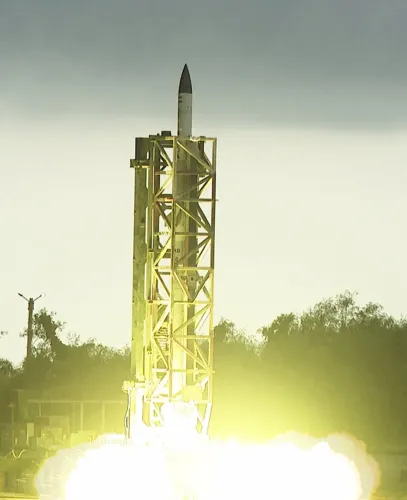
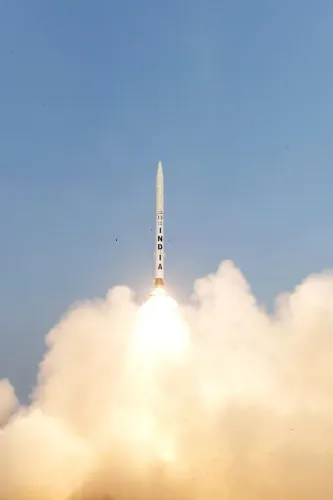
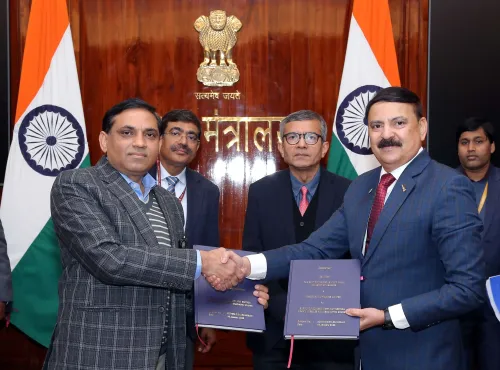
The Ministry of Defence on Wednesday, 23 September 2026, signed a contract with Bharat Dynamics Limited (BDL) for the procurement of 160 Satellite Smart Anti-Airfield Weapons (SAT-SAAW) and associated equipment for the Indian Air Force (IAF), at a total cost of ₹810.79 crore. The deal was concluded under the Buy Indian – Indigenously Designed, Developed and Manufactured (IDDM) category, reinforcing India's push for self-reliance in defence production.
Contract Details and Key Officials
The agreement was signed in the presence of Defence Secretary Rajesh Kumar Singh. The IDDM categorisation means the system must meet minimum indigenous content thresholds — in this case, 60 per cent indigenous content — and must have been designed and developed within India. Indigenisation of critical sub-systems, including the Initial Measurement Unit, Long Impact Delay Fuse, and Twin Store Carrier, is also mandated under the contract to further bolster Aatmanirbharta in defence.
What the SAT-SAAW Is and What It Can Do
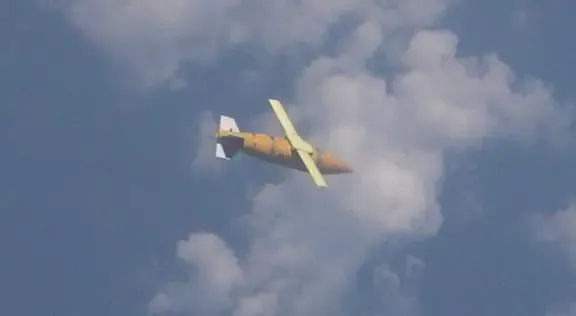
The SAT-SAAW is an air-to-ground precision-guided glide bomb indigenously designed and developed by the Defence Research and Development Organisation (DRDO). Compatible with frontline IAF platforms — including the Jaguar, Hawk, and Su-30 MKI — the weapon is designed to neutralise enemy airfields from a long stand-off range, enabling strike aircraft to hit deep inside contested airspace without entering hostile surface-to-air missile (SAM) envelopes.
The bomb is armed with a high-explosive, pre-fragmented deep-penetration warhead and uses satellite navigation for high accuracy. It relies on aerodynamic glide and the launch aircraft's own momentum for propulsion rather than an onboard rocket or jet motor, making it significantly cheaper than comparable tactical missiles. Targets include runways, taxi tracks, reinforced bunkers, aircraft hangars, radar installations, fuel storage, and communications facilities — the critical nodes of an adversary's air power infrastructure.
Strategic Significance for the IAF
Delivery of the SAT-SAAW systems is scheduled in two tranches: between 2027–2028 and 2028–2029. The induction is expected to significantly enhance the IAF's operational capability, allowing it to conduct unhindered offensive operations against enemy air bases in the early stages of a conflict — a doctrine sometimes described as 'counter-air' operations.
This comes amid sustained efforts by the Ministry of Defence to reduce import dependence, with several recent contracts steered toward Indian manufacturers under the IDDM and Buy Indian categories. The SAT-SAAW programme is among a growing portfolio of DRDO-origin precision munitions entering IAF service in this decade.
Aatmanirbharta Push in Precision Munitions
Notably, the emphasis on indigenising sub-systems such as the fuze and inertial measurement unit signals a broader ambition: not just assembling weapons in India, but developing sovereign expertise in the most technically demanding components of guided munitions. Analysts have pointed out that precision-guidance components have historically been India's most import-dependent segment in the defence supply chain. The BDL contract, if executed on schedule, would mark a meaningful step toward closing that gap.
Frequently Asked Questions
What is the SAT-SAAW and why has India procured it?
The SAT-SAAW (Satellite Smart Anti-Airfield Weapon) is a DRDO-developed air-to-ground precision-guided glide bomb designed to destroy enemy airfield infrastructure — runways, bunkers, hangars, and radar installations — from a long stand-off range. India has procured 160 of these weapons for the IAF to enhance its counter-air strike capability without exposing aircraft to hostile surface-to-air missiles.
How much did the Ministry of Defence pay for the SAT-SAAW contract?
The Ministry of Defence signed a contract worth ₹810.79 crore with Bharat Dynamics Limited on 23 September 2026 for the supply of 160 SAT-SAAW systems along with associated equipment for the Indian Air Force.
When will the SAT-SAAW be delivered to the Indian Air Force?
Deliveries of the SAT-SAAW are scheduled across two periods: 2027–2028 and 2028–2029, according to the official contract statement from the Ministry of Defence.
Which aircraft can launch the SAT-SAAW?
The SAT-SAAW is compatible with three IAF platforms — the Jaguar, Hawk, and Su-30 MKI. It uses the launch aircraft's own momentum for propulsion via aerodynamic glide, making it cheaper to produce than rocket-propelled tactical missiles.
What makes the SAT-SAAW contract significant for India's defence self-reliance?
The contract falls under the Buy Indian – Indigenously Designed, Developed and Manufactured (IDDM) category and mandates 60 per cent indigenous content. It also requires indigenisation of critical sub-systems — the Initial Measurement Unit, Long Impact Delay Fuse, and Twin Store Carrier — which are among the most technically demanding components in guided munitions, an area where India has historically been import-dependent.