India: A Rising Power in Artificial Intelligence Applications
Synopsis
India is rapidly becoming a key player in the artificial intelligence landscape, ranking third globally in AI development. Dr. Taraknath Woddi underscores the nation's strengths and the importance of focusing on practical applications that address real-world challenges.
Key Takeaways
India ranks third in global AI development.
Immediate focus should be on industry-driven applications .
Collaboration between government and industry is crucial.
Addressing real-world problems is essential for effective AI solutions .
India's strengths lie in its talent pool and innovation culture.
Washington, March 19 (NationPress) India has established itself as a prominent player in the realm of artificial intelligence applications, ranking third globally in core AI development, trailing only behind the United States and China, according to Indian-origin scientist Dr. Taraknath Woddi. He highlighted the nation's burgeoning capabilities and unexplored potential within this sector.
“To be straightforward, when it comes to AI application utilization, India ranks among the leaders in the field,” Woddi stated in an interview with IANS. “In terms of application usage, India is currently at the forefront as an AI developer; although it holds the number three position globally, it’s important to note that it is significantly behind the leaders.”
Dr. Woddi, who transitioned from a nuclear engineer to a data scientist and founded Anicca Data Science Solutions, emphasized that India's immediate focus should not be on competing directly with the United States and China regarding foundational models, but rather on developing practical, industry-oriented applications.
“The country needs to prioritize building applications that directly benefit industries,” he stated, highlighting areas such as enterprise systems, supply chains, and industrial optimization.
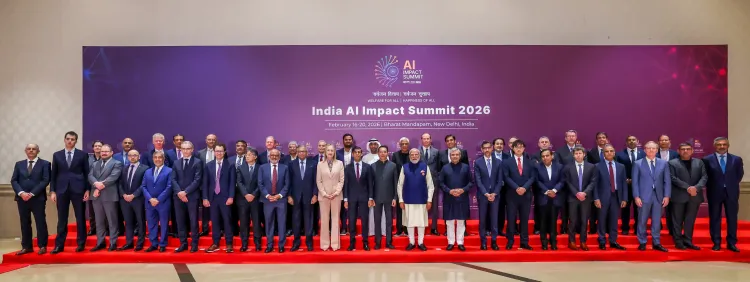
After attending the AI Impact Summit in India last month, Woddi expressed his admiration for India’s leadership in artificial intelligence, particularly praising Prime Minister Narendra Modi for his profound understanding of the subject.
“He stands out among many leaders. He discusses future possibilities in a way that few leaders can,” he remarked, recalling discussions at the summit that exceeded expectations even among global tech leaders.
Woddi pointed out the importance of government involvement and industry collaboration in implementing large-scale initiatives, noting that this coordination has been crucial in shaping India’s AI landscape.
Drawing from his extensive experience in nuclear engineering and AI, Woddi stressed the significance of addressing real-world challenges first. “Begin by identifying the problems the industry needs to solve,” he advised, warning against premature infrastructure investments without clearly defined use cases.
He also mentioned that India’s data center capacity, though limited, remains underutilized, stating, “India has less than one gigawatt of capacity, and yet less than 80 percent of that is currently being utilized due to a lack of applications that can leverage the existing infrastructure.”
Woddi suggested that India should concentrate on sectors with noticeable inefficiencies, such as healthcare, education, and the legal system. “The sectors facing the most challenges are where opportunities for growth will arise,” he said.
Regarding regulation, he advocated for a balanced approach, rejecting both excessive control and total deregulation. “No innovative business should operate completely free of regulation,” he emphasized, highlighting the necessity for data protection and responsible AI frameworks.
He also stressed the need for coordinated efforts between the government and industry. “The government should engage with the industry to identify national issues,” he said, adding that support should follow once clear solutions are established.
Woddi cautioned against an overdependence on services without product innovation, drawing lessons from India's past economic journey. “Any nation that fails to manufacture or innovate its own products lacks influence on the global stage,” he remarked.
His own career reflects India’s evolving global presence. Having trained as a nuclear engineer in both India and the United States, Woddi played a role in the technical aspects of the US-India civilian nuclear agreement before transitioning into leadership roles in AI and data science.
He pointed out that India’s strength lies in its talented workforce and the burgeoning culture of innovation. “The momentum is building... this is the moment,” he stated, noting that increasing opportunities are empowering individuals to engage in independent innovation.
India’s AI journey, he added, must be anchored in three essential pillars: “energy, education, and environment,” supported by high-performance computing and emerging technologies like blockchain.
Point of View
India's emergence as a leader in AI applications reflects a strategic focus on leveraging technology for industry-specific solutions. Dr. Woddi's insights underscore the importance of innovation and collaboration between government and industry in enhancing India's global standing in AI.
NationPress
17 Sept 2026
Frequently Asked Questions
What is India's current rank in AI development?
India ranks third globally in core AI development, following the United States and China.
What areas should India focus on in AI applications?
India should prioritize practical applications that address challenges in sectors like healthcare, education, and supply chains.
Who is Dr. Taraknath Woddi?
Dr. Taraknath Woddi is a nuclear engineer turned data scientist and founder of Anicca Data Science Solutions, who emphasizes India's potential in AI.
What is the significance of the AI Impact Summit?
The AI Impact Summit showcases India's leadership in AI and facilitates discussions among global technology leaders.
How can India improve its AI infrastructure?
India can enhance its AI infrastructure by increasing application development to fully utilize existing data center capacity.