India Shifts Focus to New Partnerships Amid US Tensions: Analysis
Synopsis
The evolving geopolitical landscape has led India to explore new partnerships, driven by shifts in its relationship with the United States under the Trump administration. This article delves into the implications of these changes for India’s economic strategy and international alliances.
Key Takeaways
India is exploring new partnerships due to shifts in US foreign policy.
The trade deal with the EU marks a significant change in India's strategy.
The CPTPP is a crucial trade bloc that India is encouraged to join.
Membership in CPTPP could boost India's economy and exports.
New alliances could strengthen India's global position.
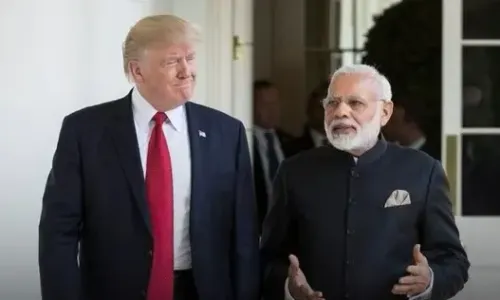
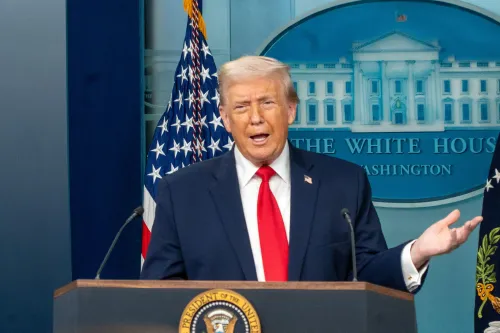
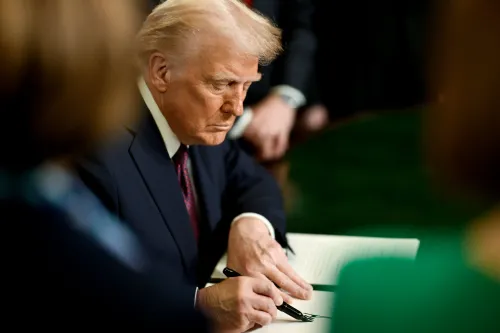
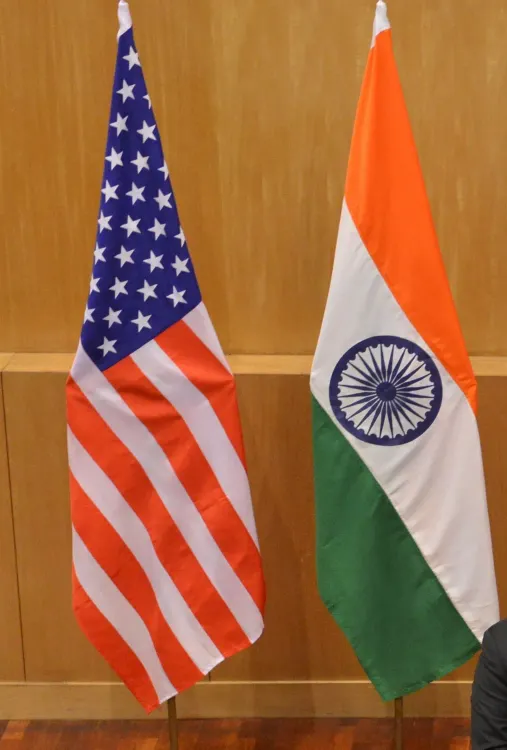
New Delhi, March 5 (NationPress) The strategies employed by the Donald Trump administration have prompted a shift in the previously strengthening India-US alliance, as highlighted in a notable journal article.
Initially, Indian officials believed that the United States would consider their partnership vital to a broader initiative against China. However, this expectation was not met, compelling New Delhi to seek out new alliances, according to the findings in Foreign Affairs.
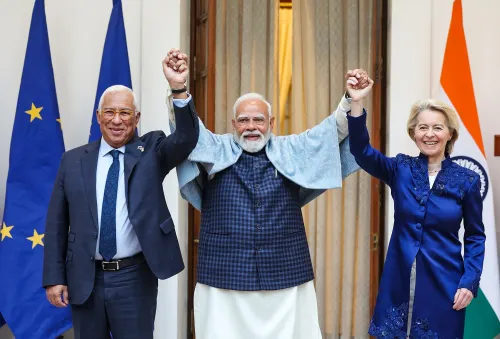
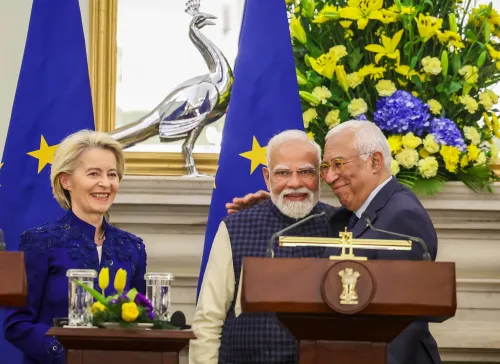
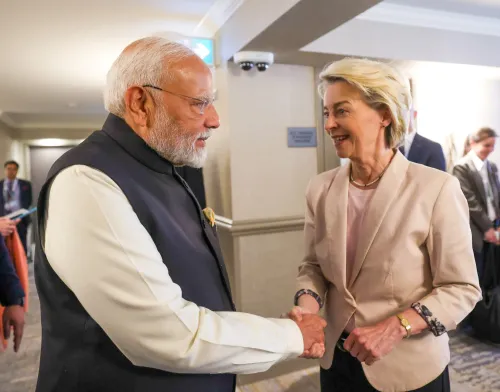
The piece emphasizes the significance of the trade deal finalized in January with the European Union, marking a pivotal alteration in New Delhi's geoeconomic agenda. Ursula von der Leyen, President of the European Commission, hailed it as the "mother of all deals," projecting an anticipated €30 billion in export benefits for both parties. The agreement was further complemented by a fresh defense pact and numerous additional agreements. Such bilateral arrangements, including the one with Brussels and recent pacts with Australia, the United Arab Emirates, and others, are expected to assist India in enhancing its economy and reducing dependence on any single nation.
The article advocates for India’s entry into the Comprehensive and Progressive Agreement for Trans-Pacific Partnership (CPTPP), viewed as a key trade coalition in Asia.
Established in 2018, the CPTPP was formed after US President Trump exited an earlier agreement—the Trans-Pacific Partnership—aimed at creating a premier trade zone across the Pacific Rim. The CPTPP works to eliminate or lower tariffs on a broad range of goods and services, while also obligating members to adhere to rigorous shared standards in various sectors, such as labor rights and intellectual property. These standards drive genuine structural reforms within member economies. Even in the absence of the United States, the agreement now includes 12 members that collectively represent around 15% of the global economy, comprising Australia, Canada, Chile, Japan, Malaysia, Mexico, New Zealand, Singapore, the United Kingdom, and Vietnam. Several potential new members, including Cambodia and South Korea, are expressing interest in joining.
Although there are notable challenges for India in joining the bloc, the advantages are also substantial. CPTPP nations would gain preferential access to India’s extensive market, while the group would benefit from incorporating a future global superpower. For India, joining would expedite its integration into regional supply chains and substantially boost exports, the article concludes.
Point of View
It is evident that India's strategic pivot towards alternative partnerships reflects a significant reassessment of its international relations, sparked by changes in US policy. This move may enhance India's economic resilience and global influence.
NationPress
19 Sept 2026
Frequently Asked Questions
What triggered India's shift in foreign policy?
The pressure tactics from the Trump administration led to a reevaluation of the India-US relationship, prompting India to seek alternative partnerships.
Why is the trade deal with the EU significant?
The trade deal with the EU is seen as a pivotal shift in India's geoeconomic strategy, potentially bringing significant economic benefits.
How many countries are currently in the CPTPP?
Currently, the CPTPP has 12 member countries, representing about 15% of the global economy.
What are the potential benefits for India in joining CPTPP?
Joining the CPTPP could provide India with preferential access to member markets and enhance its integration into regional supply chains.