One Nation One Port reforms: India's maritime sector gets uniform digital overhaul by March 2027
Synopsis
India's 21st MSDC meeting has set a hard deadline — March 2027 — for every major and non-major port to digitise, standardise documentation, and publish tariffs electronically under ONOP reforms. Backed by 500+ national initiatives and two first-of-their-kind shipbuilding insurance products, this is the most sweeping overhaul of India's maritime governance architecture in years.
Key Takeaways
The 21st MSDC , chaired by Sarbananda Sonowal , mandated all Indian ports to adopt uniform digital procedures and integrate with Maritime Single Window by March 2027 .
The One Nation One Port Process (ONOP) covers documentation standardisation, port process re-engineering, and inter-ministerial reforms across all ports.
The Council adopted Maritime India Vision 2030 and Maritime Amrit Kaal Vision 2047 , mapping over 500 initiatives across the sector.
States and Union Territories must notify subordinate rules under Section 77 of the Act within three months .
Two credit risk insurance products were introduced under the National Shipbuilding Mission to protect large-scale ship manufacturers from milestone payment failures.
Port-linked industrial clusters and multimodal connectivity projects under Sagarmala were endorsed as priority actions.
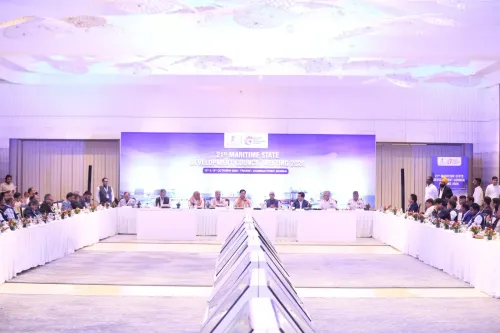
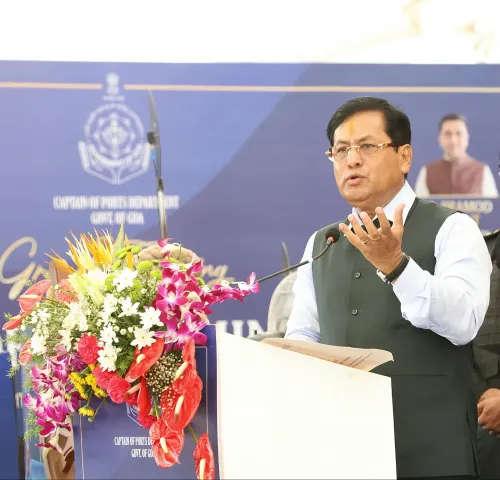
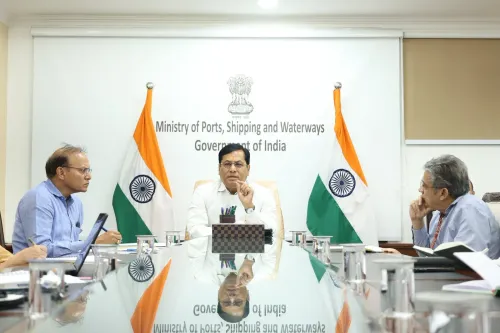
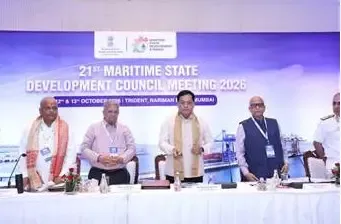
The 21st Maritime State Development Council (MSDC), chaired by Union Minister for Ports, Shipping and Waterways Sarbananda Sonowal, on Tuesday, 13 October 2026, resolved that all major and non-major ports across India must adopt uniform digital procedures, integrate with the Maritime Single Window platform, and publish tariffs electronically by March 2027. The mandate is part of the One Nation One Port Process (ONOP) reforms, designed to standardise port operations and ease the cost of doing business at India's coastline.
What ONOP Covers
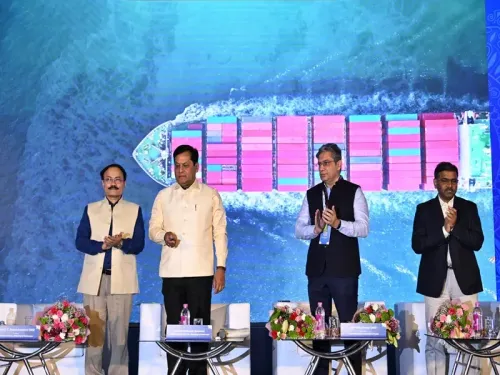
The ONOP framework comprises three pillars: One Nation One Documentation, Port Process Re-engineering, and Inter-ministerial Process Reforms — all to be implemented uniformly across every Indian port, according to an official statement from the Ministry. To guide rollout, Minister Sonowal launched the Ready Reckoner for Implementing ONOP, a comprehensive reference document for both major and non-major ports.
The Ready Reckoner draws on central circulars from the Central Board of Indirect Taxes and Customs, the Ministry of Home Affairs, and the Ministry of Health and Family Welfare, covering inter-ministerial process reforms. It also sets out explicit obligations for state governments and Union Territory administrations to accelerate implementation.
Maritime Vision and National Targets
The Council formally adopted the Maritime India Vision 2030 and Maritime Amrit Kaal Vision 2047 targets, which together map out more than 500 initiatives spanning ports, shipping, inland waterways, shipbuilding, green shipping, and global collaboration. States and State Maritime Boards were directed to align port master plans for non-major ports with these national targets, using a standardised template shared by the Ministry.
The MSDC also endorsed the priorities of the National Perspective Plan and called on states to fast-track multimodal connectivity projects — covering road, rail, inland waterways, pipelines, and conveyors. Port-linked industrial clusters with land availability, plug-and-play infrastructure, and fast-tracked approvals are to be developed by states in coordination with the Centre, integrated with port capacity expansion plans.
Statutory Compliance and Transparency Mandates
On governance, the Council approved draft MSDC regulations and guidelines on port data and tariff transparency. All states and Union Territories were instructed to notify subordinate rules under Section 77 of the Act within three months. Electronic publication of port tariffs was made mandatory as part of the broader transparency drive.
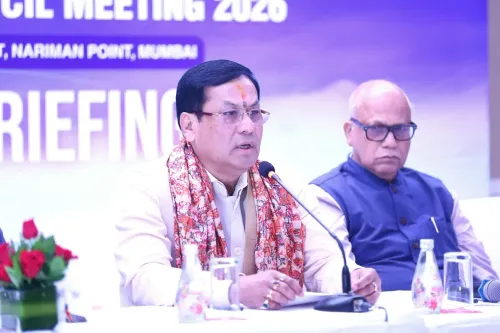
Minister Sonowal said, 'The Indian Ports Act gave the MSDC its legal foundation. Today the Centre and the coastal states turned that foundation into a shared work plan, with deadlines every one of us has agreed to meet.' He added that the reforms represent 'cooperative federalism in maritime governance, delivering for our ports and for port-led industrialisation.'
Shipbuilding Insurance and Connectivity Push
A significant announcement at the meeting was the introduction of two specialised credit risk insurance products for India's shipbuilding industry under the National Shipbuilding Mission. Developed under the Shipbuilding Development Scheme (SbDS), these first-of-their-kind policies aim to reduce financial stress in large-scale ship manufacturing by providing a safety net against missed milestone payments.
Sonowal noted, 'Building a ship is a massive, multi-year journey — a single missed milestone payment could stall an entire shipyard's operations. With these new insurance policies, we are stepping in to give them a real safety net.'
The Council additionally resolved to prioritise connectivity projects under Sagarmala, implement the National Coastal and Inland Shipping Strategic Plan, promote modal shift of cargo to coastal shipping, and develop shipbuilding, ship-repair, and recycling clusters. The Maritime Development Fund, Shipbuilding Development Scheme, and Shipbuilding Financial Assistance Programme were cited as financing tools. Cruise shipping infrastructure development at major and non-major ports was also formally endorsed, pointing to the sector's growing economic potential.
With firm deadlines now in place and inter-governmental consensus formalised at the MSDC, the pace of implementation at state-level ports will be the defining test of whether ONOP delivers on its promise of a truly unified maritime corridor.
Point of View
And coastal states with their own port interests will determine whether March 2027 is a real deadline or an aspirational one. The shipbuilding insurance products are a genuinely novel intervention, but their uptake will depend on how swiftly underwriting frameworks and claims mechanisms are operationalised — details the government has yet to fully disclose.
NationPress
13 Oct 2026
Frequently Asked Questions
What is the One Nation One Port Process (ONOP) reform?
ONOP is a reform initiative requiring all major and non-major Indian ports to adopt uniform digital procedures, integrate with the Maritime Single Window platform, and publish tariffs electronically by March 2027. It covers three pillars: One Nation One Documentation, Port Process Re-engineering, and Inter-ministerial Process Reforms.
What was decided at the 21st Maritime State Development Council meeting?
The 21st MSDC, chaired by Union Minister Sarbananda Sonowal on 13 October 2026, mandated uniform digital port procedures by March 2027, adopted the Maritime India Vision 2030 and Maritime Amrit Kaal Vision 2047 targets, approved draft regulations on port data and tariff transparency, and introduced two new credit risk insurance products for the shipbuilding industry.
What are the new shipbuilding insurance products announced?
Two first-of-their-kind credit risk insurance products were introduced under the National Shipbuilding Mission, developed as part of the Shipbuilding Development Scheme (SbDS). They are designed to protect shipyards from financial stress caused by missed milestone payments during large, multi-year ship construction projects.
What is the deadline for states to comply with MSDC regulations?
States and Union Territories have been instructed to notify subordinate rules under Section 77 of the Act within three months of the MSDC meeting. All ports must complete digital integration and tariff publication by March 2027.
How does ONOP connect to India's broader maritime vision?
ONOP sits within the larger Maritime India Vision 2030 and Maritime Amrit Kaal Vision 2047 frameworks, which together outline over 500 initiatives across ports, shipping, inland waterways, shipbuilding, green shipping, and global collaboration. ONOP provides the procedural and digital backbone needed to achieve these national targets.