India's dormant terror modules: How sleeper cells wait years for a 'spectacular' strike

Synopsis
India's most dangerous terror threat isn't a ticking bomb — it's a patient one. Security officials reveal that self-radicalised modules inspired by IS and Al-Qaeda are deliberately lying low for up to a decade, recruiting educated, high-income members to evade detection, and waiting for the right moment to launch a 'spectacular' strike. The Pune module, dormant since 2015, is only the latest example uncovered.
Key Takeaways
Indian security agencies have identified self-radicalised terror modules staying dormant for 5–10 years before attempting large-scale attacks.
Most such modules are ideologically inspired by the Islamic State or Al-Qaeda in the Sub-Continent (AQIS) .
Recruits are typically highly educated, high-income individuals chosen to avoid financial and surveillance detection.
A module busted in Pune , set up in 2015 , remained operationally invisible for a decade before escalating to IED attacks in areas like Kondhwa .
Some modules established in 2014 have reportedly shown no overt activity even after more than ten years .
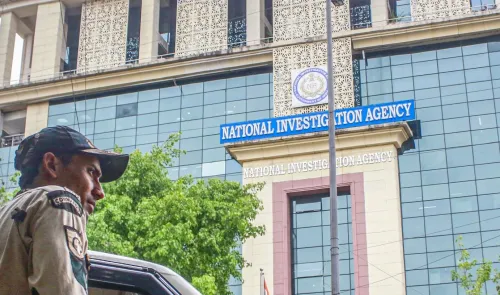
The National Investigation Agency (NIA) has shifted to proactive disruption , coordinating with state agencies for pre-emptive raids on suspected dormant cells.
Indian security agencies have identified a deeply troubling pattern in the functioning of self-radicalised terror modules operating across the country — cells that stay deliberately inactive for years, even decades, before attempting a large-scale attack. The emerging threat profile, outlined by officials, points to a calculated, patient strategy that makes these groups exceptionally difficult to detect and dismantle.
How Dormant Modules Are Built
According to officials, the formation of such a module typically begins with one or two radicalised individuals with shared ideological convictions. Their immediate goal, officials say, is not violence — it is the quiet construction of a self-sustaining cell capable of spreading radical propaganda and selectively recruiting over time.
'Their primary objective is to establish a self-sustaining module focused on spreading radical propaganda. Over time, they begin recruiting others, but only select a small number of people. They also thoroughly profile potential recruits before allowing them to join the module,' an official said.
Most of these modules, according to officials, draw ideological inspiration from either the Islamic State or Al-Qaeda in the Sub-Continent (AQIS). 'It is their patience, which is what makes them extremely lethal,' the official added.
Why Educated, High-Income Recruits Are Targeted
An Intelligence Bureau (IB) official noted that recruits are typically well-educated individuals holding high-paying jobs — a deliberate selection strategy designed to ensure operational secrecy and financial self-sufficiency.
'First and foremost, these persons do not come under the radar easily. Secondly, they have high-paying jobs, and the money earned comes in handy to run a self-sustained module. This helps cover the financial trail, as there is no dependence on an outside source to fund the module,' the IB official said.
This internal funding model eliminates one of the most common signals investigators use to track terror networks — suspicious financial flows from foreign or known extremist sources.
The Pune Module: A Blueprint for Dormancy
Officials pointed to a recently busted module in Pune as a textbook illustration of this threat. The cell was reportedly set up in 2015 and remained operationally invisible for ten years, with members blending seamlessly into the local community throughout.
In its early phase, the module reportedly focused exclusively on amplifying Al-Qaeda's call for the destruction of India — referred to in extremist circles as Ghazwa-e-Hind. Only later, when the group considered itself ready, did it escalate to carrying out IED attacks in areas such as Kondhwa.
Notably, officials say some modules set up as far back as 2014 have shown no overt activity even now — a span exceeding ten years of undetected dormancy.
Why These Cells Avoid Lone Wolf Tactics
A key strategic distinction that officials draw is the deliberate avoidance of lone wolf attacks. According to security officials, such impulsive actions are seen as counterproductive by these modules.
'This is a knee-jerk reaction, and a lone wolf attack would not just be less effective, but would expose such modules easily. Instead, they play the waiting game for 5–10 years and at the end of it set themselves up for a spectacular attack,' an official said.
The long incubation period, officials say, is used not just for concealment, but for active — if covert — radicalisation and recruitment, steadily expanding the cell's capacity while staying below detection thresholds.
NIA's Shift to Proactive Disruption
In response to this evolving threat, the National Investigation Agency (NIA) has reportedly shifted its operational posture toward proactive disruption — moving to dismantle modules before they activate, rather than investigating attacks after the fact. The NIA now coordinates closely with state agencies and conducts pre-emptive raids targeting suspected dormant cells.
Officials confirmed that several more such modules remain on the radar of Indian security agencies. The focus, they said, is not only on dismantling existing cells but also on preventing new ones from forming — with intelligence-led surveillance identified as the central tool in that effort.
With intelligence assessments warning that dormant modules will continue to emerge across different regions, the pressure on India's counter-terror architecture to detect threats that are, by design, built to be invisible will only intensify.
Point of View
Not silence. Profiling high-income, educated recruits with no apparent foreign funding trail is far harder than tracking money flows or travel patterns. The Pune case is a reminder that a decade of institutional patience from a terror cell can outpace a decade of surveillance. The NIA's pivot to proactive disruption is the right directional call, but its success will hinge on the quality of human intelligence at the grassroots level — an area where Indian agencies have historically struggled relative to signals intelligence.
NationPress
7 Oct 2026
Frequently Asked Questions
What are dormant terror modules in India?
Dormant terror modules are self-radicalised cells that remain operationally inactive for years — sometimes over a decade — before attempting a large-scale attack. According to security officials, these groups are typically inspired by the Islamic State or Al-Qaeda in the Sub-Continent, and are deliberately designed to evade detection through prolonged silence and community-level concealment.
What was the Pune terror module and how long was it active?
The Pune module was a dormant terror cell reportedly set up in 2015 that remained undetected for approximately ten years. In its early phase it focused on spreading Al-Qaeda's Ghazwa-e-Hind ideology before escalating to IED attacks in areas like Kondhwa. It was recently busted by security agencies and is described as a textbook example of how dormant modules operate.
Why do these terror modules recruit educated, high-income individuals?
According to an Intelligence Bureau official, educated professionals with high salaries are recruited because they are less likely to attract law enforcement attention and can fund the module internally without relying on foreign money transfers — one of the most common financial red flags used to track terror networks.
Why do dormant modules avoid lone wolf attacks?
Security officials say these cells view lone wolf attacks as tactically counterproductive — they expose the module prematurely and have less impact. Instead, the strategy is to wait 5–10 years, quietly building capability, before launching what officials describe as a 'spectacular' coordinated strike.
How is the NIA responding to the dormant module threat?
The National Investigation Agency has shifted to a proactive disruption strategy, conducting pre-emptive raids in coordination with state agencies to dismantle suspected dormant cells before they can activate. Officials say several more such modules are currently on the radar of Indian security agencies.