Leaderless radicalisation in South India: New security threat with no terror links
Synopsis
India's security agencies are confronting a radicalisation model with no leaders, no terror-group ties, and no criminal records to track — small autonomous cells inspired by IS and Al-Qaeda, self-replicating through social media across state lines. It is a direct lesson drawn from the PFI's dismantling, and officials warn it could spread nationally before agencies can adapt.
Key Takeaways
Security agencies have identified a new pattern of leaderless radicalisation in South India , driven by individuals and cells with no formal terror-group affiliation.
Recruits carry no criminal record and operate without financial or logistical support from designated organisations, making tracking extremely difficult.
Modules are reportedly inspired by Islamic State and Al-Qaeda ideology and recruit nationally via social media, creating a self-replicating chain.
The current stated goal is ideological — changing societal mindset — rather than directing immediate violence, according to officials.
The pattern echoes the early spread of the Popular Front of India (PFI) , which expanded from Kerala to Uttar Pradesh , Bihar , and the Northeast before being banned following an NIA -led probe.
Officials warn the threat could escalate nationally if not addressed with recalibrated surveillance frameworks.
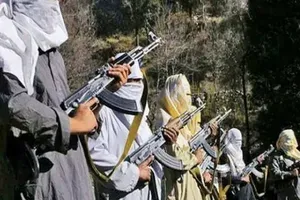
Security agencies across India are sounding fresh alarms over a significant shift in radicalisation patterns in South India, where individuals and small cells are independently propagating extremist ideologies without any formal affiliation to recognised terror organisations. Officials say this structural change makes the threat harder to detect and disrupt than conventional networks.
The New Pattern: Autonomous Cells, No Paper Trail
Unlike earlier models where radicalisation was driven by structured outfits, the emerging modules operate in near-total anonymity. According to an Intelligence Bureau official, the individuals involved have no association with any designated terror group and carry no criminal record — two factors that severely limit the ability of agencies to track them proactively.
'These youths are not even associated with any terror group. They have been inspired by groups such as the Islamic State or Al-Qaeda and are independently spreading radical beliefs. They are doing so without seeking any financial or logistical support from any terror groups,' the official said.
Counter-terror experts describe these modules as operating on 'autopilot mode' — typically run by a single individual or a cluster of three to four persons who recruit through social media, often targeting strangers across state lines after just a few online interactions.
How the Radicalisation Chain Works
The modus operandi, according to officials, is deliberately decentralised. Recruiters do not restrict outreach to any particular state; instead, they cast a wide net nationally, instructing newly radicalised individuals to continue the process with others. The result, experts warn, is a self-replicating chain reaction with no central command to dismantle.
Critically, officials say these modules are not currently directing recruits toward violence. 'The pattern is changing, and the idea is to change the mindset of society, with the larger goal being the establishment of an Islamic State,' one official said. Longer-term targeting is reportedly expected to extend to women, who may be encouraged to enforce conservative social norms and shape ideological upbringing of future generations.
The PFI Precedent and What Changed
The shift stands in sharp contrast to the model once run by the Popular Front of India (PFI), which operated radicalisation camps with a visible organisational structure — offices, registered cadres, and traceable financial flows. It was precisely this structure that enabled a multi-agency probe led by the National Investigation Agency (NIA) to build a case resulting in the ban on the PFI.
Officials warn that the current autonomous modules have drawn lessons from the PFI's dismantling, deliberately stripping away any institutional footprint. 'For years, this issue has been ignored, and over time, with no attention paid, scores of radical elements have begun to thrive,' a second official noted.
Geographic Spread and the Risk of Escalation
While the concentration of such modules has been identified in southern states, officials caution that the pattern mirrors the early trajectory of the PFI — which began as a Kerala-based outfit before expanding to Uttar Pradesh, Bihar, and parts of Northeast India. 'We are witnessing a similar pattern when it comes to these modules,' one official pointed out.
Recent raids and investigations across southern states have surfaced evidence of this emerging network, though the absence of criminal records among those identified complicates both prosecution and pre-emptive action. The broader stated aim, according to officials, is the eventual overthrow of the democratically elected government and its replacement with governance rooted in the ideology of groups such as Al-Qaeda or the Islamic State.
As agencies recalibrate surveillance frameworks for a threat that leaves minimal institutional traces, the challenge of countering leaderless radicalisation is expected to intensify in the months ahead.
Point of View
Record-free modules is not incidental — it is adaptive. These cells have internalised exactly what made the PFI vulnerable: visibility. What agencies are now confronting is a threat deliberately engineered to evade the tools that worked before. The deeper concern is institutional: India's counter-radicalisation infrastructure was built to track organisations, not ideas spreading peer-to-peer on social media. Until surveillance and legal frameworks catch up to this model, the chain-reaction dynamic officials describe will keep compounding — and the southern states are only the current epicentre, not the endpoint.
NationPress
8 Oct 2026
Frequently Asked Questions
What is leaderless radicalisation and why is it a concern in South India?
Leaderless radicalisation refers to the spread of extremist ideology by individuals or very small groups acting independently, without direction or support from any formal terror organisation. In South India, security agencies have identified such autonomous cells inspired by Islamic State and Al-Qaeda ideology, which are difficult to track because they leave no institutional footprint and their members carry no criminal records.
How do these radicalisation modules recruit members?
According to counter-terror experts, these modules operate primarily through social media, targeting individuals across state lines after only a few online interactions. Newly radicalised persons are then expected to recruit others, creating a self-replicating chain with no central command.
How does this differ from the Popular Front of India's radicalisation model?
The PFI operated radicalisation camps through a visible organisational structure — with offices, registered cadres, and traceable finances — which ultimately enabled the NIA-led multi-agency probe that resulted in its ban. The current autonomous modules deliberately strip away any such institutional presence, making them significantly harder to detect and prosecute.
Are these modules planning terror attacks?
Officials say the immediate goal is not to direct violence but to achieve a broader ideological shift in society, with the stated long-term aim of replacing the elected government with governance rooted in radical ideology. However, agencies caution that the threat could evolve, and the pattern is being monitored closely.
Could this spread beyond South India?
Officials believe so. They draw a direct parallel with the PFI, which began as a Kerala-based outfit and later expanded to Uttar Pradesh, Bihar, and parts of Northeast India. Recent investigations suggest a similar geographic spread is already underway with the current autonomous modules.