Emerging Hybrid Terrorism in India: A New Era of Self-Inspired Modules
Synopsis
Recent arrests reveal a concerning trend in India: terror modules are now formed by individuals inspired by multiple groups rather than being affiliated with a single organization. This shift towards self-initiated groups poses significant challenges to national security.
Key Takeaways
Emergence of hybrid terror modules in India, showcasing a shift in operational tactics.
Individuals are increasingly self-motivated and inspired by various ideologies.
Propaganda plays a critical role in connecting potential recruits.
ISI's strategy involves allowing recruits to choose their terror affiliations.
Recent incidents highlight the effectiveness of this new approach.
New Delhi, April 8 (NationPress) The recent unraveling of multiple terror modules poised to attack within India has unveiled a striking new trend. The individuals involved do not belong to a single organization. For instance, the members of the Faridabad module were affiliated with Jaish-e-Mohammad, yet the predominant ideology they adhered to was that of the Islamic State.
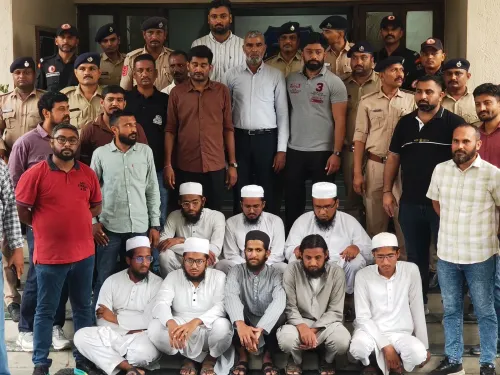
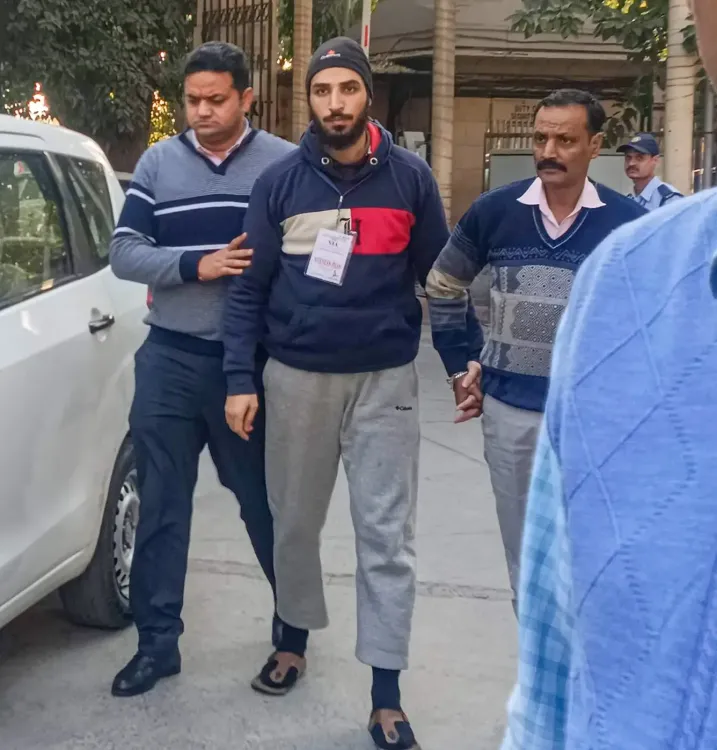
In a recent operation, the Delhi Police and Maharashtra Anti-Terrorism Squad (ATS) apprehended two suspects whose ties extended to both the Islamic State and Jaish-e-Mohammad, according to the investigation.
An official from the Intelligence Bureau highlighted that this marks a novel tactic where module members are no longer tied to just one group but are motivated by various terror factions. This indicates a perilous shift, as individuals are independently banding together to form terror units. The agenda of the ISI is unmistakable, aiming for groups to be self-initiated.
In light of India's firm stance against terrorism, particularly following the Pahalgam attack, Pakistan is keen to avoid direct involvement in establishing terrorist organizations. To facilitate this, individuals in Pakistan—who are not directly affiliated with terror groups—are being recruited to disseminate propaganda on social media.
Since Operation Sindoor, intelligence agencies have observed a significant increase in the propaganda campaign orchestrated by various Pakistani accounts. This mirrors the long-standing tactics employed by the Islamic State. Such propaganda serves to entice youth who are inundated with content that motivates them to form terror groups with like-minded individuals.
Numerous instances have emerged where young people have attempted to act independently. An official elaborated that initially, propaganda material, including Jihadi literature, is extensively circulated on social media and encrypted messaging platforms. Handlers meticulously monitor how this content is consumed, tracking who engages with it. When a group is identified as having absorbed similar material, networking occurs.
The Pakistani handlers then facilitate introductions among these individuals, enabling them to collaborate and establish a terror module.
Except for the terror incidents in Jammu and Kashmir in recent years, all other attacks have been linked to self-inspired terror modules.
Jamesha Rubin, who intended to detonate a bomb at a temple in Coimbatore, was motivated by his own beliefs. He subscribed to the ideology of the Islamic State, heavily propagated by Zahran Hashim, the mastermind behind the Sri Lanka Easter Bombings. Mubeen acted independently, raising funds primarily on his own for his operation.
The blast at Rameshwaram Cafe in Bengaluru on March 1, 2024, was executed by two terrorists inspired by the Islamic State: Mussavir Hussain and Abdul Mateen Talha. Similarly, Mohammad Shariq and Syed Yasin, involved in the failed Mangaluru blast, were also influenced by Islamic State ideology.
An official stated that each of these incidents was self-driven, and investigations revealed no direct link among the perpetrators. Their only commonality was that they were self-inspired and adhered to the same ideology.
The ISI, in implementing this new approach, has directed handlers to allow recruits the freedom to choose which terror group they wish to join. No coercion should be employed to force individuals into a specific organization, as per ISI instructions.
Propaganda will be disseminated, and recruits can select their preferred terror group, in alignment with this revised strategy.
Moreover, the handlers and recruiters flooding social media with Jihadi literature do not belong to any single terror organization, as noted by an official. Another official indicated that this strategy is likely to become the ISI's preferred method. It affords deniability, minimizes operational risks, and is cost-efficient.
Point of View
The threat landscape becomes more fragmented and harder to predict. A proactive approach is essential to counter this evolving danger.
NationPress
19 Sept 2026
Frequently Asked Questions
What is the new trend in terrorism observed in India?
The new trend involves the rise of self-inspired terror modules formed by individuals motivated by the ideologies of various groups, rather than being strictly affiliated with a single organization.
How are these self-inspired modules formed?
These modules are formed through the dissemination of propaganda on social media, where individuals connect based on shared beliefs and ideologies.
What role does the ISI play in this new strategy?
The ISI has directed handlers to allow recruits the freedom to choose their preferred terror group, facilitating self-initiated terror modules.
Are there recent examples of such self-inspired terror activities?
Yes, notable cases include the planned temple bombing in Coimbatore and the Rameshwaram Cafe blast in Bengaluru, both executed by individuals inspired by the Islamic State.
What measures can be taken to counter this threat?
Strengthening intelligence efforts, monitoring social media for propaganda, and promoting counter-narratives are essential measures to combat the rise of self-inspired terror modules.