Security Agencies Warn of Terror and Disinformation Threats in Tamil Nadu and Kerala Elections
Synopsis
As Tamil Nadu and Kerala gear up for elections, security agencies are on high alert due to potential threats from terror groups and disinformation campaigns aimed at disrupting the electoral process.
Key Takeaways
Security agencies are on high alert for potential terror threats.
Disinformation campaigns aim to incite communal tensions .
The Islamic State and PFI are collaborating to disrupt elections.
Radicalisation efforts in South India are notably easier.
Agencies are focusing on monitoring the Hizb-ut-Tahrir activities.
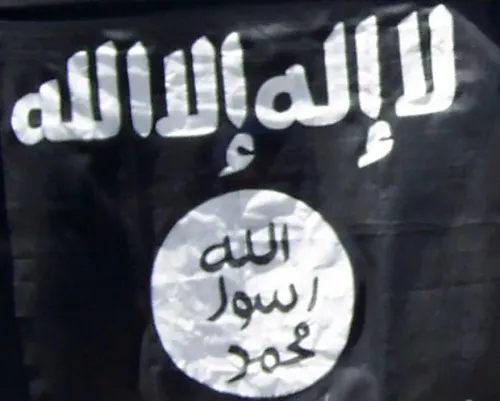
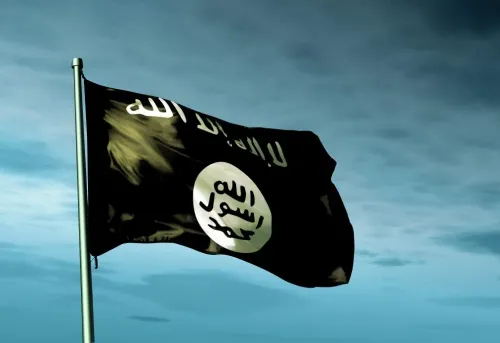
New Delhi, March 24 (NationPress) Security agencies are diligently observing the online activities of terror operatives and their supporters as the elections in Tamil Nadu and Kerala approach. Intelligence reports indicate that sympathisers of the outlawed Popular Front of India (PFI) and individuals associated with the Islamic State are devising plans to disrupt the electoral process.
The agencies report that members and supporters of both the PFI and Islamic State are collaborating to execute a strike aimed at hindering the elections.
However, the agencies caution that the greater threat to these southern states lies in the disinformation campaigns that these groups are intending to launch.
Such campaigns are designed to incite communal discord. If communal peace is compromised, it serves as an effective tool for radicalisation and recruitment.
The Islamic State has significantly focused on the southern regions, gaining more traction in this part of the nation.
Most of its activities have been conducted online, with the primary goal of radicalising a large number of youths in Kerala and Tamil Nadu.
The terror group intends to exploit the fact that security forces will be preoccupied with ensuring smooth elections.
Currently, these terror factions are concentrating their efforts in Kerala and Tamil Nadu, but once the elections conclude, they may extend their focus to other southern states.
An official stated that the radicalisation in South India saw a substantial increase when Wahhabi preachers began visiting in large numbers, setting the stage for groups like the PFI, Islamic State, and to some extent, Al-Qaeda, to establish a presence.
The official emphasized that these organisations have long viewed South India as their radicalisation testing ground. The process of radicalisation has been relatively straightforward in Tamil Nadu and Kerala, he noted.
Another official pointed out that prior to the announcement of election dates, these factions were already strategizing attacks and engaging in disinformation activities.
Moreover, the current global climate, fraught with conflicts, has been seized upon by these groups, the official added.
Following the outbreak of conflict in Iran, the Union Home Ministry issued a warning about potential radicalisation attempts. An Intelligence Bureau official revealed that during Gulf conflicts, the Southern states become particularly vulnerable to radicalisation.
While the spread of Wahhabism contributes to this vulnerability, the large population from Kerala residing in the Gulf also plays a significant role.
In addition to the existing threats posed by the Islamic State and PFI, agencies are also monitoring another group—Hizb-ut-Tahrir (HuT). This group, banned by the Indian government under the Unlawful Activities (Prevention) Act (UAPA), has created numerous ghost accounts on social media aimed at large-scale radicalisation in South India.
The agencies are closely scrutinising the material circulated by HuT, which has intensified as the elections approach, an official stated.
Some of their content promotes the formation of hit squads in South India and advocates for lone wolf attacks. With these new developments surfacing ahead of the elections, the agencies are revisiting investigations stemming from the arrest of Faizul Rehman, the Emir of HuT in Tamil Nadu.
During his interrogation, he indicated that HuT aims to establish multiple recruitment modules in South India and incite youth, thus creating communal tensions in the area.
An Intelligence Bureau official remarked that all terror groups operating in South India are primarily focused on inciting communal strife. Their objective is to disrupt the electoral process and leverage the ensuing violence as a tool for radicalisation and recruitment.
Upcoming elections are scheduled in Assam, Tamil Nadu, Kerala, West Bengal, and Puducherry. In Kerala, Assam, and Puducherry, elections will take place on April 9. West Bengal will conduct polls in two phases on April 23 and 29, while Tamil Nadu will have a single-phase election on April 23. Counting for all four states and Puducherry (UT) will occur on May 4.
Point of View
The heightened vigilance by security agencies reveals the complex interplay of terror threats and disinformation tactics. It emphasizes the need for a robust response to safeguard democratic integrity in these regions.
NationPress
23 Sept 2026
Frequently Asked Questions
What are the main threats identified by security agencies ahead of the elections?
The main threats include potential disruptions by sympathisers of the PFI and Islamic State, as well as extensive disinformation campaigns aimed at inciting communal tensions.
How are these terror groups planning to operate during the election period?
These groups are planning to exploit the preoccupation of security forces with the elections to carry out attacks and spread disinformation.
Why are Tamil Nadu and Kerala considered vulnerable to radicalisation?
Vulnerability arises from the presence of Wahhabi preachers and a substantial population from Kerala residing in the Gulf, which has contributed to increased radicalisation.
What is the role of Hizb-ut-Tahrir in this context?
Hizb-ut-Tahrir has been closely monitored for creating ghost accounts on social media to facilitate large-scale radicalisation in South India.
What measures are being taken to address these threats?
Security agencies are enhancing their monitoring efforts and revisiting investigations into radicalisation activities to prevent any disruptions during the elections.