Spy Networks Targeting Temples: Uncovering ISI's Strategy

Synopsis
Recent investigations reveal a disturbing trend where spy networks are focusing on Hindu temples across India, potentially to incite communal tensions ahead of upcoming elections. With the ISI's involvement, the threat to religious sites raises significant security concerns.
Key Takeaways
Spy networks are targeting Hindu temples for intelligence gathering.
The ISI aims to provoke communal violence in India.
Upcoming elections heighten the risks of unrest.
Surveillance tactics include installing cameras at sensitive locations.
Close monitoring of religious sites is essential for security.
New Delhi, March 21 (NationPress) Recent investigations by Indian intelligence agencies have revealed that the spy networks they have uncovered are not solely focused on gathering sensitive data regarding the Indian military. Within these espionage groups, certain individuals have been specifically tasked with monitoring religious sites.
Evidence suggests that these operatives were directed to collect intelligence about various Hindu temples scattered throughout the nation.
An official from the Intelligence Bureau noted that these individuals are increasingly scrutinizing temples. This indicates that they are supplying information to the ISI (Inter-Services Intelligence) to facilitate potential attacks. An assault on a temple could trigger communal unrest, which aligns with the objectives of the Pakistan-based spy agency.
The official further explained that recent interceptions and ongoing inquiries into espionage incidents have shown that elements originating from Pakistan are concentrating their efforts on targeting temples in India, aiming to provoke communal discord.
Stirring communal violence is viewed as a more effective strategy by the ISI than executing a direct terror attack. Such violence can spread rapidly, creating widespread instability.
Moreover, with elections approaching in multiple states, any outbreak of violence could exacerbate the pressure on security forces.
Officials indicated that the initial phase of the operation involves gathering intelligence on smaller temples.
Once this phase is completed, the plan is to extend their focus to larger places of worship, the official added.
Another alarming trend that has surfaced is the directive given to spies recruited by Pakistani operatives to install cameras at sensitive locations. This discovery was made during an investigation by the Ghaziabad police following the apprehension of six individuals from the Kaushambi area on March 14.
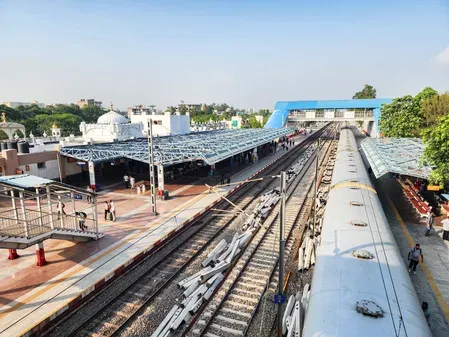
It was found that these individuals had successfully installed a camera at the Delhi Cantt railway station, which enabled the ISI to obtain live feeds from the location.
Additionally, members of the espionage network were instructed to place cameras nearby temples to facilitate live monitoring of security arrangements.
The ability to access a live feed allows the planners of a potential attack to evaluate security measures in real time.
Details and alterations in security protocols are also readily available to these operatives.
Provoking communal tensions has long been a tactic of the ISI. For instance, during the passage of the Citizen Amendment Act (CAA), numerous ISI-affiliated elements instigated a disinformation campaign that resulted in communal riots across various regions.
Intelligence agencies had previously alerted that ISI-backed individuals had infiltrated protests, seeking to inject a communal narrative into the act.
Even the Pahalgam attack was designed not only to incite communal strife but also to disrupt the tourism sector in Jammu and Kashmir.
The perpetrators of that attack inquired about the victims' religions before executing them, clearly indicating that the main objective was to incite communal discord and create a divide between the residents of Jammu and Kashmir and those from other regions of India.
Another official remarked that ISI-supported elements are planning a significant strike on places of worship ahead of the elections scheduled for April. They are aware that sensitive states are preparing for elections and are likely to exploit this situation.
Polling will occur in West Bengal, Tamil Nadu, Kerala, Assam, and the Union Territory of Puducherry. Security remains a pressing concern in all these regions, as both internal and external factions might attempt to escalate communal tensions.
Officials have emphasized that religious sites should be closely monitored during this period, as these elements may attempt to execute their plans.
Point of View
It's imperative to highlight the alarming intelligence findings regarding the ISI's tactics to provoke communal tensions through targeted attacks on religious sites. This situation demands urgent attention, particularly with elections on the horizon, as any violence could destabilize the country further.
NationPress
22 Sept 2026
Frequently Asked Questions
What is the main objective of the ISI's espionage network?
The ISI aims to incite communal tensions in India by targeting religious sites, particularly Hindu temples, to create unrest and instability.
How are Indian intelligence agencies responding to these threats?
Indian intelligence agencies are actively investigating these spy networks and monitoring religious sites to prevent potential attacks.
What impact could these activities have on upcoming elections?
The activities of these spy networks could exacerbate communal tensions, complicating the security landscape during the critical election period.
What has been discovered about the tactics used by these networks?
Investigations have revealed that operatives are instructed to install surveillance cameras near temples to gather real-time intelligence.
Why is it important to monitor religious sites during this time?
Monitoring religious sites is crucial to thwart potential attacks and maintain communal harmony, especially with elections approaching.