India's space economy hits $9bn, targets $40-45bn in a decade
Synopsis
India's space economy has grown to $9 billion and is on course to hit $40–45 billion within a decade — but the real story is the speed of the private-sector pivot: from 1 space startup in 2014 to 440 in 2026, and private investment up nearly six-fold. Policy, capital, and launch cadence are now all moving in the same direction.
Key Takeaways
India's space economy stands at $9 billion and is projected to reach $40–45 billion over the next decade, per government data.
Registered space startups grew from 1 in 2014 to approximately 440 by August 2026 .
Private investment surged nearly six-fold , from $100.5 million in 2021–22 to $618.5 million by March 2026 .
NSIL revenue rose from ₹321.77 crore in FY 2021–22 to over ₹3,000 crore in FY 2024–25 .
FDI liberalised in February 2024 : up to 74% for satellite manufacturing, 100% for satellite data products.
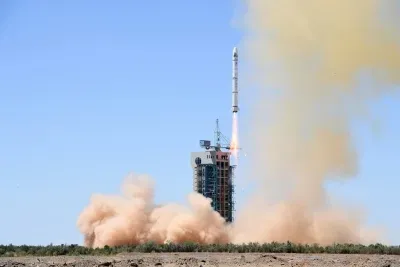
India completed 12 launch vehicle missions between July 2023 and June 2026 , including 9 international customer satellites .
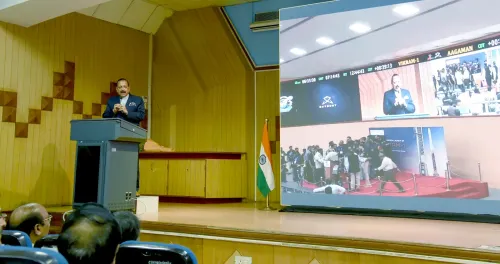
India's space economy has reached $9 billion and is projected to grow to $40–45 billion over the next decade, powered by a rapidly expanding startup ecosystem and sweeping policy reforms, according to the latest government data released on National Space Day, observed on Sunday, 23 August 2026. The figures underscore a structural transformation in how India approaches space — shifting from a state-led programme to a broad commercial ecosystem.
Startup Surge and Private Investment
The scale of private-sector growth is striking. Registered space startups have climbed from just 1 in 2014 to approximately 440 by August 2026. Private investment in the sector surged nearly six-fold, rising from $100.5 million in 2021–22 to $618.5 million by 31 March 2026, with $187 million recorded in 2026 alone. By mid-2026, 113 authorisations had been granted to 52 Non-Government Entities (NGEs), of which 18 are startups engaged in satellite operations, payload establishment, and launch services.
Policy Reforms That Opened the Floodgates
India formally opened its space sector to private participation in 2020, enabling industry and startups to operate across satellites, launch systems, and space applications — a decisive break from the decades-long model of exclusive government control. The Indian Space Policy 2023 deepened this shift, expanding private involvement across the full space value chain and formally defining the roles of two key bodies: NewSpace India Limited (NSIL), the commercial arm of the Indian Space Research Organisation (ISRO), and the Indian National Space Promotion and Authorisation Centre (IN-SPACe).
NSIL's revenue reflects the pace of commercialisation — it rose from ₹321.77 crore in FY 2021–22 to over ₹3,000 crore in FY 2024–25. IN-SPACe, operating as a single-window mechanism, had facilitated 71 ISRO technology transfers to industry and startups as of 31 January 2026.
FDI Liberalisation and Targeted Financing
Foreign direct investment rules were liberalised for the space sector in February 2024. Under the revised framework, up to 74% FDI is permitted automatically for satellite manufacturing and operations, 49% for launch vehicles and spaceports, and 100% for satellite data products and ground-segment components. This positions India as one of the more open space investment destinations among emerging economies.
Targeted financing schemes are also reinforcing the ecosystem. The IN-SPACe Seed Fund Scheme backs early-stage startups; a ₹1,000 crore Venture Capital Fund provides growth capital; a ₹500 crore Technology Adoption Fund supports wider deployment of space technologies; and the Satellite Bus as a Service (SBaaS) Scheme has been allocated ₹75 crore to develop satellite bus capabilities.
Launch Milestones
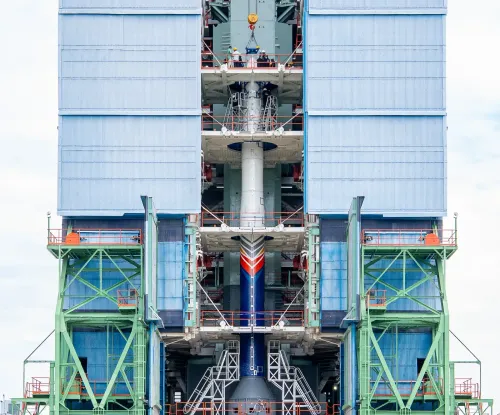
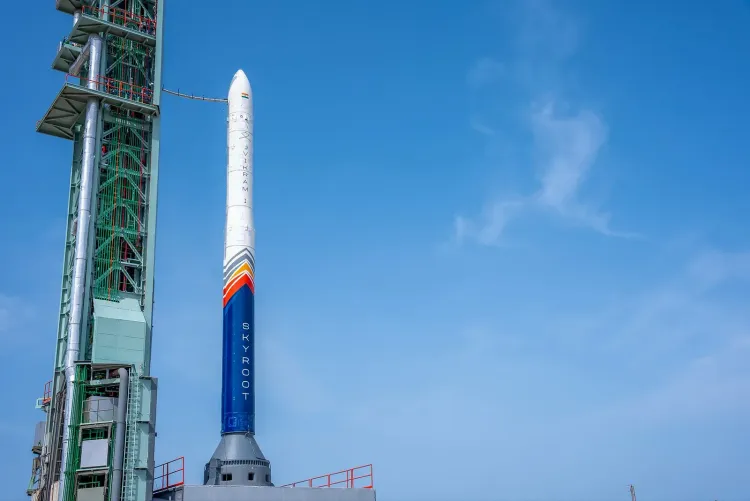
Over the three years from July 2023 to June 2026, India successfully completed 12 launch vehicle missions, carrying 11 national satellites and 9 satellites for international customers. This commercial launch activity signals that India is no longer just a cost-effective launch destination — it is emerging as a reliable partner for global payloads.
With policy architecture in place and private capital accelerating, the trajectory toward a $40–45 billion space economy now hinges on execution — whether startups can scale, whether launch cadence can increase, and whether India can capture a larger share of the global commercial satellite market.
Point of View
And the startup count alone does not guarantee it — most of India's 440 space startups are early-stage, and the gap between authorisation and commercial revenue remains wide. The six-fold rise in private investment is real, but a significant portion is still pre-revenue. The harder question is whether India can convert launch cadence and FDI openness into a durable share of the global commercial satellite market, where established players from the US and Europe retain structural advantages. National Space Day data releases tend to lead with the best numbers; the stress-test will come when global launch competition intensifies.
NationPress
23 Aug 2026
Frequently Asked Questions
What is India's current space economy size and its growth projection?
India's space economy has reached $9 billion and is projected to grow to $40–45 billion over the next decade, driven by private investment and policy reforms, according to government data released on National Space Day, 23 August 2026.
How many space startups does India have in 2026?
India had approximately 440 registered space startups by August 2026, up from just 1 in 2014. Of the 113 authorisations granted to 52 Non-Government Entities by mid-2026, 18 were awarded to startups for satellite operations and launch services.
What FDI rules apply to India's space sector?
Following liberalisation in February 2024, India permits up to 74% automatic FDI for satellite manufacturing and operations, 49% for launch vehicles and spaceports, and 100% for satellite data products and ground-segment components.
What is the role of NSIL and IN-SPACe in India's space sector?
NSIL is the commercial arm of ISRO, providing launch and satellite services and transferring ISRO technologies to industry; its revenue grew from ₹321.77 crore in FY 2021–22 to over ₹3,000 crore in FY 2024–25. IN-SPACe is a single-window body that enables and authorises private space activities and had facilitated 71 ISRO technology transfers as of January 2026.
How many space launches has India conducted in recent years?
India completed 12 launch vehicle missions between July 2023 and June 2026, carrying 11 national satellites and 9 satellites for international customers, reflecting the growing commercial dimension of its launch programme.