India's private SpaceTech raises record $871 mn in 241 rounds by July 2026
Synopsis
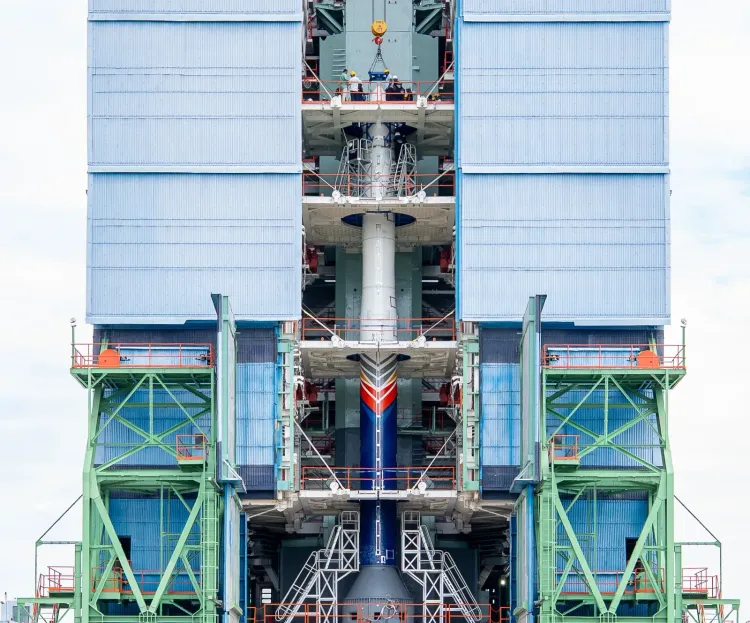
India's private space sector has crossed $871 million in total funding — and for the first time, it has a privately developed rocket in orbit. Skyroot Aerospace's Vikram-1 reaching a 450-km orbit on 18 July made India only the third country after the US and China to hit that milestone, arriving just six years after the sector was opened to private players. The money and the milestone together signal a sector moving from ambition to execution.
Key Takeaways
India's private SpaceTech sector raised a record $871 million across 241 funding rounds through July 2026 , per a Tracxn report.
Skyroot Aerospace's Vikram-1 reached a 450-km low Earth orbit on 18 July 2026 , making India the third country after the US and China with a privately developed orbital launch.
Annual funding grew from $43 million in 2021 to a record $200 million in 2025 ; late-stage funding hit $53 million in 2026 so far.
Bengaluru leads city-wise with $495 million across 106 rounds , followed by Hyderabad ( $205 million ) and Chennai ( $80 million ).
The ecosystem now has 285 companies ( 274 active), with 72 startups holding institutional equity funding.
Skyroot Aerospace is the highest-funded startup at $150 million , ahead of Pixxel ( $96 million ) and AgniKul Cosmos ( $76 million ).
India's private SpaceTech ecosystem has raised a record $871 million across 241 funding rounds through July 2026, according to a report released on Tuesday, 28 July by market intelligence platform Tracxn. The surge, driven by government-led policy reforms that opened the sector to private participation, has attracted significant institutional capital and positioned India among a small group of nations with privately developed orbital launch capability.
Scale of the Ecosystem
The Indian private SpaceTech landscape now comprises 285 companies, of which 274 remain active, according to the Tracxn report. Of these, 72 startups have secured institutional equity funding across segments including launch vehicles, satellite manufacturing, propulsion systems, space situational awareness, earth observation, and downstream analytics.
The sector has also produced India's first SpaceTech unicorn — a milestone that would have been unthinkable before the government opened the sector to private players in 2020.
Skyroot's Historic Orbital Launch
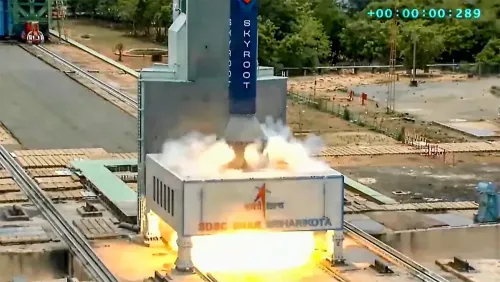
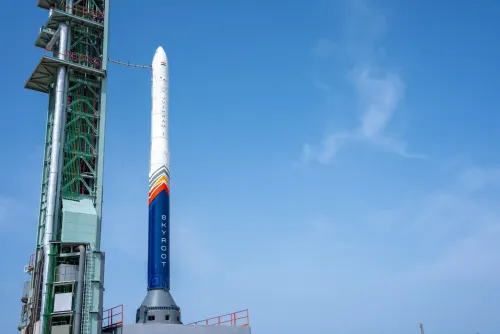
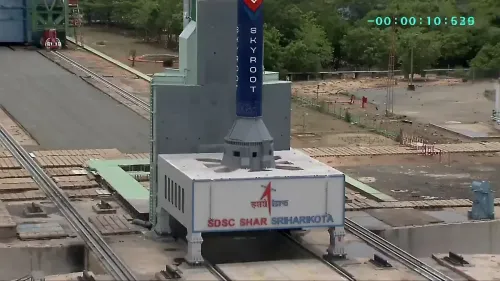
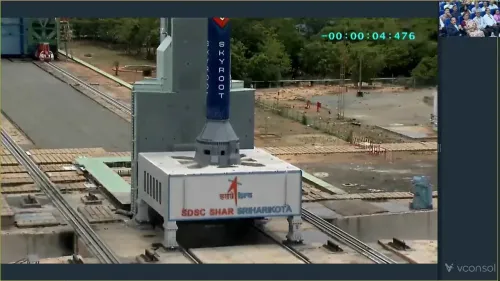
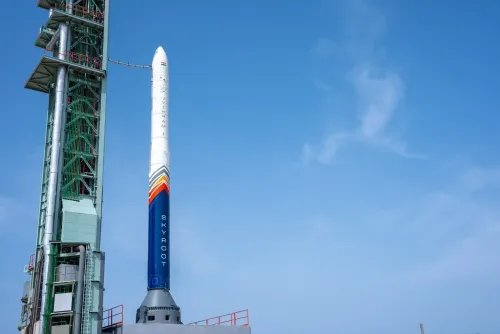
The report highlighted Skyroot Aerospace's Vikram-1 mission, which successfully reached a 450-km low Earth orbit on 18 July, deploying four payloads. The mission made India the third country after the United States and China to achieve a privately developed orbital launch capability — and it did so within just six years of the sector being opened to private participation.
Skyroot plans an additional test flight later this year before commencing commercial launch operations in 2027.
Funding Growth Trajectory
The funding trajectory reflects a sector in rapid acceleration. Annual investment climbed from $43 million across 12 rounds in 2021 to a record $200 million across 53 rounds in 2025, with 2026 sustaining strong momentum. Seed-stage funding rose sharply from $7 million in 2022 to $62 million in 2025, signalling deepening early-stage investor confidence.
Notably, late-stage funding emerged for the first time in 2025, reaching $17 million, and has already hit $53 million in 2026 so far — a sign that the ecosystem is maturing beyond the startup phase.
Five major rounds together accounted for $158 million — more than half of all capital raised across 2025 and 2026. These included Skyroot Aerospace's $50 million Series C, Digantara's $50 million Series B, and AgniKul Cosmos's $17 million Series C.
City-Wise Dominance
Bengaluru continues to lead India's private SpaceTech landscape, attracting $495 million across 106 funding rounds. Hyderabad followed with $205 million, while Chennai secured $80 million. Together, the three cities account for the bulk of equity funding in the sector.
Top-Funded Startups
Skyroot Aerospace leads as the highest-funded company at $150 million, followed by Pixxel ($96 million), AgniKul Cosmos ($76 million), Digantara ($67 million), and Bellatrix Aerospace ($34 million).
With late-stage capital entering the picture and a historic orbital launch now on record, India's private space sector appears to be transitioning from proof-of-concept to commercial scale — though execution across the launch and satellite manufacturing pipeline will determine whether the funding momentum translates into sustained global competitiveness.
Point of View
But the more telling signal is the emergence of late-stage funding — $53 million in 2026 alone — which suggests investors are no longer just betting on ideas but on companies approaching commercial viability. Skyroot's Vikram-1 success is a genuine inflection point, yet the real test lies ahead: converting a successful test mission into a reliable commercial launch cadence by 2027. India's space sector opened to private players only in 2020, and the six-year journey to a private orbital launch is fast by global standards. Whether the funding depth and regulatory momentum can sustain a competitive launch market — rather than producing a single dominant player — is the structural question mainstream coverage is underplaying.
NationPress
26 Oct 2026
Frequently Asked Questions
How much has India's private SpaceTech sector raised in total?
India's private SpaceTech ecosystem has raised a record $871 million across 241 funding rounds through July 2026, according to a Tracxn report released on 28 July. The figure reflects a dramatic rise from just $43 million across 12 rounds in 2021.
What is the significance of Skyroot Aerospace's Vikram-1 mission?
Skyroot Aerospace's Vikram-1 rocket reached a 450-km low Earth orbit on 18 July 2026, deploying four payloads and making India the third country after the US and China to achieve a privately developed orbital launch. The milestone came just six years after India opened its space sector to private players in 2020.
Which Indian cities lead in SpaceTech funding?
Bengaluru dominates with $495 million across 106 funding rounds, followed by Hyderabad at $205 million and Chennai at $80 million. Together, the three cities account for the bulk of equity funding in India's private SpaceTech sector.
Which Indian SpaceTech startups have raised the most funding?
Skyroot Aerospace leads with $150 million in total funding, followed by Pixxel ($96 million), AgniKul Cosmos ($76 million), Digantara ($67 million), and Bellatrix Aerospace ($34 million), according to the Tracxn report.
When will Skyroot Aerospace begin commercial launch operations?
Skyroot Aerospace plans one more test flight later in 2026 before commencing commercial launch operations in 2027, following the successful Vikram-1 orbital mission on 18 July 2026.